The intersection of feminism and religious liberties is a contentious battleground in today’s socio-political landscape. As Democrats gear up to introduce legislation aimed at reversing the Supreme Court’s Hobby Lobby decision, the dialogue is inevitably tinged with complexities that demand a keen understanding of both women’s rights and religious protections. This legislation could potentially reshape the framework of employee rights, access to healthcare, and the role of religion in public policy, raising pivotal questions that reverberate through the feminist movement.
To appreciate the urgent need for such a bill, it is essential to dissect what the Hobby Lobby decision entailed and the consequences it wrought upon women’s reproductive rights. The ramifications of this ruling extend beyond a mere legal interpretation; they strike at the very heart of women’s autonomy over their own bodies. Therefore, feminist advocates must engage actively in this discourse, carefully weighing both the implications for equitable healthcare and the sanctity of religious beliefs.
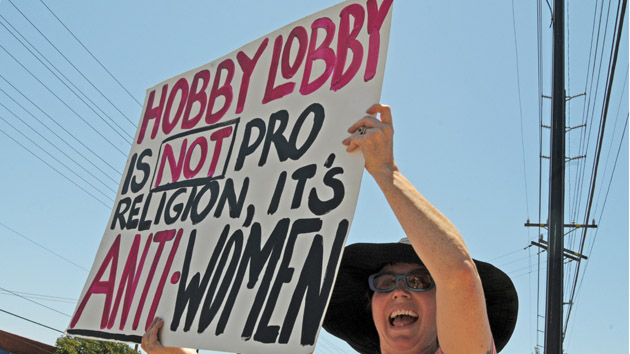
The decision rendered by the Supreme Court in 2014 in Burwell v. Hobby Lobby Stores, Inc. established a precedent where closely held corporations could deny coverage for contraceptives based on religious beliefs. While the ruling ostensibly aimed to protect the rights of employers, its reverberations placed women’s reproductive health in jeopardy. What does it mean when a corporation can impose its religious doctrine on the personal choices of its employees? Feminism thrives on the tenets of bodily autonomy and the inalienable right of women to make informed decisions regarding their health. The federal government’s initial framework for healthcare should include, unequivocally, comprehensive coverage that respects women’s needs without imposing external moral judgments.
In light of these concerns, the Democrats’ proposed bill seeks not merely to nullify the Hobby Lobby decision but to architect a paradigm that meticulously balances the principle of reproductive rights with respect for religious convictions. This is an audacious endeavor, symbolizing an evolving understanding of both feminism and religious expression in the public square. To tackle this effectively, the legislation must be predicated on inclusivity, recognizing the diverse spectrum of faith and its varying interpretations within modern society.
This endeavor is emblematic of the shift towards a feminist ideology that encompasses pluralism. It posits that women should not have to choose between their right to healthcare and their employer’s religious beliefs. Navigating this intricate web necessitates a legislative solution that provides protections for women while also safeguarding religious freedoms. Such a robust framework could engender a healthier dialogue around both issues, fostering collaboration rather than conflict.
However, this path is fraught with challenges. The climate of polarized ideology in contemporary politics often succumbs to hyperbole, leading to a fraught debate that overlooks the nuances in these conversations. Some argue that extending contraceptive coverage represents a coercive infringement upon religious institutions, while others assert that denying such coverage under the guise of religious belief is an affront to women’s rights. Such adversarial positions risk rendering the debate a zero-sum game, with real-world implications that disproportionately affect marginalized women who may lack the resources to navigate these restrictions effectively.
Within this framework, the conversation must pivot towards understanding how feminism intersects with religious identities in diverse communities. For many women, faith is an integral part of their personhood and cultural identity. The feminist movement cannot afford to alienate these voices; rather, it must be a conduit for dialogue that grapples with the complex relationship between personal, moral convictions and collective rights.
The proposed legislation affirms that women’s rights to access contraception are foundational, yet it can also be crafted to accommodate religious beliefs without diminishing the efficacy of this right. A piece of legislation that truly respects both sides would demand a bipartisan approach—an endeavor to unify contrasting philosophies under the umbrella of mutual respect and shared humanity. This ideal is not merely aspirational; it is an imperative for a functioning democracy seeking to uphold the dignity of all its constituents.
One of the foremost challenges is the misconception that religious freedoms are intrinsically at odds with women’s rights. In reality, an equitable dialogue on this topic recognizes the space within which both can flourish. When women are empowered to make autonomous decisions about their reproductive health, it doesn’t preclude individuals or institutions from practicing their faith. Recognition of this reality could pave the way for practical solutions that honor both reproductive freedoms and religious convictions.
The introduction of this legislation is an opportunity not just for redress but for reimagining the narrative surrounding women’s health and faith in America. Feminists must harness this moment to advocate for a system that genuinely supports women from all walks of life. Stakeholders must engage in educational initiatives that demystify reproductive health, entwined with respect for religious traditions, fostering a culture of understanding rather than one of division.
Moreover, grassroots movements can play an integral role in shaping this legislative landscape. Women throughout the nation—regardless of their religious affiliation—must unify their voices in a robust chorus calling for just and equitable healthcare access. By underscoring personal narratives and systemic injustices, activists can create a compelling impetus for lawmakers to act decisively, wielding their influence to craft a bill that embodies both compassion and progress. The heart of feminism beats within the stories of striving women, each narrative chronicling the battles fought and won. This is the time for those stories to come to the forefront, shaping the legislative agenda and making the case for change with both vigor and authenticity.
In conclusion, the proposed bill to reverse the Hobby Lobby decision constitutes a profound opportunity to reframe the discourse on women’s reproductive rights and religious freedoms in this country. It is a chance to articulate a vision of feminism that is neither exclusionary nor reductive. Instead, it advocates for a vibrant tapestry of beliefs while steadfastly prioritizing women’s rights to make choices about their bodies without external constraints.
In essence, the upcoming legislative effort is about far more than policy; it is a concerted endeavor to harmonize seemingly disparate principles—religious freedoms and women’s rights. It proposes not merely a legal remedy but also a cultural recalibration, one that acknowledges and respects the multiplicity of experiences while affirming the fundamental tenets of equity and justice. In this endeavor, the feminist movement must stand firm and resolute, championing a narrative that recognizes the complexity of womanhood in a diversifying world.