

















The Equal Rights Amendment: A Heartbeat for Feminism in a Fractured Society
In the pantheon of social justice, few battles have been as protracted as the quest for equality between men and women. As the Equal Rights Amendment (ERA) is reintroduced in Congress, this moment represents not just a legislative maneuver, but a potent symbol of the ongoing struggle for gender parity in the United States. The ERA was first proposed in 1923, and yet here we stand—almost a century later—dealing with the same systemic inequities that the amendment sought to rectify. This calls into question: what does the reintroduction of the ERA signify for contemporary feminism? Is it merely a nostalgic revival, or does it signal a reawakening of the feminist movement itself?
A Closer Look at the History and Purpose of the ERA
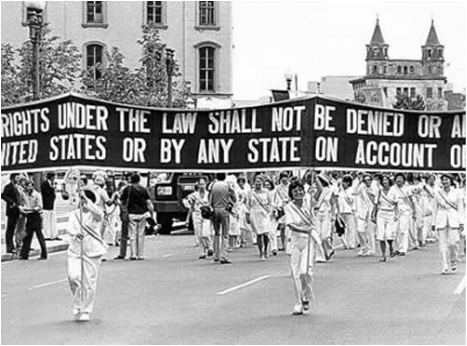
The ERA, succinctly framed, articulates that “equality of rights under the law shall not be denied or abridged by the United States or by any State on account of sex.” Simple and straightforward, yet deceptively profound. While many states have enacted their own legislation promoting gender equality, the central promise of the ERA is to provide an overarching, federally guaranteed right to women—a protection against discrimination that has yet to be fully secured. In the wake of the #MeToo movement and the alarming rise of anti-abortion laws, the urgency for such protection cannot be overstated.
To combat the relentless tide of patriarchal authority that often pervades legislative halls, the ERA acts as a formidable bulwark—a vital countermeasure against the archaic assumptions that underpin much of our legal system. The reintroduction signals not merely the restoration of an old idea, but an essential clarion call to galvanize a new generation of feminists. Women in the U.S. today are inheritors of the struggles of their foremothers, yet they are equipped with new tools and tactics to mount a sophisticated defense of their rights.
What the ERA Represents in Contemporary Feminism
The reintroduction of the ERA serves as an existential moment in feminism. It extends beyond legislative language into the very ethos of women’s rights—challenging us to examine what equality means in a multiracial, multifaceted society. In the age of intersectionality, we must ask: is the ERA comprehensive enough to encompass the myriad experiences of all women? The reality is that the feminist movement is not monolithic; it is a kaleidoscope of varied identities, concerns, and aspirations.
As feminists, we must interrogate the implications of the ERA for marginalized women who often find themselves further from the center of societal protections. It is crucial to critique who benefits from the ERA; will intersectional concerns—those of women of color, LGBTQ+ individuals, and economically disadvantaged groups—be robustly addressed? Thus, reintroducing the ERA invites us to forge alliances beyond traditional feminist spheres and embrace a broader, more inclusive vision of equality.
Bolstering Women’s Rights or Perpetuating a Myth?
The ERA poses a compelling question: does increasing legal protection for women genuinely serve to empower them, or does it risk becoming a superficial facade that perpetuates the myth of equality? The answer lies in recognizing that law alone does not eliminate societal prejudices. The systemic issues of gender discrimination, violence, and pay disparities could persist even with an enshrined constitutional amendment. Historically, legal measures have sometimes led to a depreciation of social consciousness around these issues.
Critics may argue that instituting a constitutional guarantee could inadvertently make the struggle for equality seem less urgent, allowing societal actors to rest complacently on their laurels, satisfied with a piece of paper rather than authentic change. The challenge lies in ensuring that the ERA catalyzes progressive transformation rather than suppressing it. Feminism must not relent in its grassroots activism to combat structural inequities while simultaneously lobbying for legislative change.
The Politicization of Women’s Rights
In a hyper-polarized political landscape, it’s vital to underscore how any reintroduction of the ERA could become a bargaining chip, co-opted by factions within Congress that may not have women’s best interests at heart. Legislative agency for women becomes perilously intertwined with partisan politics; the very real fear exists that such debates could obfuscate essential issues of bodily autonomy, economic inequities, and workplace rights for women across America. Thus, what should have been a unifying movement risks devolving into a mere political tool.
Feminism must reclaim the ERA as a multi-dimensional symbol of liberation, transcending mere legislative recognition. It cannot fit neatly within the confines of a political party but should rather be a rallying point for collective action across the ideological spectrum. Real progress will emerge not solely through the passage of the ERA but through grassroots activism that holds lawmakers accountable for translating rhetoric into reality—a comprehensive transformation of societal norms that extend beyond the legislative process.
The Call for Radical Action and Solidarity
The reintroduction of the Equal Rights Amendment garners attention and engagement in a society yearning for transformative change. The time is ripe for a new wave of feminists to seize this opportunity and advocate fervently for comprehensive strategies of empowerment. What is urgently required is a movement built on solidarity that encompasses not just women’s rights but also intersectional justice, LGBTQ+ rights, and economic equity.
The contours of feminism must shift to reflect the realities of lives lived at the margins. Whether through court interventions, community organizing, or educational outreach, the reintroduction of the ERA must extended to challenge the cultural ethos that allows discrimination to thrive. Feminists must leverage the momentum of this moment—from legislative battles to cultural interventions—to create a world where equality is not a distant ideal but a tangible reality.
A Future Unwritten: The Feminist Road Ahead
As the ERA finds its place in Congress once again, it symbolizes more than just a legal amendment; it is a profound reminder of the work that remains. The amendment serves as both a beacon of hope and a reflective surface, challenging contemporary feminists to reassess what equality means and how to achieve it. It compels the movement to demand not just legal protections but real-life reflections of equity in communities across the nation.
In this reemergence, feminists are called upon to engage in deep, nuanced conversations—not just about equality as it pertains to gender, but as it intersects with race, class, and identity. We stand on the cusp of a transformative moment within a vigilantly evolving discourse, and the reintroduction of the Equal Rights Amendment could serve as a catalyst for a dynamic, awakened feminist movement ready to challenge the status quo. The question looms: will this effort unite us in purpose, or allow us to disband into factions of division, forever charting the murky waters of systemic inequality?