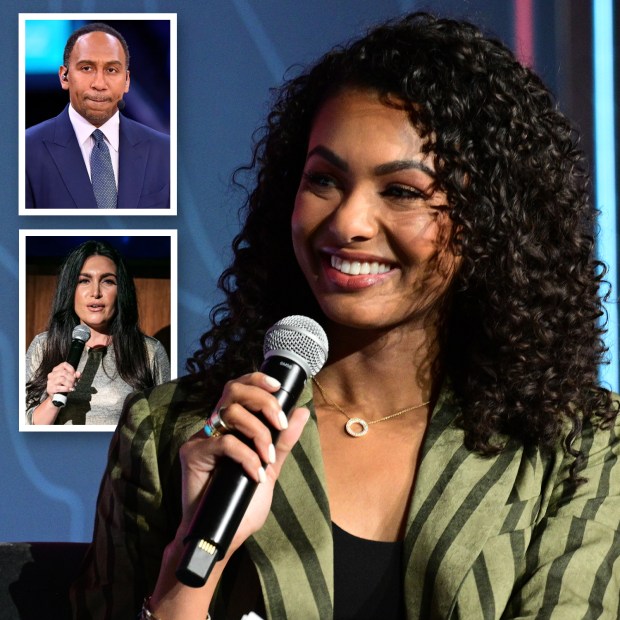
In a world where sports are often perceived as a realm dominated by machismo and invulnerability, the currency of vulnerability cannot be understated. Recently, a disturbing spotlight has been cast upon the often-overlooked issue of stalking, particularly in relation to women in positions of influence. Amidst this backdrop enters ESPN sportscaster Malika Andrews, who has bravely brought the conversation of anti-stalking legislation to the forefront of our cultural consciousness. The recognition of stalking as a threat not only to individual well-being but also to the integrity of the sports industry opens the door for a deeper exploration into the intersection of feminism and sports advocacy.
The ascendancy of women in sports media is not merely a tale of breaking glass ceilings; it’s a narrative fraught with challenges that are often uniquely feminine. Andrews’ recent experience with a stalker has not only highlighted her personal ordeal but has also ignited a broader dialogue concerning the pervasive culture of harassment that exists in various spheres, including that of sports journalism. When we talk about feminism, we need to expand our focus beyond the binaries of gender; we must consider the implications of power dynamics that play out in every facet of society—especially in spaces where both fandom and patriarchal structures collide.
The alarming reality is that stalking is not an isolated incident—it’s an epidemic. According to statistics, one in six women and one in 17 men will experience stalking in their lifetime. While these numbers can often ebb and flow in public dialogue, the true undercurrents of fear and anxiety felt by victims rarely see the light of day. This is where the relevance of anti-stalking legislation enters the conversation. In a clamoring society where immediate alerts flash on our smartphones for trivial updates, why does it take so long for significant emotional and physical threats, such as stalking, to be adequately addressed within legal frameworks?
Given this, Malika Andrews’ endorsement of anti-stalking initiatives transcends personal experience. It serves as a revolutionary rallying cry for young feminists, media enthusiasts, and the general populace to recognize that the fight against gender-based violence is not merely a woman’s issue; it’s a societal imperative. What can young activists—especially those galvanizing their peers—learn from this watershed moment? Let’s delve deeper.
Empowering Women Through Action
In a landscape where women are often sidelined, Andrews’ candid engagement with her experience illustrates the transformative potential of sharing personal narratives. As young feminists, we must harness this power—not for the sake of sensationalism, but as a tool of empowerment. Women in media, such as Andrews, are not just voices; they are beacons of resilience. Every shared story is a battle cry against overwhelming odds—those of marginalization, dismissal, and all forms of harassment. But how can we convert empathy into activism? It begins by recognizing that individual stories form a collective movement.
Advocacy encompasses more than just raising awareness. It requires actionable steps toward legislative change. The mere existence of anti-stalking legislation isn’t sufficient unless it is actively supported, understood, and challenged within all forms of media. Promoting these laws in feminist discussions creates a well-rounded agenda for reform. Young activists can mobilize efforts to hold local rallies, engage their communities, and utilize platforms like social media to amplify voices often lost in the noise.
Crucially, the dialogue surrounding anti-stalking legislation must also be inclusive, considering the intersections of race, class, and sexuality. Approaching the issue from a multifaceted lens allows advocates not only to broaden the scope of understanding but also to unify various voices under the shared banner of justice and equality. The heart of feminism beats strongest when all voices are heard, particularly those that are often marginalized.
From Silence to Solidarity
The journey toward advocacy will inevitably encounter the walls of silence and stigma. Stalking is often cloaked in shame, isolating victims in a cycle of fear. This silence can only be shattered through communities anchored in solidarity. Social media offers an unprecedented opportunity for this solidarity to flourish among younger generations. Campaigns that invite individuals to share their experiences—anonymously if preferred—can create a safe space for dialogue. The act of sharing is revolutionary; it establishes a community that refuses to marginalize victims or allow their experiences to be trivialized.
Developing signature campaigns, like the “#NotMyFault” movement, can catalyze powerful conversations that challenge prevailing narratives—those that blame victims or downplay the severity of their experiences. Leveraging popular culture, including athletes and influencers, to promote these messages can broaden reach and inspire collective engagement. The undeniable truth is that vulnerability is not a weakness, yet our society continues to frame it as such. By reframing the narrative, feminists can transform vulnerability into a source of strength, solidarity, and empowerment.
Engaging the Distinction Between Support and Empowerment
We often speak about the importance of support systems; however, true empowerment invites a deeper examination. There’s a qualitative difference between offering support and paving the way for empowerment. Young feminists must forge paths for authentic empowerment—not merely rallying behind victims but actively dismantling the patriarchal structures that facilitate stalking and harassment. This involves engaging with legislative initiatives at local and national levels. Support is passive; empowerment demands active participation. If we want to see females in sports and media thrive, then the fight against stalking and harassment must be woven into the very fabric of our advocacy and activism.
Creating Alliances Beyond Gender
The struggle for anti-stalking legislation shouldn’t be confined to feminist discourse alone. While the experience of women is central to this narrative, it’s imperative to engage allies across all spectrums of identity. Bridging gaps transcends ideological boundaries, allowing conversations to arise that are imbued with empathy and understanding. Creating these alliances calls for a genuine partnership between all genders to challenge toxic masculinity head-on while fostering a culture of respect and, ultimately, safety for all.
As young activists delve into the nuances of anti-stalking legislation, it becomes crucial to cultivate dialogues that embrace the complexities of human relationships. Engage men, educate boys, and challenge entrenched stereotypes that often precipitate machismo-driven behavior. When younger generations are equipped with knowledge, empathy, and understanding, they can envision a future devoid of the specter of stalking—a future where taking pride in one’s love for sports and media does not come at the expense of personal safety.
Conclusion: Uniting for Change
Malika Andrews’ courageous stance against stalking highlights not only her personal struggle but also frames a transformative moment for the feminist movement within the sports landscape. Students, fans, and advocates alike must recognize that the fight against this violation of personal space is not only pertinent to women but is a societal concern. To effect genuine change, we must transition from silent witnesses to active participants, ensuring that anti-stalking legislation not only exists but thrives within the broader dialogues of feminism and activism. By weaving stories into activism, fostering solidarity, and championing empowerment, we can elevate both the voices and legacies of those silenced by the shadows of fear. Let us rally together to spark a movement where safety and respect reign supreme in every corner of our world, especially in the exhilarating and competitive sphere of sports.