The recent ruling by a federal court declaring a North Carolina 20-week abortion ban unconstitutional has reignited essential discussions surrounding women’s rights, bodily autonomy, and the imperative role of feminism in advocating for equitable healthcare. The significance of this decision stretches far beyond mere legislative technicalities; it digs deep into the complex interplay of power, control, and the unrelenting struggle for gender equality. As feminists, we must critically engage with the implications of this ruling and advocate for a future where reproductive rights are not only preserved but celebrated as a testament to our autonomy.
The Political Landscape of Reproductive Rights
The terrain of reproductive rights is terrain marked by relentless battles that glean insights into the societal attitudes towards women. Laws restricting abortion access have been carefully camouflaged as “women’s protections,” yet these same laws often disproportionately infringe upon marginalized communities. The court’s recent decision dismantles a façade that too often obscures the truth; these bans are not anchored in the welfare of women but rather in a patriarchal drive to control their bodies.
As the court pointed out, the 20-week abortion ban violates established constitutional protections, echoing the pivotal Supreme Court decision in Roe v. Wade. Upholding women’s rights to make decisions about their own bodies must be at the forefront of feminist activism. This ruling emphasizes that legislating thresholds for abortion access is tantamount to enshrining systemic inequality. Thus, it is incumbent upon feminists to continue challenging oppressive laws that curtail women’s agency.
The Intersectionality of Abortion Rights
When discussing abortion rights, we cannot ignore the multifaceted layers of identity that influence a woman’s experience with pregnancy and abortion. Intersectionality, a term coined by Kimberlé Crenshaw, highlights how various forms of discrimination based on race, class, sexuality, and other identities intersect, creating unique experiences of oppression. This court decision reinforces the need for an intersectional approach in the fight for reproductive justice.
Low-income women and women of color often face the gravest consequences when access to abortion is restricted. Compounding factors such as economic instability, lack of healthcare access, and systemic racism exacerbate the challenges faced by marginalized groups. Therefore, as we celebrate the court’s ruling, we must expand our focus. Feminism should not merely advocate for the right to abortion; it should dismantle the societal structures that render these rights precarious for many. A commitment to comprehensive healthcare, education, and economic equity is essential for true reproductive justice.
The Role of Feminist Activism in Shaping Public Opinion
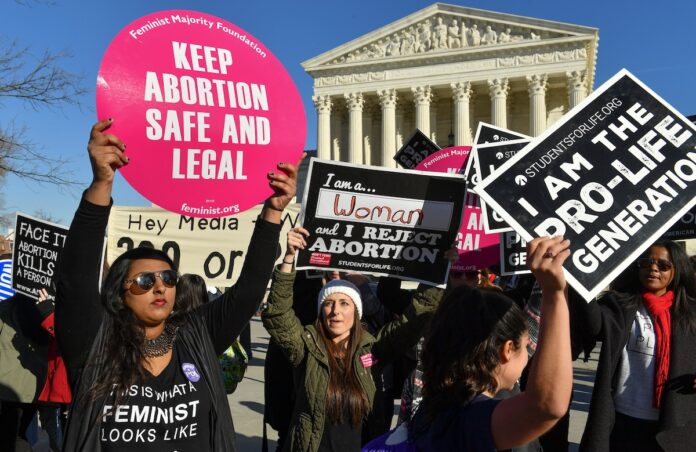
The conversation on abortion must transcend legal jargon and political maneuvering. Feminist activism has historically been a powerful catalyst for change, and its role is as crucial today as it has ever been. Engaging in bold, provocative discussions about abortion is essential to destigmatize the choices women make about their bodies. The messages surrounding abortion should reflect not just legality but also the morality of choice and the value of autonomy.
Feminists should harness the power of storytelling. Sharing personal narratives can break down barriers and humanize the struggle for reproductive rights. Each story weaves a rich tapestry of experiences, from sorrow to empowerment, challenging the heteronormative ideal that confines women’s roles. Highlighting individual stories humanizes the “abortion debate,” shifting it from abstract statistics to lived realities. These narratives illuminate the profound significance of a woman’s right to choose—and underscore that every woman has the right to her own narrative.
The Ongoing Struggle for Comprehensive Reproductive Health Care
Merely declaring an abortion ban unconstitutional does not eradicate the pervasive stigma or simplify access to safe procedures. The battle for reproductive rights is inextricably linked to broader issues of reproductive health care. Access to comprehensive and intersectional sexual health care must be an integral part of the feminist agenda.
Contraception, sex education, and maternal health are vital constituents of the conversation around reproductive justice. We must explore how socio-economic factors influence access to these services; many women, particularly in underserved communities, struggle to receive culturally competent care or education about their reproductive options. Advocacy must extend beyond abortion access to encompass a holistic approach to reproductive health, fostering a society that values women’s health as paramount.
The Impacts of Judicial Decisions on Future Legislation
The implications of the federal court ruling cascade into future legislative actions. As we scrutinize the attempts to restrict abortion access, we shall question the legitimacy of those pushing for such measures under the guise of “protecting women.” This ruling serves as a strike against regressive measures that seek to erode established rights. However, vigilance is necessary; the opposition will likely attempt to reframe the conversation and craft more insidious legislation targeting reproductive rights.
As feminists, we must be proactive rather than reactive. This involves advocating for comprehensive reproductive health policies while remaining steadfast in the fight against judicial austerity that seeks to undermine women’s rights. Mobilizing voter education initiatives, supporting proactive candidates, and ensuring that judicial appointments reflect a commitment to reproductive justice are ways to navigate this precarious landscape.
The Role of Men as Allies in Reproductive Justice
While the fight for reproductive rights largely centers around women, the role of allies, particularly men, is often overshadowed. Men must take on the mantle of advocates, acknowledging their privilege and striving to become active partners in dismantling the patriarchal structures that oppress women. Engaging men in discussions about reproductive rights opens up opportunities to create a more equitable societal framework.
Men should leverage their societal privileges to amplify women’s voices, challenge narratives that demonize abortion, and support initiatives that promote gender equality. The responsibility lies with everyone to foster a culture of respect and understanding about women’s rights. When all genders actively support reproductive justice, we can approach a more inclusive political and social atmosphere.
A Vision for the Future
What lies ahead is an opportunity — one that demands fervent activism, conscious allyship, and a commitment to crafting a future where women’s autonomy is beyond reproach. The recent court ruling elucidates a critical juncture in the fight for reproductive rights. It serves as a call to arms for feminists to deepen our engagement and reshuffle our priorities, ensuring that we do not retreat from the gains we have made.
The question is not merely about legal battles; it is about reshaping our culture into one that recognizes and reveres women’s right to choose. Together, we can dismantle the oppressive structures that seek to limit our freedom. By advocating for comprehensive access to reproductive health services, elevating intersectional voices, and demanding accountability from our leaders, we can forge a society that truly honors the spectrum of women’s experiences and their right to choose.