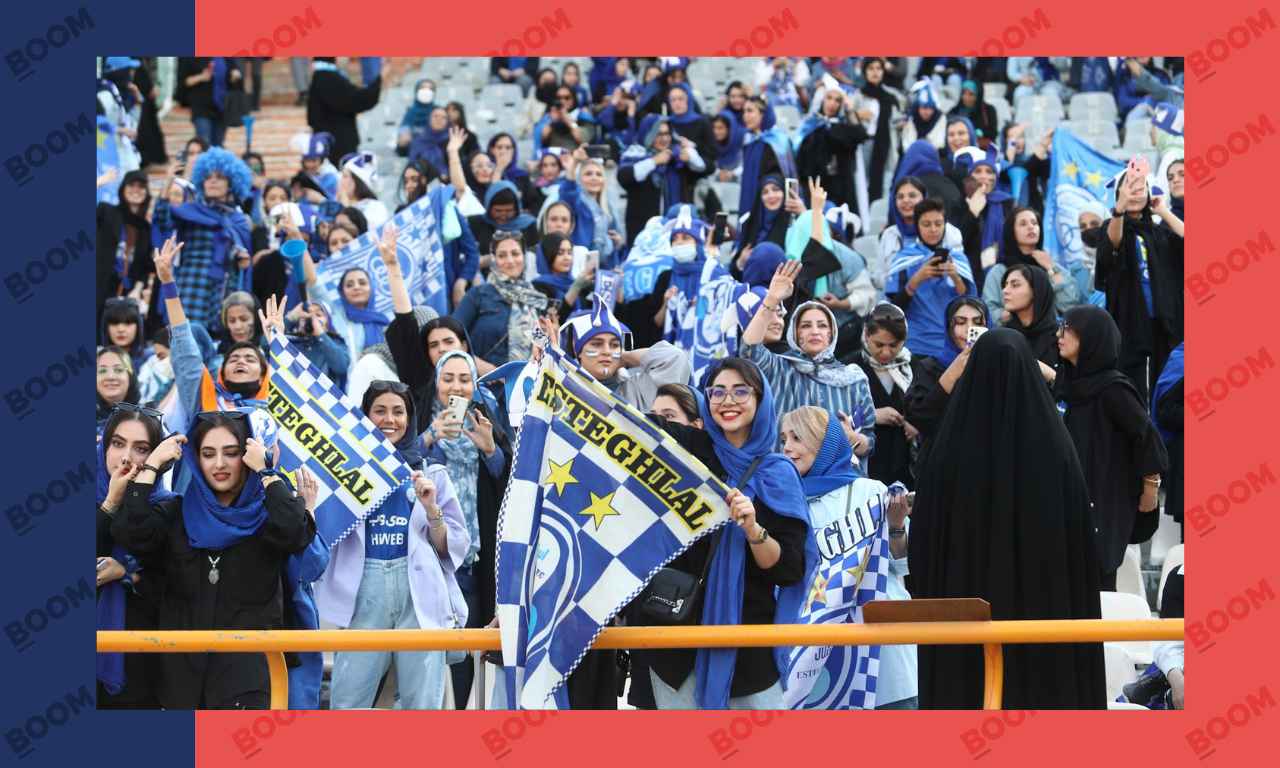
The long-standing exclusion of women from attending football matches in Iran has been emblematic of broader systemic gender discrimination. However, with recent developments, a curtain has been partially drawn back, allowing for scrutiny and nuanced discussions surrounding this highly sensitive topic. The entrance of women into football stadiums is not merely a concession—it is an explosion of feminist discourse, highlighting the disparities that persist in a society often overshadowed by patriarchal controls. Enter FIFA, an organization that found itself at the confluence of international expectation and domestic restriction, provoking a transformative dialogue that deserves closer examination.
Iran’s allowance for women to watch domestic football matches in stadiums showcases the peculiar intersection of sports, gender rights, and cultural rigidity. This move is not just about a game; it encapsulates decades of struggle for recognition and equality. It begs the question: what does this shift in policy mean for Iranian women and feminism as a whole?
The backdrop of this shift is steeped in activism and social upheaval. For years, Iranian women’s voices have been stifled by an oppressive regime that has marginalized them not just in the arena of sports but in every facet of public life. Football, a sport that enthralls millions, became a symbol—a pitch where the fight for gender equality transcends mere athleticism and unravels the tightly woven fabric of societal norms.
So, how does FIFA’s intervention play a role in this saga of emancipation?
Historical Context: The Subjugation of Women in Iran
To understand the recent developments, we must delve into the historical context. Since the 1979 Islamic Revolution, Iranian women have faced a slew of restrictions that dictate their presence in public spheres. Some restrictions are overt, such as mandatory hijab laws; others are subtler, ingraining societal norms that brand women as unworthy inhabitants of public spaces, such as football stadiums.
Stadiums—a microcosm of culture—have symbolized power, camaraderie, and national pride. However, for women, they have also represented exclusion and systematic control. Denied the exhilarating experience of live matches, women were often relegated to spectator roles from the sidelines, both in sports and in societal structures.
Through the lens of feminist activism, this exclusion speaks volumes about patriarchal systems that seek to control and undermine women’s agency. Football is not just a game; it’s an arena of influence, passion, and identity. The ability to watch a match is emblematic of broader citizenship, an indication of rightful presence in a nation’s cultural narrative.
The Catalyst: FIFA’s Role and the Pressure of Global Society
FIFA’s intervention is indicative of a larger global sentiment towards gender equality. With mounting pressure from advocacy groups and international media, the organization found itself in a position where inaction was no longer viable. The outcry over the treatment of women in Iran became impossible to ignore. FIFA’s acknowledgement of Iranian women’s rights to attend matches was a calculated decision, designed not only to protect its brand image but also to uphold the values espoused by its global constituency.
This diplomatic maneuver sparked curiosity; could FIFA be a harbinger of change in a landscape marred by repression? While some argue that such actions are insufficient and superficial, they cannot be dismissed entirely. The media spotlight shining on Iran’s treatment of female spectators has opened up a Pandora’s box of discussions on women’s rights that cannot be easily closed. With this visibility comes the potential for real change, albeit a slow and arduous journey.
The response from Iranian society has been mixed. On one hand, women celebrated this newfound opportunity, embarking on a collective experience that had long been denied. Yet, on the other hand, conservative factions just as quickly sought to undermine this progress. Feminism is about choice, and forcing women into or out of stadiums based on gender restrictions reveals the persistent struggle between progressive and regressive forces within Iranian society.
The Feminist Perspective: Celebrating Progress While Acknowledging Limitations
While FIFA’s decision is laudable, it is crucial to critically analyze what it means for the feminist movement in Iran and beyond. Certainly, the immediate euphoria is palpable, but the realities of everyday life for Iranian women continue to be overshadowed by political and cultural constraints. A single sporting event does not equate to systemic change. It glosses over deeper issues such as wage gaps, legal discrimination, and violence against women that continue to plague Iranian society.
Moreover, the very act of celebrating women’s attendance at football matches detracts from a broader narrative of inequality that persists in everyday life. A critical examination must also take into account the fact that while some women may have the luxury to attend, many remain without the autonomy to make similar life choices, stymied by cultural traditions and governmental restrictions.
Furthermore, one must confront the rationalization of allowing women into stadiums as an achievement. It surfaces the idea that mere access equates to empowerment, a notion that could not be further from the truth. Empowerment is not merely about presence but about agency—the freedom to express, to protest, and to demand respect in all civic virtues. The stadiums may be opened, but the societal barriers that constrain women’s choices remain steadfast.
What Lies Ahead: The Path Towards Genuine Equality
Going forward, the onus lies with both the Iranian government and the Iranian people to ensure that this moment catalyzes a broader shift towards genuine equality. Women’s rights activists must harness this momentum to advocate for structural changes, pushing for reforms that validate women’s roles in sports and society as a whole. The right to attend events and participate in public life must intersect with deeper advocacy for legal equality, representation, and societal acceptance.
International organizations like FIFA must bear the responsibility not just for compliance but also for accountability. Their influence should extend beyond the pitch; they must engage in dialogues and initiatives that support sustainable gender equality. The world is watching, and the power of collective feminist movements cannot be underestimated. Together, they can amplify the voices of Iranian women, who have fought relentlessly against the odds to claim their rights.
In conclusion, the decision to allow women into football stadiums in Iran represents a small yet significant victory in the long and arduous fight for gender equality. While it is essential to celebrate this step, we must remain vigilant, acknowledging the limitations inherent in such gestures. Feminism is an enduring struggle, one that transcends moments of inclusion and demands systemic change. With a collective voice, we can dismantle the barriers that continue to suppress women and pave the way for a more equitable society where all individuals, regardless of gender, enjoy full participation in civic life.