
















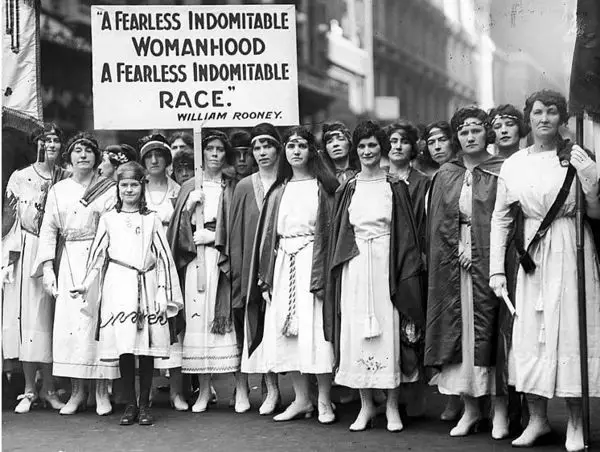
The era of December 9, 1909, stands as a significant milestone in the annals of feminism, a date intertwined with both ingenuity and audacity. Beneath the shadow of Edwardian propriety, a cadre of intrepid women emerged, articulating dissatisfaction with the status quo and instigating a paradigm shift in society’s understanding of gender roles. These founding feminists became pioneers, ardently advocating for women’s rights and altering the social contract in ways that reverberate even in contemporary discourse. Let’s delve into their lives and legacies, recognizing their remarkable contributions as fundamental to the evolution of feminism.
Every pioneer has a protagonist story, and the suffragettes in the early 1900s represented an indomitable spirit that shook the very foundations of patriarchy. By the time the Women’s Trade Union League convened on that fateful December day, women across the nation were already buzzing with urgency for reform. The protests and marches held by these iron-willed suffragists were not mere acts of rebellion; they were declarations of independence, sagaciously crafted to awaken the collective consciousness of the public. Women were not merely seeking the right to vote but rather, they were demanding recognition as political beings capable of agency.
Today, as we scrutinize everyday injustices faced by women across the globe, we must revisit the audacious acts of the women who dared to disrupt the patriarchal narrative. The agitation for equality has since evolved, but the foundational elements remain rooted in the struggles and sacrifices of those early activists.
As we reflect on this crucial history, we must not shy away from recognizing the cruelty of dismissing these brave women as mere footnotes in history. They were strategists, revolutionaries, and most importantly, harbingers of a new epistemology of gender relations. They understood that enfranchisement was just the tip of the iceberg; it was but one conduit for a full-scale overhaul of societal norms.
Intellectual Discourse and Political Agency
The notion of political agency for women was ignited in large part by luminaries such as Alice Paul and Lucy Burns. As architects of the National Women’s Party, they recognized that mere participation in the electoral process was insufficient; what was required was a radical rethinking of how women were perceived and treated within that process. Paul, in particular, was a fierce advocate of direct action—a contrast that typified the growing radicalism within the suffrage movement. Her infamous hunger strikes and unrelenting picketing outside the White House shook political complacency and demanded recognition.
Women were seizing the narrative, liberating their identities from the restrictive boundaries of domesticity. This reconfiguration of their roles became a powerful rhetorical force, displacing the long-standing argument that women were too emotional or incapable of rational thought to partake in governance. The dialectic provided by these suffragettes inherently challenged the very ideology that sought to subjugate them; they dismantled reductive stereotypes and redefined femininity through their very actions.
The ramifications of their persistence laid the groundwork for follow-up movements—intersectional feminism, liberalism, and socialism among them. They broadened the conversation around what it truly meant to advocate for women’s rights. This fervent activism infused intellectual rigor into what had been dismissed as frivolous subjects. Today, feminists continually invoke their legacy, challenging systemic inequities that persist not just in overt forms, but subtly entwined within policies that appear benign on the surface.
Sisterhood and Solidarity: The Power of Collective Action
Perhaps one of the most compelling aspects of the early feminist movement is the idea of sisterhood and collective action. Women like Inez Milholland and others galvanized comradeship among diverse groups of women through mutual recognition of shared grievances. Race, class, and ethnicity often took a backseat to the unified goal of achieving suffrage—but this is a point of contention that cannot be overlooked. Once enfranchised, the movement had to grapple with its intersectionality, questioning who truly benefitted from “women’s rights.” In this regard, December 9, 1909, served as a harbinger for discussions about inclusivity and intersectionality that resonate deeply in today’s feminist movements.
The suffrage movement was rife with complexities; the intersectionality of race was often neglected in efforts to gain support from more privileged white women. Particularly, black women like Ida B. Wells confronted the double bind of racism and sexism. They advocated for their rights while simultaneously battling the deeply entrenched racism that persisted within the movement itself. The struggles of women of color thus necessitated that sisterhood evolve, integrating a more comprehensive understanding of oppression that was not monolithic but fractal in its manifestations.
Presently, the feminist movement continues to wrestle with these intersections, boldly addressing the multidimensional nature of womanhood. Discussions regarding trans rights, racial diversity, and socio-economic class are central once again, as they should have been in past movements. The early suffragists established a blueprint for such solidarity, underscoring the importance of not only recognizing disparities but navigating them towards collective empowerment.
Legacies Revisited: Moving from the Voting Box to the Boardroom
As we trace the line from the aspirations of the suffragettes to current debates surrounding women’s rights, we notice some glaring discrepancies. While the early feminists laid down markers that steered society toward the recognition of women’s voting rights, myriad issues remain germane. Women might enjoy the franchise, but they still navigate a professional landscape rife with inequality—the wage gap, glass ceilings, and discrimination continue to plague their progress. The idea that political enfranchisement solved the fundamental issues surrounding gender justice is a fallacious narrative echoing hollow through history.
Modern feminists today challenge the paradigmatic assumptions that have persisted since those early days. The focus on systemic reform rather than mere inclusion has become a rallying cry. Advocates argue that women’s equality must transcend political representation; it must encapsulate economic, social, and cultural dimensions, too. The call for parity in opportunities within corporate boardrooms and influence over legislative policy decisions connects the fervor of early feminists with the current fight for comprehensive women’s rights.
Consequently, an engaged and informed populace must continue to reexamine not only the victories but also the unfinished business that has lingered for over a century. Structural barriers that women face are indeed a direct reflection of a patriarchal system that prefers subjugation over freedom. The triumphs of December 9, 1909, must inspire an unyielding call to arms against those who would see feminism reduced to a mere historical footnote.
In the final analysis, the founding feminists of December 9, 1909, did not merely shake the system; they rudely awakened it. Today’s activism must capitalize on this legacy, ensuring that the pioneers of our past are honored through relentless advocacy. It remains a moral exigency to interrogate how far we’ve come—and how far we have left to go—on the path toward true gender equality. Let us not falter in the face of challenges but rather draw strength from the audacity of the women who have emboldened our fight. Their memory must serve as our battle cry, fortifying us as we strive to dismantle the inequities woven into the fabric of society.