

















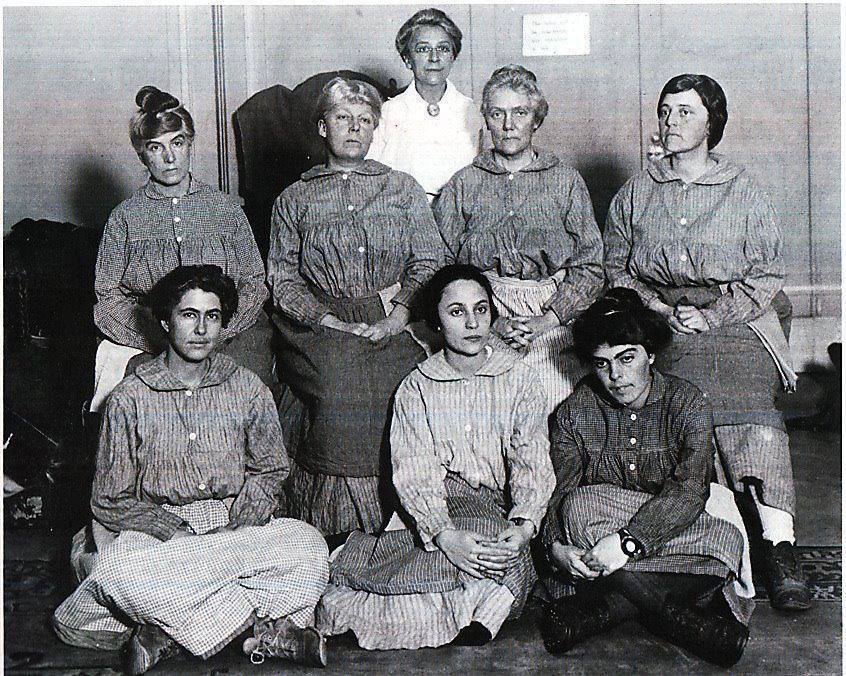
The year is 1918: a pivotal moment in the annals of history, when the world was both reeling from the horrors of war and inching towards a seismic shift in societal norms. In this turbulent backdrop, feminists were rapidly organizing and demanding a rightful place in society, signaling a profound intersection between the global conflict and the burgeoning women’s rights movement. March 4, 1918, marks a significant date—not merely because 218 suffragettes were released from custody—but as a testament to the unwavering spirit of women who orchestrated their liberation through their indomitable will and collective action.
The suffragette movement was not merely about voting rights; it was emblematic of a broader struggle for equality, visibility, and respect. As the specter of World War I loomed large over society, women emerged as indispensable contributors to the workforce, yet their rights continued to be marginalized in the discussions of citizenship and societal value. The events of March 4 illustrate the explosive tension between women’s auxiliary roles in wartime and their persistent demands for justice and agency.
To capture the essence of feminism in this final year of war, it is essential to explore several key dimensions of the struggle: the socio-political ramifications, the response to the war, and the radical emergence of feminist voices that paved the way for future generations.
One cannot begin this discussion without dissecting the remarkable socio-political climate of 1918. The war had catalyzed unprecedented transformations in gender dynamics. Women were stepping into roles traditionally dominated by men, assuming positions in factories, transport, and even agriculture. They were not only filling the gaps left by their male counterparts but doing so while striving for recognition. In this moment of upheaval, the suffragette movement became a beacon of hope—illuminating the struggles for suffrage across the globe. The release of the 218 suffragettes on March 4 signaled both a tactical victory and the deepening commitment of women to social change.
The glowing embers of discontent ignited into an inferno on the streets as women marched and rallied for their rights. They understood the complexities of a world at war and deftly maneuvered their narrative to assert both patriotism and the demand for recognition. The intertwining of the war effort with the suffragette movement laid the groundwork for future victories, such as the eventual passage of the Nineteenth Amendment in the United States in 1920. What transpired in 1918 was not merely a reaction to societal pressure, but a revolution in its own right.
The ideological evolution of feminism during this tumultuous time cannot be understated. The war was a crucible that forged new feminist identities, often melding radical ideas with the pragmatic needs of the moment. Women began to eschew traditional notions of femininity, opting instead for more assertive, unapologetic stances that insisted on both equal rights and societal acknowledgment of their contributions. Activists like Emmeline Pankhurst and her daughters propelled this movement, creating an urgent discourse surrounding women’s rights in the context of war. The narrative shifted; no longer were women merely participants in a male-dominated society—they were catalysts for change.
As societal expectations shifted, the feminist rhetoric of 1918 began to embrace more radical ideologies. Intersectionality, albeit an emerging concept in later feminist movements, was in nascent discussions as women across class and race lines began to unify. The disillusionment of war saw activists advocating for a more comprehensive understanding of suffrage that included not just white women but women of color and those from lower socioeconomic backgrounds. This shift signaled a rustling awareness that gender equality must encompass all layers of society, reflecting the diverse experiences of womanhood beyond the singular narrative of the affluent, white suffragette.
As the war drew to a close, the state of feminism transformed: women would not revert back to the sidelines. They had tasted empowerment, and there was no turning back. The cumulative events of March 4 and the efforts leading up to it culminated in a pressing wave of societal transformation. Post-war, women were no longer perceived solely as caretakers or homemakers but emerged as demanded participants in the socio-political landscape. The realization of their capabilities during wartime yielded a sense of entitlement, a demand for rights that resonated far beyond mere suffrage.
Fast forward to present-day feminism, and the echoes of March 4 reverberate through current discussions of gender equality. Recent conversations surrounding intersectionality in the movement highlight the necessity of inclusivity, paralleling the sentiments expressed in 1918. Today, as the world grapples with issues of equity, representation, and justice, the foundational lessons learned from those liberating marches can inform contemporary efforts. The historical tapestry of women’s rights reveals patterns—victories that arise from struggles while also illuminating the shortcomings and continuous barriers women face.
With the advent of modern digital activism, the 21st century offers a new battleground for feminists fueled by the legacies of women who came before. Social media platforms have become literal and figurative rallying points, enabling grassroots organizations to connect, share stories, and mobilize quickly. Recent movements like #MeToo and Black Lives Matter amplify the historical calls for justice, though the fight remains deeply entangled with the realities of sexism, racism, and classism. Failure to acknowledge the complexity of these issues risks repeating the very mistakes made in prior movements, where the focus often rested on a singular narrative. The diversity of women’s experiences must not only be recognized but embraced to craft a fuller understanding of feminism today.
March 4, 1918, serves as a critical reminder of the paths paved by bold and courageous women who refused to be silenced. Their resolve and bravery reverberate through time, guiding modern feminists as they continue to navigate the challenging landscape of gender equality. The ongoing discourse surrounding women’s rights finds its roots in these historical events, inviting new generations to take the torch and fight for what is just and right.
As we stand at the crossroads of history and future, feminism remains an evolving dialogue—a powerful tapestry woven from the threads of countless voices. As we honor the legacy of those 218 suffragettes, we must acknowledge that the struggle has not concluded. Feminism is not merely a heritage—it is a living movement, ever-adapting, ever-challenging, demanding that we push for not just equal rights but for a society in which the richness of diverse experiences is celebrated.