

















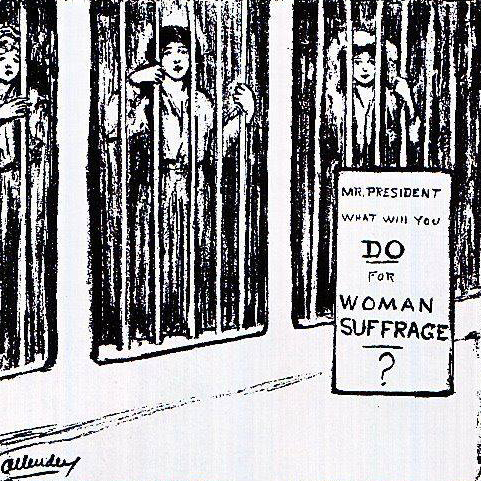
On November 19, 1917, a significant event unfolded that would etch its mark upon the annals of history. It was a moment where the steely resolve of women clash against the oppressive structures that sought to cage their aspirations. The founding feminists of that era weren’t merely participants in a struggle for the right to vote; they were the torchbearers of a transformative movement that sparked a fire still blazing in the hearts of feminists today. Let us unravel this incandescent tale of rebellion and revolution that ignited the journey toward equality, autonomy, and justice.
As we step back in time, we must recognize that the path to women’s suffrage was paved with courage, unwavering commitment, and, dare we say, audacity. The decision of the suffragists to take their message to the streets was not merely a political strategy; it was a radical proclamation of their demand for inclusion and representation. The implications of their actions resonate to this day, particularly as women around the globe continue to battle for their rights in the face of adversity.
What does it mean to stand on the shoulders of these founding feminists? To understand their impact is to dissect the social and political machinery of their time and witness how they engineered a paradigm shift that reverberates through the ages. Today, the feminist movement faces contemporary challenges, yet it can draw deeply from the well of history where bold women forged a path in the dark.
To comprehend the contours of the feminist struggle, it is vital to immerse ourselves in the historical context. The founding feminists of the early twentieth century were not fighting in isolation; they were deeply influenced by various social issues that fused with the suffrage movement. The increasing visibility of women in the workforce due to World War I, the burgeoning labor rights movement, and progressive social reform laws were intertwined with the demand for voting rights. It was an era ripe for challenge, buttressed by fervent discontent with patriarchal structures.
The situation of women in 1917 was characterized by a pervasive culture that relegated them to the domestic sphere. The suffragists, however, shattered this notion. They articulated the idea that women’s voices deserved to echo in the chambers of power, a notion that stands as a rallying cry even today. “We’re not just asking for the right to vote; we’re demanding respect, recognition, and the power to shape our own destinies,” they proclaimed through protests and demonstrations, events that captured national attention and demanded action.
In examining the ideologies behind the suffrage movement, one cannot ignore the contrasting views within the feminist camp itself. The era fostered a fierce debate between mainstream suffragists and more radical factions. The mainstream approach advocated for suffrage as a way to elevate women’s status within existing frameworks of power. Meanwhile, radical feminists critiqued the entire system, questioning whether voting within an oppressive structure was enough. This ideological schism highlighted an essential truth about feminism—it is a composite mosaic of perspectives that enriches the discourse. Even today, we grapple with similar debates, wherein some argue for equality within systems while others challenge the systems themselves.
The founding feminists adopted tactics that would be revered and replicated for generations. From hunger strikes to marches, they illustrated tenacity in the face of state-sanctioned violence and public disapproval. Their bodies became instruments of protest, a poignant reminder of how personal sacrifice was, and still is, an integral part of activism. Women were arrested, mistreated, and vilified, yet they held their heads high and continued to occupy public spaces. These women were not merely seeking the right to vote; they were igniting a revolution that encompassed every aspect of societal change.
Today, as new waves of feminists rise with increased fervor and visibility, it is essential to reflect upon the generosity of spirit exhibited by the founding feminists. Activists of the early 20th century did not solely champion their individual rights; they cultivated an environment of solidarity among women from diverse backgrounds, toiling and strategizing together for shared goals. They recognized that the fight for suffrage was inexorably linked to a broader quest for social and economic reforms. The intersections they established amongst their causes foreshadowed the inclusivity that contemporary activists strive for.
Modern feminism faces a host of challenges, but it is invigorating to observe how the lessons from the founding feminists direct current debates. The profound discussion surrounding intersectionality today owes its roots to the recognition that women’s experiences are not monolithic. In a world fearful of the multiplicity within feminism, their minds pulse with the energy of the past, revitalizing efforts for all marginalized groups. As we witness the rise of movements that underscore the importance of acknowledging diverse identities, we honor the heritage laid down by those pioneers long ago.
In our current climate, trans rights, reproductive rights, and the fight against systemic racism are among the foremost issues demanding a keen feminist lens. The fire kindled on November 19, 1917, inflamed subsequent generations, establishing a legacy of advocacy that continues to shape activism today. The women’s marches, the Me Too movement, and the fight for equality in every facet of life are extensions of that revolutionary spirit, bearing testament to how far we’ve come and how far we still have to go.
The suffragists’ struggle was not merely for a vote; it was a clarion call for systemic change. It urged subsequent generations to look beyond electoral politics and consider how we engage with frameworks of power that govern our lives. Feminist activism must constantly interrogate the efficacy of existing structures. Are we ennobled by the choices we make, or do we merely reinforce the boundaries that confine us? This is the essential question borne from the steadfast spirits of women like those who strode forth in 1917.
As we commemorate the audacity of the founding feminists, let us not fall prey to complacency. May their fire burn bright in our collective consciousness, igniting courageous action and introspection. The journey toward equality is laden with obstacles, yet inspired by their trailblazing efforts, we march forward—with our eyes wide open, demanding justice and advocating for a world where all women, irrespective of their identities, have the right to carve out their destinies.
In the shadows of 1917 lies a potent reminder that the fight for rights is multifold; it transcends mere political gain and engages deeply with societal transformation. The spirit of the founding feminists breathes life into our contemporary battles, reminding us that our empowerment is intricately woven with the struggles of all marginalized voices. As we channel their indomitable spirits, we carry the torch forward—eschewing silence and embracing the revolutionary journey toward equality.