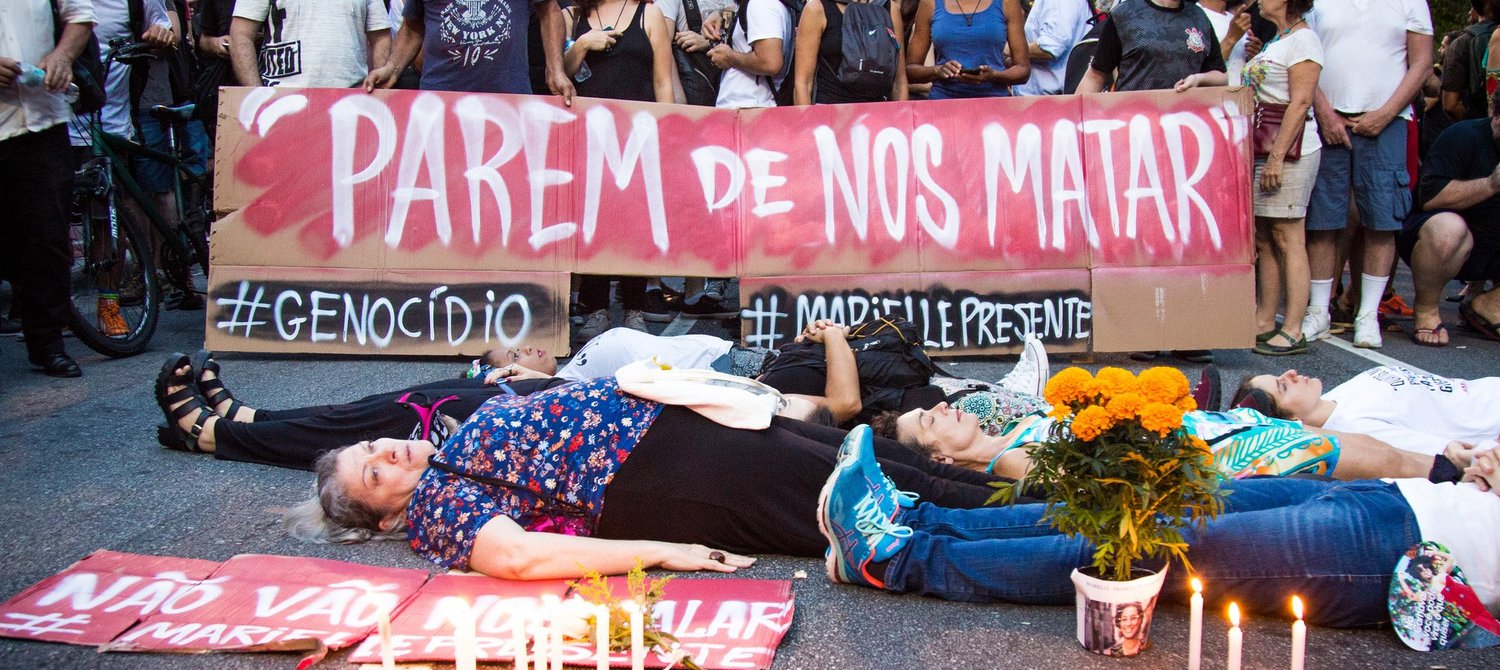
In a world that often deludes itself with the illusion of progress, the grim reality of Brazil’s femicide crisis reveals a deeply entrenched societal ailment. The statistic is startling: four women are murdered every single day in Brazil. This harrowing truth is not merely a grim calculation; it is a manifestation of systemic misogyny, a historical legacy that perpetuates the cycle of gender-based violence. At the heart of this tragedy lies a formidable challenge for feminism: how do we dismantle the patriarchal structures that allow such atrocities to persist?
Understanding Femicide: The Death Toll of Discrimination
Femicide is not merely a crime of passion; it is a blatant statement of power. Each murder encapsulates a broader narrative of control, where women’s lives are expendable in the eyes of a society that fails to protect them. Characterizing femicide as an epidemic is not hyperbole; it is a calling for a deeper examination of the cultural, legal, and systemic factors that contribute to this scourge.
- The insidious nature of machismo in Brazilian culture plays a pivotal role. This hypermasculine ethos fosters an environment where women are subjugated, often viewed as property rather than individuals with autonomy.
- The legal framework is grotesquely inadequate. While Brazil has legislated against domestic violence—like the Maria da Penha Law—implementation remains painfully insufficient. Women continue to find themselves without adequate protection or recourse, navigating a justice system that often turns a blind eye to their suffering.
- Social norms exacerbate the problem. The normalization of violence against women extends beyond criminal acts; it seeps into the very fabric of interpersonal relationships and societal expectations. Women are taught to endure, to accept male violence as an unfortunate reality, and not to seek justice.
When you peel back the layers, the narrative of femicide in Brazil is not isolated; it is symptomatic of a global crisis. The tragic irony lies in the fact that as some corners of the world strive for gender equality, others remain entrenched in barbarism. Feminism must grapple with this grotesque reality—an unwavering commitment to advocacy and action is imperative.
The Intersectionality of Oppression: A Cacophony of Voices
To understand the femicide crisis in Brazil, one cannot proceed without addressing the intersectionality that complicates a woman’s existence. The convergence of race, class, and sexual orientation creates diverse, often harsh realities for women across the country.
- Indigenous and Afro-Brazilian women are disproportionately affected by violence. The historical marginalization of these groups has led to a silent epidemic, their struggles rarely highlighted in mainstream discussions surrounding femicide.
- Economic instability broadens the scope of vulnerability. Women from impoverished backgrounds often find themselves trapped in cycles of violence, lacking the financial freedom necessary to escape toxic relationships. Their plight is exacerbated by a system that offers meager support to survivors, effectively entrenching them in dangerous situations.
- Societal invisibility only further compounds these challenges. When a woman is murdered—a trans woman, a woman of color, a poor woman—the media coverage, public outrage, and awareness shrink considerably. The sheer silence surrounding these lives lost is a betrayal by a world that professes to champion equality.
By adopting an intersectional framework, feminists can better understand the multifaceted nature of oppression that allows femicides to thrive. It is imperative to amplify the voices of those often pushed to the margins and advocate for a more inclusive dialogue. Only through solidarity can the layers of violence be unwrapped, and meaningful progress be forged.
The Call for Change: A Roadmap to Revolution
The path forward is fraught with challenges but punctuated by an unwavering hope for change. The multifarious solutions to combat femicide must explore diverse avenues, each intertwined with the others, creating a robust framework for resistance.
- Education must be at the forefront. Societal norms are not immutable; they can be challenged and transformed. Comprehensive educational programs about gender equality that target all demographics—children, men, and women alike—can sow the seeds for a cultural shift. By addressing misogyny and promoting respect for women’s rights from a young age, new generations may emerge with a different perspective.
- Legislative reform is non-negotiable. Feminists must advocate for policies that enhance protections for women, ensuring that laws are not only in place but are enforced vigorously. Attention to detail is paramount; lethal violence against women must be appropriately categorized and treated with the utmost severity by law enforcement and judicial systems.
- The media plays an essential role in shaping public discourse. Responsible journalism that focuses on the underlying causes of femicide, rather than sensationalizing violence, can elevate awareness and facilitate accountability. If the stories of women lost to this violence are told with dignity and respect, society is compelled to take notice and act.
A collective societal awakening is imperative. Activists, community leaders, and everyday citizens must converge to disrupt the status quo. It is our responsibility to dismantle the silence, to amplify marginalized voices, and to advocate for systemic change.
Conclusion: Feminism’s Indispensable Role in Unraveling the Crisis
As we revisit the haunting statistic—four women murdered daily in Brazil—we must channel our indignation into resolute action. Feminism is not a static ideology but a dynamic force poised to inspire change. More than ever, it is crucial to recognize that combating femicide demands a multifaceted approach that embraces intersectionality, advocates for legislative reform, and fosters educational initiatives.
The fight against femicide is not just a women’s issue; it is a battle for humanity, a righteous stand against oppression in all its forms. As the harrowing tales of lives claimed by violence resonate through communities, they call upon each of us to reflect, act, and demand a world where women are not merely statistics, but individuals celebrated for their resilience, strength, and worth. Together, we can dismantle the structures that perpetuate this epidemic and pave the way for a future where women live free from fear, violence, and discrimination.