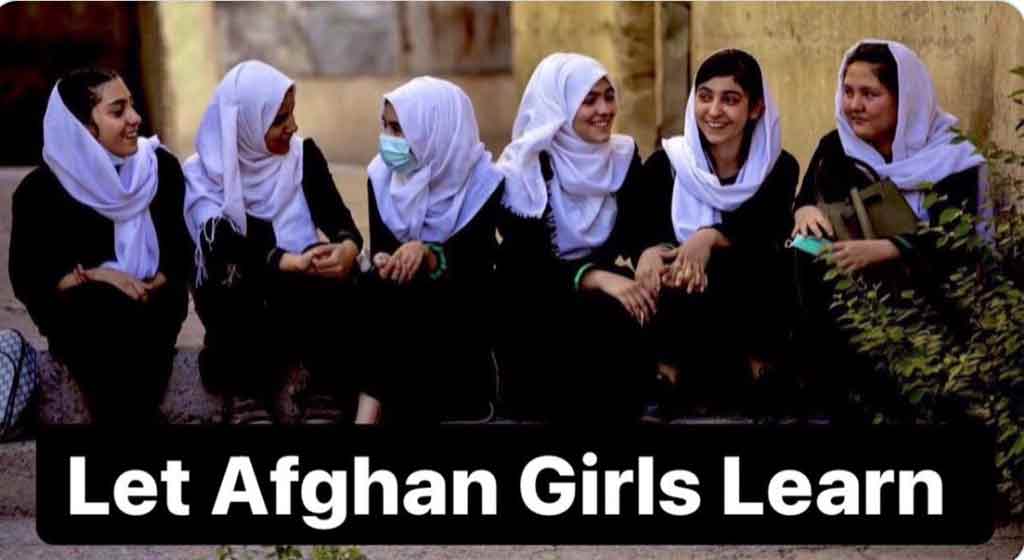
In the grand tapestry of global feminism, Afghan women are currently embroiled in both an arduous battle and an inspiring quest for empowerment. In the relatively short time since the Taliban regained control of Afghanistan, we have witnessed a staggering erosion of women’s rights, particularly in the realm of education. Yet, despite these oppressive realities, signs of resilience and hope have emerged, compelling us to examine the potential trajectory of women’s education rights in Afghanistan by 2025. Can grassroots movements spark a revolution against patriarchal constraints? Will international advocacy catalyze a reformation in educational access? 2025 could be a pivotal year for Afghan women, and it is crucial to delve into this discourse.
Educational exclusion manifests as a lethal weapon within the Taliban’s arsenal—a systematic dismantling of hard-won gains in female education over the past two decades. The immediate aftermath of this regime change has rekindled fears that span generations, wherein the oppressive specter of ignorance and subjugation looms over young girls aspiring to break free from societal shackles. However, aspirations often wield more power than mere reality; they inspire collective action and engender hope in the most desperate of circumstances. Thus, as we gaze toward 2025, we cannot overlook the indefatigable spirit among Afghan women and their allies that champions the cause of education as a fundamental right.
Without an iota of doubt, education is the bedrock of empowerment. It is the bridge that transcends socioeconomic barriers, cultivates self-worth, and ignites the flames of ambition. Therefore, mustering sufficient support for Afghan female education is non-negotiable if we are to foster a society that honors equality and justice. So, what does the landscape look like in 2025, and how do we intend to sculpt it?
International Pressure: A Catalyst for Change
Consider the power of international advocacy in places like Afghanistan. Global feminist movements, particularly those rooted in solidarity and intersectionality, have strived to shine a spotlight on the plight of Afghan women. By 2025, it is imperative for these movements to amplify their voices and demand concrete actions that make tangible changes. An invigorated international community must employ a range of strategies, ranging from diplomatic pressure to the imposition of sanctions against oppressive regimes that deny girls their right to education.
Furthermore, engaging local communities in the advocacy process serves to weave a richer fabric of representation and self-determination. Many Afghan women are not seeking rescue but rather solidarity—support that acknowledges their agency and unique cultural contexts. Navigating this realm requires a delicate balance; armed with cultural competence, international allies can effectively advocate for policies that resonate with the realities Afghan women face.
Empowerment Through Grassroots Movements
One of the more radiant possibilities for 2025 is the burgeoning of grassroots movements within Afghanistan itself. Despite the Taliban’s attempts to quash dissent, history has shown us that the human spirit is resilient. Afghan women’s organizations, often formed in secrecy and with scant resources, are springing up with renewed fervor. They are not only advocating for educational rights but also providing informal education to girls who remain shut out of conventional schooling. The ripple effect of these clandestine efforts can have far-reaching implications, as the next generation becomes imbued with knowledge, confidence, and a set of ideals that challenge systemic inequality.
Moreover, the intersectionality of feminism demands that we address the multi-faceted challenges women face, particularly in rural areas. Here, local activists and community leaders are crucial allies. By 2025, ensuring that educational programs take into account the unique cultural and economic contexts of each community could foster more sustainable solutions. Education is not a one-size-fits-all endeavor; thus, tailoring approaches to empower women while respecting their identities is paramount.
The Role of Technology: A Modern Frontier for Education
In our technologically saturated world, the role of digital literacy cannot be overstated. With the potential to leap over barriers of physical classrooms and traditional pedagogies, technology represents a modern frontier for education in Afghanistan. By 2025, initiatives aimed at expanding internet accessibility and tech education for girls could birth a revolution in learning opportunities. Imagine virtual classrooms and online mentorship programs that connect Afghan girls with inspirational role models across the globe—this interconnected web of knowledge could become the lifeline that many have been craving.
However, it is worth noting that reliance on technology must be cautiously approached. Access to the internet requires infrastructure, stable energy supplies, and government accountability—all of which are, unfortunately, prone to volatility in an unstable political environment. There is nothing more disheartening than watching a beacon of hope extinguished due to a lack of essential resources. Therefore, any technology-driven education initiative must include contingencies and efforts for robust physical infrastructure on the ground.
Revisiting Representation: Afghan Women at the Forefront
As we look toward 2025, it is paramount that we reconsider the representation of Afghan women at all levels—political, social, and educational. Women’s voices must not only be present but pivotal in policy-making processes. Their lived experiences have insights that are invaluable; to dismiss them is to willfully ignore a treasure trove of knowledge that could catalyze necessary changes in educational frameworks and society as a whole.
Furthermore, women’s representation in leadership roles can reshape narratives surrounding education. Consider the strong female figures throughout history who have instigated change simply by daring to lead. Afghan women who access higher education, enter politics, or occupy leadership roles in NGOs serve as powerful symbols of potential. They can drive the conversation and advocate for necessary reforms by leveraging their positions to break cycles of ignorance.
In conclusion, as we approach 2025, the future for Afghan women regarding educational rights is fraught with uncertainty but laden with potential. By harnessing international support, fostering grassroots movements, leveraging technology, and demanding authentic representation, Afghan women can indeed carve a path toward equality and empowerment. The road is long and the challenges formidable, yet the flicker of hope is unmistakable. Now is the time for feminist allies around the world to stand in solidarity with Afghan women, fighting hand-in-hand to secure their rightful place in the classrooms, boardrooms, and society at large. In the chorus of resistance, every woman’s voice matters; let us ensure that Afghan women’s voices are not only heard but resonate beyond their borders—for the world to see the transformative power of education.