

















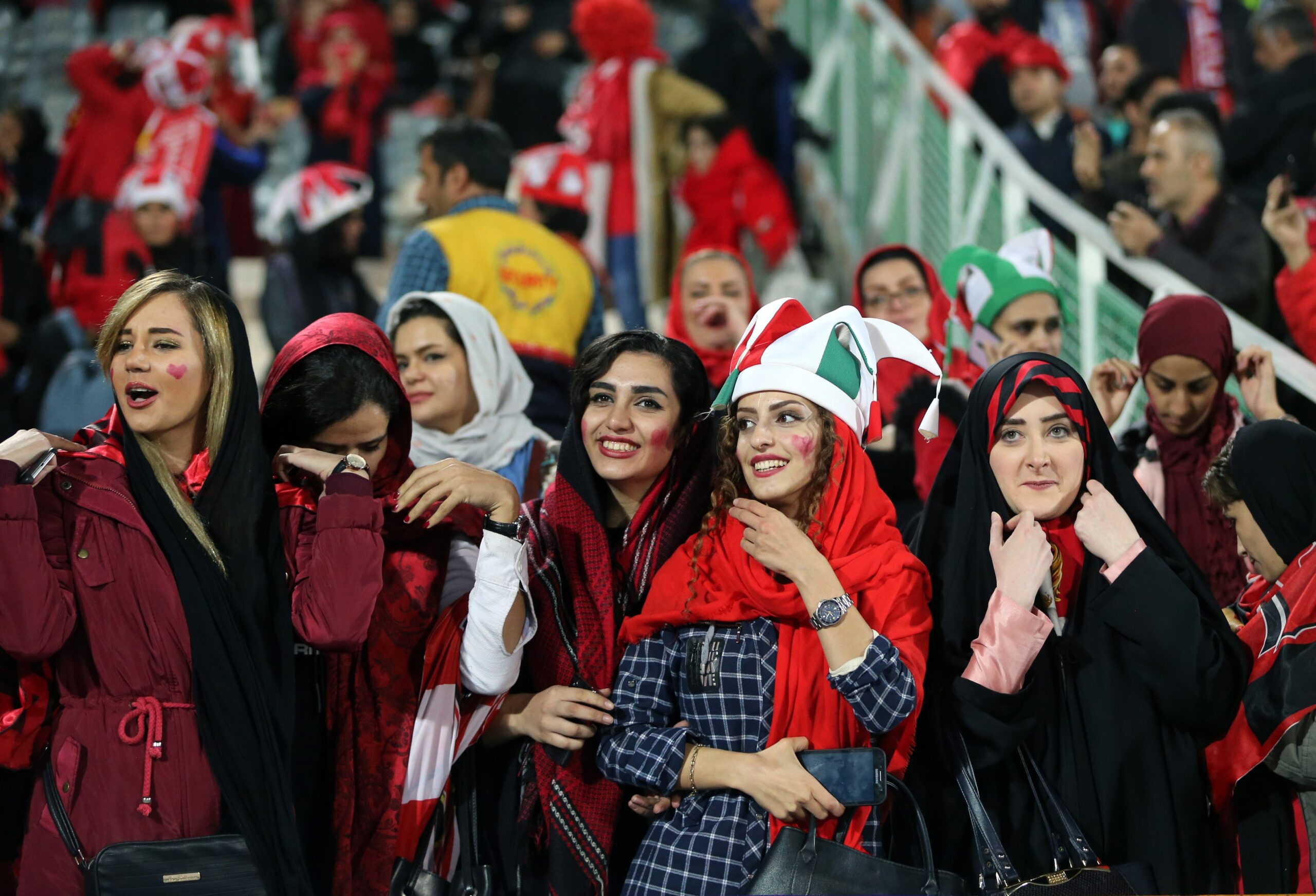
In a seismic shift that reverberates across the socio-political landscape of the Middle East, Iran has finally lifted its decades-long ban on women attending soccer games in stadiums. This pivotal decision is nothing short of a liberation manifesto, an audacious proclamation that resonates deeply within the feminist discourse. It ignites a conversation not only about the right to spectate and revel in sports but more importantly, about the broader implications for gender equality and women’s rights in Iran and beyond.
Let’s dissect this landmark moment. We stand at the intersection of tradition and modernity, where the will of a populace is starting to challenge archaic norms. Sports are not merely games; they are cultural phenomena that bind societies together. To ban women from these celebrated arenas is to strip them of their agency and their ability to partake in a significant aspect of cultural life. Yet, with this recent decree, we see an opportunity—a chink in the proverbial armor of patriarchy. It’s like watching a tightly sealed bottle slowly uncorking; the effervescence of change is palpable.
But this isn’t just a victory for women in Iran; it amplifies movements across the globe. It invites the question: how far are we willing to go to dismantle structures of oppression? Feminism must evolve continuously, and the lifting of this ban shines a light on the resilience and relentless spirit of women everywhere who are demanding a seat at the table—figuratively and literally.
Let’s delve deeper.
### Gendered Spaces: The Boundary of Sports
For far too long, the realm of sports has been portrayed as a masculine bastion. Soccer stadiums, with their roaring crowds and male-dominated narratives, have been off-limits to women, reinforcing the myth that athleticism and spectator culture are inherently gendered. This segregation is not just a simple case of unequal access; it is a symbolic appropriation of space that relegates women to the sidelines. There’s an intrinsic connection between physical space and the embodiment of rights. Where women are not allowed to participate or witness, they are subtly informed that they do not belong. Thus, the lifting of the ban offers a powerful reclamation of space.
With the resounding cheers of female voices now echoing within stadium walls, we witness a collective dismantling of these barriers. No longer are women relegated to the periphery of sports culture; they are poised to redefine it from within. This goes beyond watching a match; it’s about altering perceptions of women as passive observers to active participants. Feel the vibe? It’s electric!
### A Tipping Point for the Feminist Movement
Context matters. The implications of this seemingly straightforward policy change reach far beyond the immediate enjoyment of soccer games. It’s a reflective tipping point for the feminist movement within a conservative regime that has historically stifled female agency. One can’t help but contrast this moment with the struggle faced by women globally. The ban’s repeal is a clarion call; it beckons young feminists everywhere to recognize their power and to push for similar changes in their own contexts.
Picture a young woman in Iran, donning her team’s colors, surrounded by other women who share in her passion. The atmosphere is charged, charged with the undercurrents of empowerment and rebellion against a long-standing oppressive narrative. That singular moment—of unity, of shared joy, of defiance—is a powerful catalyst for change. The act of attending a soccer match becomes a protest against systemic inequality, a reclamation of personal rights, and an expression of identity. The battle for gender equality doesn’t only take place in boardrooms or legislative halls; it can thrive in the frenetic atmosphere of a sports arena.
In this potent cultural context, the women who step into the stadiums are not simply spectators; they become revolutionaries, embodying a collective ethos of breaking down barriers. This is wherein lies the strength of feminism: in its ability to galvanize women to confront their realities and reshape their narratives. The world is watching, and the lens is decisively focused on the brave women of Iran.
### The Ripple Effects: Women Empowering Women
The lifting of the ban resonates far beyond the borders of Iran. It has ignited a flame that other women may well feel inspired to fan. In societies where access to public spaces is restricted, this monumental shift acts as a beacon of hope. Women worldwide are rallying behind this cause, creating a mosaic of solidarity that is both global and intimate. When one group of women stands up, it reverberates through interconnected networks, inspiring others to rise as well.
Imagine young girls in various parts of the world—those who have despaired under unyielding patriarchal systems—witnessing the celebrations in Iran. Their dreams of attending sports events, of feeling the joy of community and belonging, become tangible hopes. In this way, the actions taken today could ripple through generations. Perhaps tomorrow, young girls will not only attend soccer games but will also realize they have the power to captivate audiences in the boardroom, on the field, and in society at large.
Moreover, this change necessitates a critical self-reflection among movements. Are we doing enough to amplify the voices of women from all walks of life? Are we extending our support to those still navigating oppressive regimes? As feminists, we must ensure that our platforms celebrate victories while remaining aware of the multifaceted challenges that women face worldwide.
### The Future: More Than Just Seats in Stadiums
While the lifting of the ban holds monumental significance, it’s paramount we acknowledge it as merely a first step rather than the final destination. Societal change is a continuous journey, layered with challenges aplenty. The break from dogma should not allow complacency to seep in; the momentum must be sustained. What lies ahead is crucial, and what commitment will Iranian authorities make to ensure an environment where women feel safe and respected within these newly accessible spaces?
This is not just about sport; it’s about the intersection with politics, social justice, and human rights. If we are to truly celebrate this change, we must push for systemic reforms that dismantle institutional barriers and foster a culture of respect and inclusion. The actions of women at these soccer games should embolden policy-makers to look introspectively at laws and practices that hinder equality.
In conclusion, the lifting of the ban on women attending soccer games in Iran is more than just a policy change; it’s a clarion call for empowerment, agency, and the reclamation of public spaces. This moment serves as a reminder that the struggle for gender equality demands audacity, unity, and perseverance. As we stand together in solidarity, let us harness the spirit of this triumph and cultivate an unwavering commitment to supporting women’s rights everywhere—because when women thrive, society flourishes.
Let this be the rallying cry for a future where equality is not an aspiration but a reality. Young voices, step up; your time is now!