In the cacophony of political and environmental discourses, few narratives possess the raw potency that intertwines celebrity activism and feminism as poignantly as Jane Fonda’s involvement in the #FireDrillFriday climate protests. While some scoff at the intersection of fame and activism, dismissing it as mere virtue signaling, it is imperative to scrutinize what this represents for the feminist movement, for climate justice, and for the societal necessity of nuanced, evocative dissent.
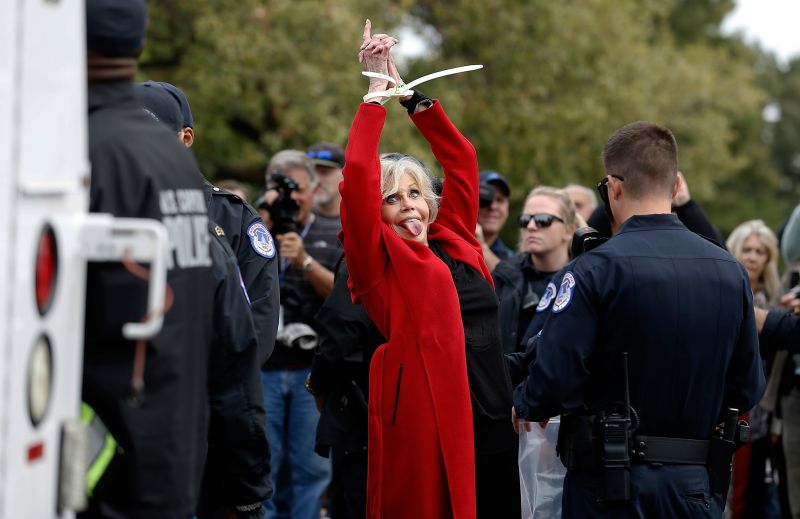
As we peel back the layers surrounding Fonda’s commitment—her eleventh climate crisis protest recently resulting in yet another arrest—we must recognize the complexities that underlie her actions. They evoke critical questions about the role of women in public discourse, particularly in arenas dominated by patriarchal structures that often sideline strong voices. This discussion extends far beyond celebrity culture, tapping directly into the core of feminist ideals about agency, activism, and environmental stewardship.
The audacity of Fonda’s visibility acts as a catalyst in a larger movement where women are striving for authenticity and representation in spaces that have too long been controlled by outdated patriarchal frameworks. The question is, how does her position influence the perception of women’s activism in contemporary society, especially within the context of socio-political engagements surrounding climate change?
Determined Resistance: The Feminist Legacy Behind Fonda’s Activism
Jane Fonda’s activism cannot be disentangled from the feminist movements that predate her—movements that have long claimed the streets as venues for dissent. From suffragettes protesting for the right to vote, to modern feminists rallying against systemic misogyny, the lineage of female activism resonates powerfully in the protests Fonda undertakes today. Her choice to risk arrest embodies a long-standing feminist tradition: the readiness to confront injustice head-on, despite potential backlash or societal scorn.
Furthermore, it beckons a conversation regarding the feminized intensity of environmental activism, which is too frequently overlooked in favor of louder, more aggressive rhetoric attributed to their male counterparts. It positions women not just as passive participants but as agents of change—individuals who reclaim their narratives against climate adversity while addressing the intersecting inequalities exacerbated by environmental collapse.
The multifaceted impact of climate change disproportionately affects marginalized communities, including women, people of color, and low-income populations. Hence, when Fonda and her co-activists gather to protest, they are doing more than merely showcasing their celebrity status; they are bringing attention to issues that require urgent redress. Their bodies become politicized entities, a rebellion against the marginalization of voices typically unheard in climate discussions.
Subversive Stardom: The Role of Celebrity in Feminist Movements
Critics argue that the involvement of celebrities dilutes the sincerity of social movements. Yet, it is vital to challenge this notion. For starters, the presence of celebrities in activist spaces often serves as a megaphone for messages that might otherwise struggle to reach larger audiences. Jane Fonda’s clout provides a valuable spotlight on climate issues that many activists toil over quietly in the shadows, crafting grassroots efforts that rarely garner the same attention.
Moreover, this phenomenon embodies a form of subversive stardom; luminaries like Fonda wield their privilege to confront systemic injustices, challenging the status quo from a platform that is often deemed unassailable. In doing so, they invite discourse around the responsibilities of privilege in activism. Their involvement in earthly matters compels us to scrutinize our own roles and complicity in the environmental crises we face.
Yet it is essential to dissect the implications of celebrity activism more critically. Does Fonda’s fame help promote the climate agenda or overshadow the grassroots activists who spend years cultivating localized, sustainable solutions? The answers are multifaceted, necessitating a balance of recognition and commitment to lifting local activists. Female celebrities must be vigilant custodians of the movement’s founding ethos—a warning against commodifying aspects of activism.
Beyond Activism: Bridging Personal Experience with Collective Action
Celebrity activism, particularly in feminism and climate justice, thrives on the cultivation of personal narratives—an area where Fonda excels. By sharing her experiences, fears, and resolutions, she forges a connection that transcends the typical barriers that separate celebrity from the everyday person. This bridging of experiential gaps is vital in fostering empathy within the wider framework of the activism she champions. Personal stories humanize the plight against climate change, enabling individuals to see these issues as personally relevant rather than abstract crises relegated to the fringes of public discourse.
Such narratives remain essential in galvanizing feminism’s push for environmental justice, establishing that the fight against climate change is not merely an eco-centric struggle but one intertwined with social justice narratives. Fonda’s protests urge women to recognize their inherent power and compel them to challenge both climate disruptions and gender inequality as inseparable foes. The struggle against the patriarchy cannot disassociate itself from the struggle against a patriarchal ecological crisis that seeks to exploit the Earth’s resources in a reckless quest for power.
Embracing the Complex: Celebrating Divergent Voices in the Movement
In this vein, it is crucial to ensure the diversity of feminist voices within environmental activism remains robust. While Jane Fonda’s celebrity status provides a powerful platform, the struggles of women from various backgrounds matter just as profoundly. White celebrity activism can often inadvertently overshadow grassroots efforts led by women of color, working-class organizers, and environmentalists who have lived through the very crises that climate change exacerbates.
The recourse isn’t to discard the importance of Fonda and other celebrities but rather to amplify marginalized experiences. Integrating a pluralistic approach into environmental activism may just be the most transformative practice of all. Feminism thrives on multiplicity; it is an ever-evolving tapestry that should be reflective of the diverse experiences of those most affected by climate injustices. Celebrating the intricate spectrum of feminine resilience ensures broader participation and ultimately fortifies the collective force necessary to confront ecological despair.
In Conclusion: Fonda’s Arrest as a Symbol of Ongoing Struggle
Jane Fonda’s persistent activism and subsequent arrests illustrate not merely an allegiance to a cause but signify a larger feminist legacy committed to societal reclamation. As she continues to challenge climatic degradation through her visibility and audacity, Fonda symbolizes the intersectionality of feminism with environmentalism—a reminder that the struggles are connected.
In recognizing her contributions, we also must remain vigilant about the structures that continue to undermine these movements. By fostering a culture where all voices—popular and marginalized—are celebrated, feminism can continue to advocate systemically for climate justice. The urgency of climate action cannot afford to be sidelined by the specter of privilege; instead, it must become a thriving unification of voices, experiences, and passions for a more equitable and sustainable world.