

















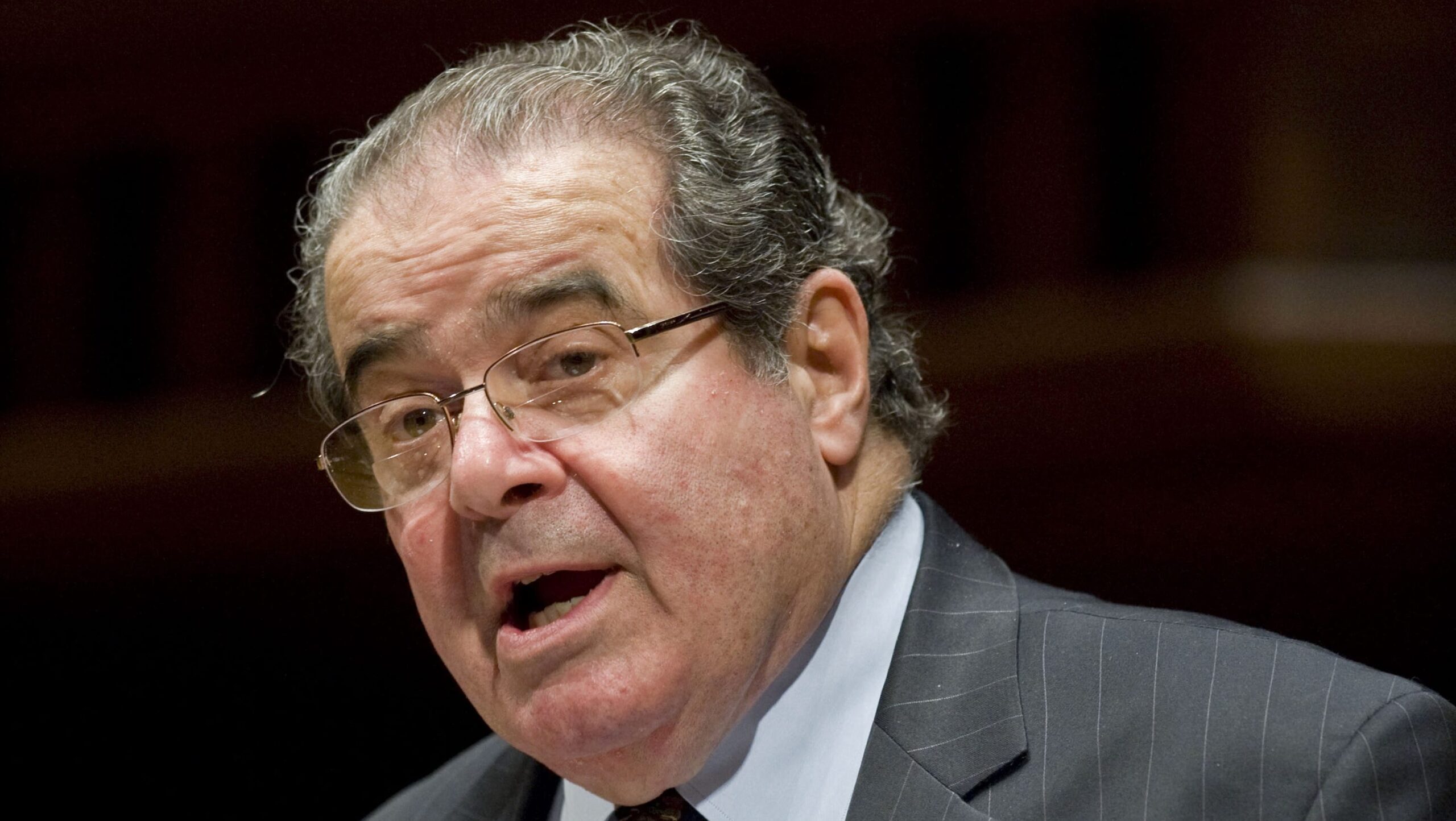
In the annals of American jurisprudence, few figures provoke as much visceral reaction as Justice Antonin Scalia. His controversial views permeate public discourse, especially as they pertain to the discourse surrounding sexuality and gender identity. Among his more incendiary remarks is the alarming comparison he once made between homosexuality and murder. Such statements demand a thorough examination, particularly from a feminist perspective that champions equality and social justice.
The assertion that homosexuality is akin to a crime as heinous as murder is not merely a rhetorical flourish—it is an ideological conviction that carries weight in legal reasoning and cultural attitudes. This article dissects the implications of Scalia’s comparison, exploring the intersectionality of feminism and LGBTQ+ rights and the nuances of societal acceptance.
Examining this comparison is crucial, as it reveals much about systemic biases and prejudices still embedded in our judicial and social frameworks. The shocking nature of Scalia’s analogy cannot be understated; it serves as a reflection of the patriarchal norms that feminism seeks to dismantle. By defending such absurd equivalencies, Scalia inadvertently exposes the fragility of heteronormative hegemony, begging the question: what does it mean for marginalized identities in their pursuit of recognition and dignity?
In the discussions that follow, we will delve into: the theological and cultural origins of anti-LGBTQ+ sentiment, the impact of Justice Scalia’s views on legal frameworks affecting LGBTQ+ rights, and the feminist counter-narratives that emerge in response to his controversial assertions.
Unpacking the Historical Context of Anti-LGBTQ+ Sentiments
To understand the gravity of Justice Scalia’s comparison, one must first consider the historical context in which such views arise. Anti-LGBTQ+ sentiments are deeply rooted in a conflation of morality with legality, a conflation that feminist theory vehemently challenges. Many of these perspectives can be traced back to ancient texts and religious doctrines that cast homosexuality in a negative light. The assertion that certain lifestyles are intrinsically “wrong” is often articulated through a framework that elevates traditional gender roles and heterosexual norms.
This conflation of crime with sexuality creates an environment ripe for prejudice, where divergent sexual orientations are not only vilified but also positioned within a criminal context. Such ideological foundations foster an environment of intolerance, which is antithetical to the principles of feminism, which seeks to champion autonomy and empower marginalized voices.
Moreover, the philosophy that upholds these archaic views often invokes the naturalistic fallacy—dismissing alternative sexualities as “unnatural.” This argument, however, crumbles under scrutiny, as it relies on subjective ethical frameworks rather than empirical evidence. Feminism advocates for a broader understanding of human experience, expanding the definition of “normal” beyond rigid binaries.
The Legal Ramifications of Scalia’s Views
Justice Scalia’s legal opinions hold gravitas that stretches beyond the confines of the courtroom, reverberating through societal attitudes and institutional practices. His pronouncement that homosexuality is comparable to murder is not merely a footnote; it is a lens through which many judges and legal practitioners interpret the law regarding LGBTQ+ rights. This affects everything from marriage equality to anti-discrimination protections.
Consider the landmark case, Obergefell v. Hodges, which mandated marriage equality nationwide. Although Scalia dissented vehemently, his earlier rhetoric was indeed echoed in the opinions of others who shaped the legal landscape. The comparison of homosexuality to murder fosters a climate where individuals feel justified in upholding discriminatory practices against LGBTQ+ individuals, arguing that such orientations inhibit societal order.
This legalistic alignment between sexual orientation and criminality not only stigmatizes but also alienates. Through a feminist lens, this is particularly alarming, as the fight for equitable treatment is undermined by outdated interpretations of morality. Feminism advocates for justice through inclusivity, recognizing that identities cannot be relegated to the shadows of illegitimacy.
Moreover, the repercussions of this comparison extend into various legal domains—from employment law to healthcare rights—transforming sentiments into tangible inequities. Additionally, Scalia’s perspectives create barriers for comprehensive sexual education and the promotion of safe spaces where LGBTQ+ individuals can thrive free of stigma.
Feminist Counter-Narratives: Reclaiming Agency
In light of such contentious comparisons, feminism serves as a resounding counter-narrative, challenging notions that perpetuate injustice. Feminist activism has made significant strides in advocating for the rights of LGBTQ+ individuals, emphasizing the intersectionality of gender and sexuality. Through the lens of feminism, one can dissect and dismantle ingrained prejudices that seek to diminish the humanity of marginalized identities.
Much of this feminist discourse involves amplifying voices that have historically been silenced. Making connections between the feminist struggle for bodily autonomy and the fight for LGBTQ+ rights underscores the shared backbone of these movements. It is not just about defending rights; it is about celebrating identities—recognizing that humanity is multifaceted and vibrant.
Moreover, feminist scholars and activists are working tirelessly to subvert harmful narratives by crafting more inclusive dialogues that encompass diverse experiences. This gives rise to a reclamation of language, urging society to replace comparisons steeped in violence with narratives rooted in compassion and mutual respect.
Revolutionizing public consciousness requires an understanding that comparisons such as Scalia’s do not exist in isolation; they are reflections of broader societal structures that marginalize whole communities. Feminism augments LGBTQ+ rights, as the fight against oppression is strengthened when advocates unite against patriarchal norms that dictate value based on conformity to heteronormative standards.
A Call for Empathy and Understanding
In closing, the chilling comparison made by Justice Scalia between homosexuality and murder is symptomatic of a far greater cultural malaise. As feminists, it is incumbent upon us to confront these narratives head-on, refuting them with evidence, compassion, and a commitment to justice. It is about reframing the conversation to highlight the differences found within humanity, as well as the shared humanity that binds us all.
We must advocate for a society in which love is celebrated irrespective of orientation, where the legal system protects rather than punishes, and where feminist values of equality inform our approach to these contentious issues. As we dismantle the restrictive frameworks of patriarchy, let us usher in an era of understanding—one that recognizes the breathtaking spectrum of human experience and fights ardently for the dignity of all.