

















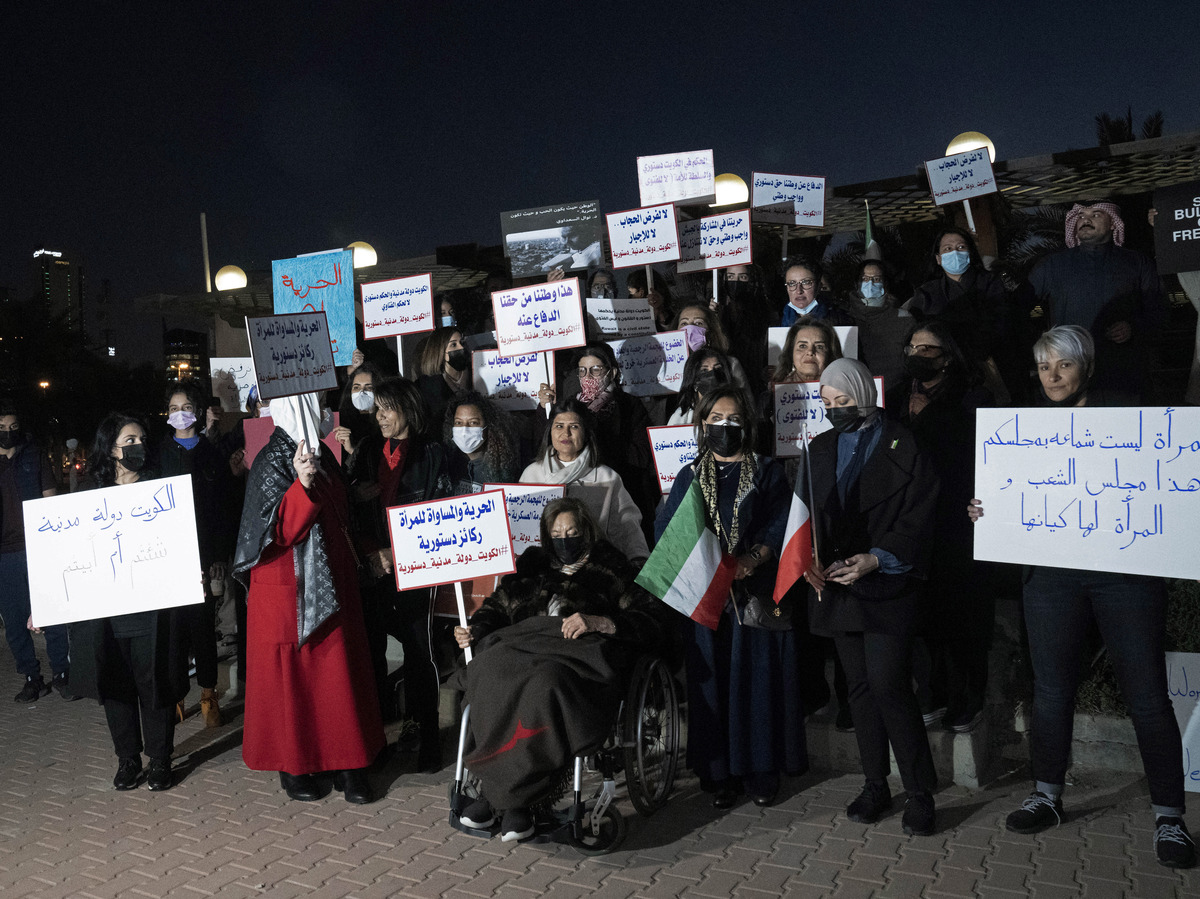
As we witness the tides of modern civilization sweeping across the globe, there remains a glaring paradox: the persistent subjugation of women in many contexts. In the heart of the Gulf, the Kuwaiti judicial system stands as a stark reminder of this dissonance, denying fundamental rights to women at the very moment when the world seems to be inching closer to equality. Feminism’s fight is not merely about rights; it’s a relentless pursuit of recognition, respect, and authenticity. The Kuwaiti court’s recent decisions reverberate beyond its borders—they challenge the very foundations of what we deem acceptable in our quest for gender equity.
The Kuwaiti court has repeatedly been a battleground where systemic misogyny rears its ugly head. With steely defiance, it has denied women the fundamental rights that ought to be universally acknowledged. Such decisions serve not only to strip women of their autonomy but also to foster an environment where patriarchal ideologies ascend, perpetuating the cycle of oppression. Women in Kuwait, and indeed across the globe, must grapple with the remnants of an archaic system that views them as lesser beings. This isn’t just a legal issue; it’s a moral scandal.
As society stands at a crossroads, should we merely observe this travesty or mobilize to dismantle the structures that sustain it? More importantly, we ought to question why the injustices suffered by these women fail to elicit the global outrage they so emphatically deserve. Perhaps it is time for the younger generation—a potent force for change—to rise and incite a debate that goes beyond sympathy to actionable solidarity.
Women’s Rights: The Inherent Entitlement
To comprehend the gravity of the Kuwaiti judiciary’s failures, we must first delineate what women’s rights encapsulate. At its core, women’s rights are not a privilege; they are an inherent entitlement, an affirmation of humanity. The right to work, to vote, to access education, and to live free of violence and discrimination are foundational aspects of equality. Yet, the Kuwaiti court does not seem to reflect this understanding. Its verdicts signal a disregard for the dignity and capabilities of women, relegating them to a position of subordination.
Surprisingly, even within a framework that emphasizes Islamic values, the court’s decisions neglect a critical tenet: justice. Many interpretations of Islamic theology advocate for women’s rights, promoting equality within the context of a dignified existence. Yet judicial mires reveal a misrepresentation of these principles—a selective reading that favors patriarchal hegemony. Consequently, the court not only erodes the rights of women but also distorts the essence of its own cultural and religious doctrines. This is a profound disservice to both women and the society that misjudges their potential.
Unpacking the Cultural Illusion
One of the most debilitating obstacles women face in Kuwait is the persistent entrenchment of cultural norms that equate femininity with fragility. When the court upholds rulings that limit women’s freedoms, it reinforces historical biases that have long presented women as unfit for independence. These cultural illusions shackled women and foster a belief system that prioritizes oppressive traditions over progressive ideals.
This phenomenon is not unique to Kuwait; it is emblematic of a broader cultural dynamic where women are often ensnared in a perpetual struggle to assert their rights against the backdrop of ingrained misogyny. Yet, as contradictory as it sounds, it is precisely within this cultural milieu that a new kind of feminism can emerge—a feminism rooted in the reclamation of identity and the reassertion of autonomy.
This form of feminism demands that women refuse to absorb the toxic narratives imposed upon them. Young Kuwaiti women are increasingly awakening to the travesties of their legal system. They are leveraging social media platforms to expose injustices and rallying support from the international community. An empowered generation is critical in this struggle. They hold the power to reshape discourse, redefine cultural norms, and mobilize collective action. It is not enough to resist within the confines of one’s national borders; true progress is achieved when we join forces across the globe.
Legal Framework: Aesthetic Justice or Authentic Equity?
A cursory glance at Kuwaiti law reveals a disconcerting paradox: a legal framework that possesses the aesthetic of modernity yet lacks authentic equity. The presence of laws intended to uplift women exists alongside draconian measures that entwine women’s rights with family honor and societal expectations. This duality manifests in a legal labyrinth where women find themselves entrapped in red tape rather than empowered to reap the benefits of their supposed rights.
The legal system must be dissected, as superficial changes can mask the underlying inequities. When courts perpetuate a cycle of oppression, they undermine their own legitimacy. Are we witnessing a true commitment to justice, or is it merely an illusion—a chuckle behind closed doors while the family unit is invoked as a shield against accountability? When women are denied their fundamental rights to inheritance, child custody, and basic agency, it becomes evident that justice remains an elusive ideal.
The liberalization of laws is not sufficient in itself. It is imperative to dismantle the patriarchal narratives entrenched in legal institutions and to cultivate a culture where women’s rights are unequivocally recognized. This shift requires a multi-faceted approach, whereby legal reforms are accompanied by educational initiatives that empower women to demand their rights boldly.
The Path Forward: From Solidarity to Action
The journey toward gender equality in Kuwait is fraught with challenges, yet it is imperative that we embrace a call to arms. The burgeoning feminism among young women can no longer remain a whisper; it must crescendo into a collective roar for change. Allies must also stand firmly beside them, transcending geographical borders to offer support and solidarity.
Solidarity is not merely about raising awareness; it is about empowering each other to take action—whether by protesting, voting, or pushing for systemic change. Highlighting personal stories of women affected by the legal system can be an effective tool for engendering empathy and prompting change. Mobilization is crucial, for when voices unite, organizations flourish, and movements ignite. The age of complacency must end; dialogue must turn into action.
Conclusion: Reclaiming the Narrative
Women in Kuwait, and throughout the world, are more than marginalized voices—they are vibrant agents of change poised to transform narratives steeped in oppression. As attention turns toward the Kuwaiti court’s denial of fundamental rights, let us remember that each denial represents an opportunity for advocacy, solidarity, and action. The tapestry of feminism is not woven solely from tales of triumph; it is enriched by resilience in the face of adversity.
Ultimately, the fight for women’s rights is a fight for humanity—a universal quest that demands our collective resolve. As we engage with the complexities of these issues, let us recommit ourselves to the relentless pursuit of equity. After all, when one woman’s rights are diminished, all of society pays a price. It’s time to elevate the conversation, challenge the status quo, and collectively dictate the terms of our existence. Together, we will rise—our voices, unstoppable.