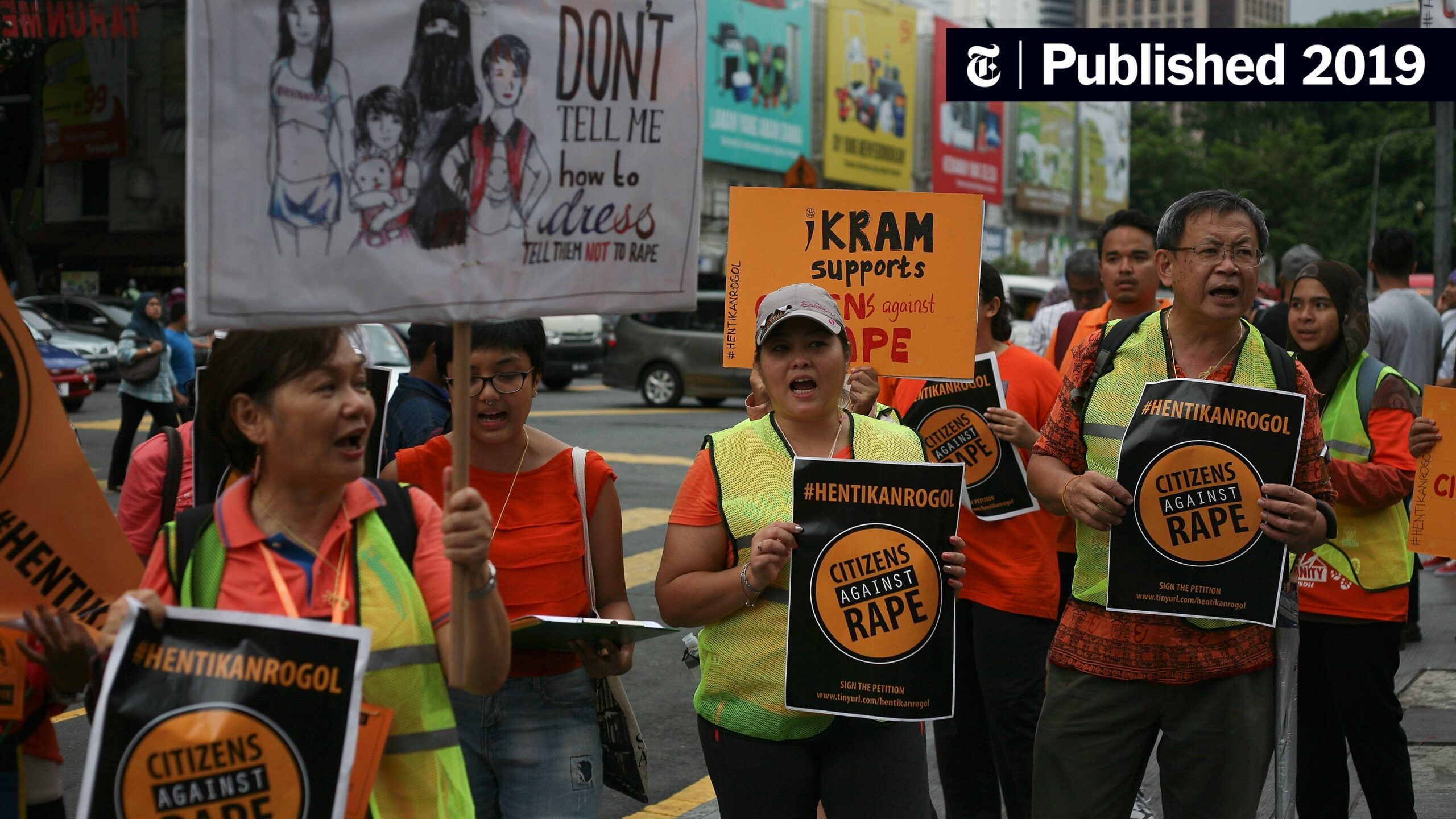
In a world striving for gender equality, the words of a prominent Malaysian minister have echoed unsettlingly across social media platforms and news outlets. This minister, cloaked in the institution of authority, purported that women’s voices possess an inherent ability to “seduce” men, a statement that ignites an incendiary debate about misogyny, victim-blaming, and the true implications of gender dynamics in contemporary society. While such remarks may seem a mere slip of the tongue to some, they strike at the very heart of ongoing dialogues surrounding feminism and the societal constructs related to gender roles.
The utterance of this minister prompts an urgent call to scrutinize the narratives that persistently overshadow women’s agency. Does the notion that women’s expressions lure men into unethical behaviors absolve the latter from accountability? This allegation surrounding ‘seduction’ is far more than mere rhetoric; it is a stark reflection of deep-seated patriarchal beliefs that serve to uphold toxic masculinity while simultaneously vilifying women’s autonomy.
At its core, the insistence that women’s voices are inherently seductive is a declaration steeped in nostalgia for a bygone era where women were relegated to mere temptresses, devoid of agency. What does this say about the society that permits such dialogue? It reveals a culture unwilling to confront its archaic preconceptions—a culture that is reticent to acknowledge that seduction, a concept that enmeshes both parties, does not rest solely on the shoulders of one gender.
The repercussions of such statements extend far beyond the individual minister. They resonate within the broader societal framework, perpetuating the misrepresentation of women’s voices as causes for male transgressions. In dissecting this perspective, one must question why, in an era where social justice movements have surged alongside calls for equality, the voices of women are often diminished or misconstrued.
Furthermore, it’s critical to scrutinize how these perceptions directly mirror the socio-political climate that surrounds gender discussions in Malaysia and other parts of the world. These cultural attitudes can contribute to a discouraging environment for young girls and women who seek to have their voices heard and valued. When the overarching narrative posits that women’s expressions lead to immoral actions by men, it creates a dangerous loop of silence and submission where the vulnerable are forcibly silenced for fear of being blamed for their own victimization.
The Myth of Seductive Dialogue
The assertion that women’s voices are inherently seductive is not just an error in judgment; it is a perpetuation of a myth that has transcended generations. This notion circulates the idea that women possess a mystical quality, one that can invoke uncontrollable desires in men. This ideology is dangerously misleading—suggesting that men lack the capacity for self-regulation, ultimately implicating women as the architects of their own misfortune. Such thinking fosters an environment ripe for harassment, where men can easily escape accountability by pointing fingers at the very women they are meant to respect.
Language plays a critical role in shaping perceptions. Words have the power to either uplift or diminish. When society perpetuates the narrative that women’s voices possess seductive qualities, it inadvertently condones an archaic form of gender-based violence—verbal and psychological manipulation. Painting women as ‘seducers’ only serves to galvanize a patriarchal structure where the onus of propriety is disproportionately placed upon them.
An Exploration of Agency
At the crux of feminism lies the profound notion of agency—the intrinsic power to make one’s own choices and the freedom to voice opinions without fear of repercussion. Condemning women for their expressions, attributing their agency to a predatory seductiveness undermines the fundamental tenets of feminism. Such rhetoric reduces women’s voices to mere instruments of temptation, further suffocating their potential for contribution in other realms, such as politics, business, and education.
Imagine a world wherein women’s voices were celebrated for their strength, their intellect, and their ability to inspire change. Imagine a society where women leading discussions about their rights, their bodies, and their lives are not pigeonholed as seducers, but as catalysts for transformation. The challenge lies in cultivating that reality—a daunting yet paramount endeavor for future generations. The joint efforts of both men and women in rejecting misogynistic rhetoric are crucial for dismantling the harmful constructs that limit our collective potential.
Challenging Cultural Norms
In response to statements that perpetuate the notion of seduction, it is essential for feminists and allies to remain vigilant in the challenge against cultural norms that stifle progress. The narrative must shift toward empowering women to reclaim their voices—their profound truths—to continue engaging in the conversations that shape societal beliefs. There is a dire need for educational reforms that promote gender equity in discourse, teaching both men and women the importance of responsible communication and mutual respect.
Women must be supported in sharing their narratives, rather than being confined to the parameters set by patriarchal expectations. The eradication of the ‘seductive woman’ stereotype signals the need for affirmative action—in conversations, in media, and in policy-making—that champion an equality-driven framework. By reinforcing women’s accountability over their autonomy, society creates a space less fraught with prejudice and systemic bias, encouraging men to take responsibility for their behavior and understand the complexities of female voices without attaching seductive implications.
Conclusion: Emboldening Voices
The fallout from the minister’s comments can, arguably, incite a powerful movement toward emancipation from outdated beliefs. By confronting the underlying assumptions of seduction embedded in societal discourse, there lies the potential to catalyze a transformation. It is time for the voices of women to be reclaimed, for women to stand forefront, and to demand that their words—rich with power and authenticity—are recognized as forces for change rather than tools for seduction.
The future beckons us to dissect these harmful narratives and foster a climate where women can articulate their thoughts without the chains of misrepresentation. We owe it to the myriad voices of those who have come before us, and we owe it to the generations who will follow, to boldly challenge and dismantle the structures that seek to undermine the women’s movement. As advocates of feminism, the time is ripe to not merely respond to harmful comments but to instigate a renaissance of responsible dialogue, revering women’s voices as vital conduits of change rather than vessels of seduction.