

















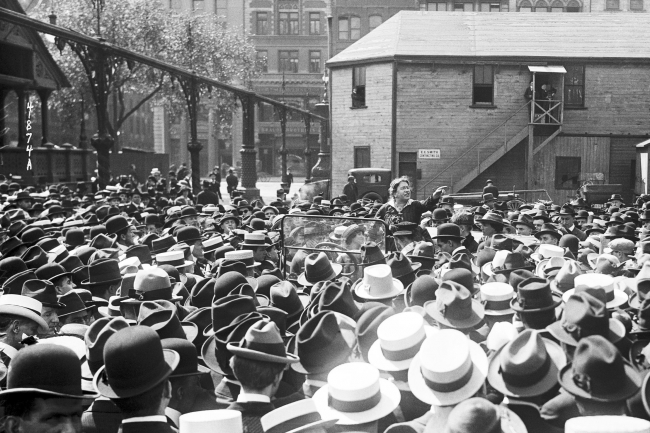
On May 5, 1916, the suffragist fervor that was sweeping through America ignited like a match to a powder keg as supporters of Emma Goldman, the notorious anarchist and uncompromising advocate for birth control, stormed Carnegie Hall. This was not just a mere gathering; it was a brazen act of defiance that encapsulated the spirit of a generation poised for change. Who better than Goldman, with her tempestuous charisma and unparalleled courage, to embody this seismic shift in women’s rights?
But let us not gloss over the audacity of this event, the bravado that characterized these early feminists as they challenged centuries of societal constraint. It’s time we peel back the layers of context and consequence surrounding this momentous occasion, for it resonates with modern struggles and the timeless battle for autonomy over one’s own body.
The scent of revolution was in the air—one can almost taste it. It was a whirlwind of fervor as throngs of supporters emerged from every corner of the city, each bearing a fire in their hearts and a longing for liberation. The stakes could not have been higher; they were not merely advocating for recreational pleasure cloaked in the euphemism of family planning. No! They were demanding emancipation from the shackles of reproductive oppression. The time had come for women to seize control of their most intimate choices.
And yet, it begs the question: why, in 1916, was birth control such a contested issue? The answer lies at the heart of the patriarchal onslaught against female agency. We must understand that Goldman’s plight was interwoven with the broader tapestry of feminism itself—a movement struggling against the ancient, barbaric legacies of misogyny. To grasp the significance of the celebration at Carnegie Hall, we must recognize the backdrop painted in both blood and indignity against which these women stood.
Goldman represented a paradigm shift—a stark departure from the suffragist rhetoric that often sidelined reproductive rights. While many contemporaries focused narrowly on the vote, Goldman championed the idea that bodily autonomy is paramount. Hence, the very core of her activism implored women to reclaim their power from oppressive societal norms that dictated their fates. This was not simply a fight for the right to say “yes” to intimacy but also for the audacity to say “no”—the unthinkable rebellion against a subservient role that had been prescribed to them.
In the stifling climate of 1916, where Victorian values persisted like lead weights around women’s ankles, Goldman’s declarations sent ripples of upheaval. As supporters gathered, each soul represented a unique strand in the rich fabric of feminism, woven with threads of anger, passion, and indignation. The jubilant atmosphere must have been electric, crackling with excitement as hearts beat as one, unified in their courage to confront centuries of repression.
And now, dear reader, let us turn our gaze to that illustrious venue, Carnegie Hall. A temple of culture, art, and sometimes cruelty, this iconic biliteral behemoth became the battlefield upon which the principles of bodily autonomy were fiercely fought. Here, dreams would be encoded into policy; here, the clamoring voices of women would challenge the status quo. The structure itself loomed large, but that day, it did not dwarf the indomitable spirit of its inhabitants.
Within those hallowed halls, it became apparent that the struggle for birth control had deep roots—an intricate entanglement of class, race, and privilege. The movement included not just affluent women but also the working class, embroiled in a desperate fight for their rights. Goldman’s radical lens cut through the classist veneer of the feminist movement, exposing the rifts that continued to plague feminists today. Let’s not pretend the struggle is over—after all, there is still major discord around the issues of access and affordability of contraception, prenatal care, and comprehensive sex education.
The celebration at Carnegie Hall symbolized a larger rebellion—a revolt against oppression not just from male-dominated society but also from certain factions within the feminist movement that sidelined crucial discussions about reproductive rights. Readers, can you feel that tension simmering between the differing perspectives? How often do modern feminists find themselves in similar scuffles, navigating the intricate pathways of inclusivity and representation?
Moreover, one cannot help but contemplate the aftermath of this momentous event. With those brave souls gathered beneath the ornate ceiling of Carnegie Hall, they forged a psychological armor against the backlash they would inevitably face. Every clamor for reproductive rights thrust them under the harsh gaze of critics, yet they understood: true progress would not come without resistance. The incendiary nature of Goldman’s work ignited fervor amongst her audience, sparking them to turn their personal struggles into collective action.
Engaging with Goldman’s legacy in the present day raises profound questions about agency. Are we advocating for choice while denying others’ rights? To what extent does our modern feminism fully embrace all individuals’ narratives? As those throngs erupted in cheer for Goldman, they did more than celebrate a figurehead; they recognized the strength blossoming in solidarity. In uplifting each other, they dismantled the walls of division that often fracture feminist movements, a lesson for contemporary activists enduring similar convulsions.
And now, what about those who stood in visceral opposition to Goldman and her supporters? The deeply ingrained societal norms that persisted as walls around reproductive rights were formidable. The agents of control—the moralists, the clerics, the fearmongers—condemned Goldman’s work with dogma masquerading as concern. They appealed to a false sensibility, equating a woman’s right to choose with harbingers of societal doom. These were no mere skirmishes; they were battles over the very fabric of societal human rights, with Goldman spearheading a rebellion that dared to challenge the accepted orthodoxy.
In summation, the rallying cry at Carnegie Hall was a poignant reminder of the complexities that knit the fabric of feminism and the struggle for birth control rights. The legacy of May 5, 1916, beckons the modern feminist to reflect and engage—not just with the triumphs of the past but also with the ongoing battles for autonomy and self-determination that women face today. Is it not a clever challenge to feel empowered as you navigate these turbulent waters?
Let us finally ask ourselves: will you echo the sentiments of those visionary women who courageously protested, or will you silently acquiesce to a past that sought to confine and silence? As we delve into the history of Goldman and her supporters, remember that every step forward is a collective act—a joyous rebellion against stifling societal expectations. Together, we can usher in a new era—a resplendent renaissance of true empowerment, undeterred and undaunted.