The battle over immigration, particularly in the context of women’s rights, presents a grim landscape marred by legal complexities and socio-political tensions. The recent legal brief filed by Mexico opposing Arizona’s immigration law stands as a clarion call for justice, resonating deeply within feminist discourse. It forces us to confront not only the implications of such laws on Mexican nationals but also the intersectionality of race, gender, and class. The time has come to examine this multifaceted situation through a feminist lens, with an acute focus on the ramifications for women caught in the crossfire.
In grappling with the question of immigration law—and in particular, Arizona’s draconian measures—we must ask: are we witnessing a broader attempt to demonize not just an entire nationality, but also the very essence of feminism? Are laws designed to “protect” one community effectively undermining the rights of women seeking autonomy, safety, and dignity? The answer is a resounding yes, and here’s why.
First, it’s critical to unpack the implications of Arizona’s immigration stance. While the law is ostensibly framed as a means to regulate illegal immigration, its very architecture is predicated on racial profiling. This especially impacts women, who are often the most vulnerable members of immigrant communities. Women face unique challenges—whether it’s domestic violence, exploitation in the labor market, or systemic discrimination—problems exacerbated by policies that remove their rights rather than bolster them.
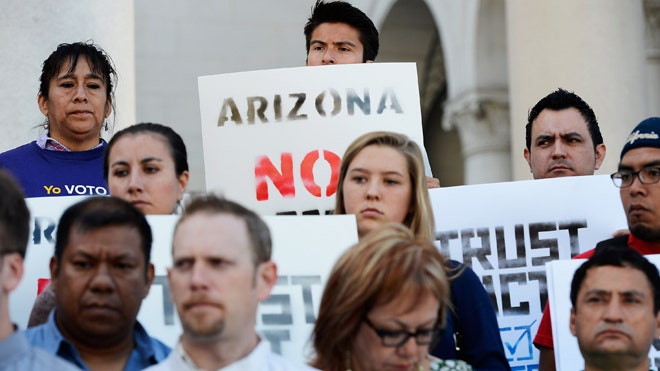
Imagine silhouettes of women, their faces obscured by fear—fear of deportation, fear of speaking out against abuses, and most crucially, fear of being silenced. Arizona’s laws compel these women into the shadows. Feminism, at its core, seeks to illuminate those shadows. By filing this legal brief, Mexico asserts that these laws do not just harm individuals; they erode the fabric of communities. This act of legal opposition serves as a powerful reminder that women must not remain voiceless in a system that perpetuates their oppression.
Furthermore, we must examine the legal discourse surrounding immigration laws and their implications for women’s rights. The very act of marginalizing immigrants feeds into broader societal narratives that define “American-ness” through exclusion. This is a feminist issue because it soon morphs into a matter of identity, autonomy, and bodily integrity for women on the margins. Mexican women, in particular, face multiple layers of disenfranchisement, from cultural stereotypes to economic disadvantage. Laws that target them not only strip away their rights but also serve to perpetuate harmful patriarchal norms within both immigrant and domestic spheres.
Moreover, in recent years, it has become increasingly clear that intersectionality is not just an academic term; it is crucial for understanding the lived realities of marginalized women. The legal brief filed by Mexico highlights this intersectionality by calling attention to the specific challenges that arise from being both an immigrant and a woman. Arizona’s oppressive immigration laws cannot be viewed in isolation. They intersect with broader themes of gender oppression, racism, and economic inequality—exposing the hypocrisy of a system that prides itself on liberty and justice for all while systematically denying rights to those who do not fit a certain mold.
Let’s consider the broader implications of this legal battle. What does it mean for young people today? As they witness the legal system play out, they must recognize that these laws are not simply political maneuvers; they are gross violations of human rights. The youth of today have the power to challenge the status quo, to demand accountability, and to advocate for a more equitable society. They must grasp the nuances between nationalism and xenophobia, asserting that true feminism includes the fight against all forms of oppression, including those directed at immigrant women.
The rhetoric surrounding immigration reform often simplifies a complex issue into divisive categories. But feminism teaches us to appreciate nuance and complexity. It urges us to question the narratives that dominate the public discourse. This legal brief by Mexico does precisely that. It asks us to reckon with the notion that laws have real consequences, that they affect lives, and that they dismantle communities. Feminism is about solidarity, and this legal action calls for solidarity not just among women but also with all marginalized groups challenged by oppressive laws.
Additionally, one cannot ignore the role of public perception in shaping legislation. The images projected through media—often sensationalized and fear-mongering—reinforce stereotypes that citizen and non-citizen women alike must contend with. The portrayal of Mexican women within the framework of immigration has tended to be reductive, often depicting them as either victims or villains. Such dichotomies limit the narrative while failing to acknowledge the resilience and strength intrinsic to these women. Feminist activists must seize the opportunity to redefine these narratives, to showcase the multifaceted lives of immigrant women and their invaluable contributions to society.
So what can we learn from this burgeoning legal battle? First, this moment is ripe for advocacy and activism. Younger generations, armed with social media platforms and community networks, possess the tools to demand justice and push back against regressive policies. They are uniquely positioned to elevate the experiences of immigrant women, to amplify their voices, and to challenge the narratives that seek to silence them.
Moreover, this legal brief encapsulates a profound challenge to feminist advocates: to expand the scope of what feminism means. It isn’t solely about gender equity within one’s nation but also about global solidarity with women who face oppression based on race, nationality, and immigration status. In embracing this perspective, we pave the way for a more inclusive feminist movement that recognizes that every woman’s struggle is interconnected.
To conclude, Mexico’s legal brief opposing Arizona’s immigration law is not just a legal maneuver; it is a formidable cry for justice, echoing through the chambers of feminism. It calls for awareness, advocacy, and action in a moment when silence could prove deadly. As discussions surrounding immigration laws evolve, the feminist movement must adapt and respond, harnessing the collective power of young activists who refuse to remain complicit in the face of injustice. Transformation begins with awareness, and if this moment teaches us anything, it is that a collectively empowered voice can guide us toward a more equitable tomorrow.