

















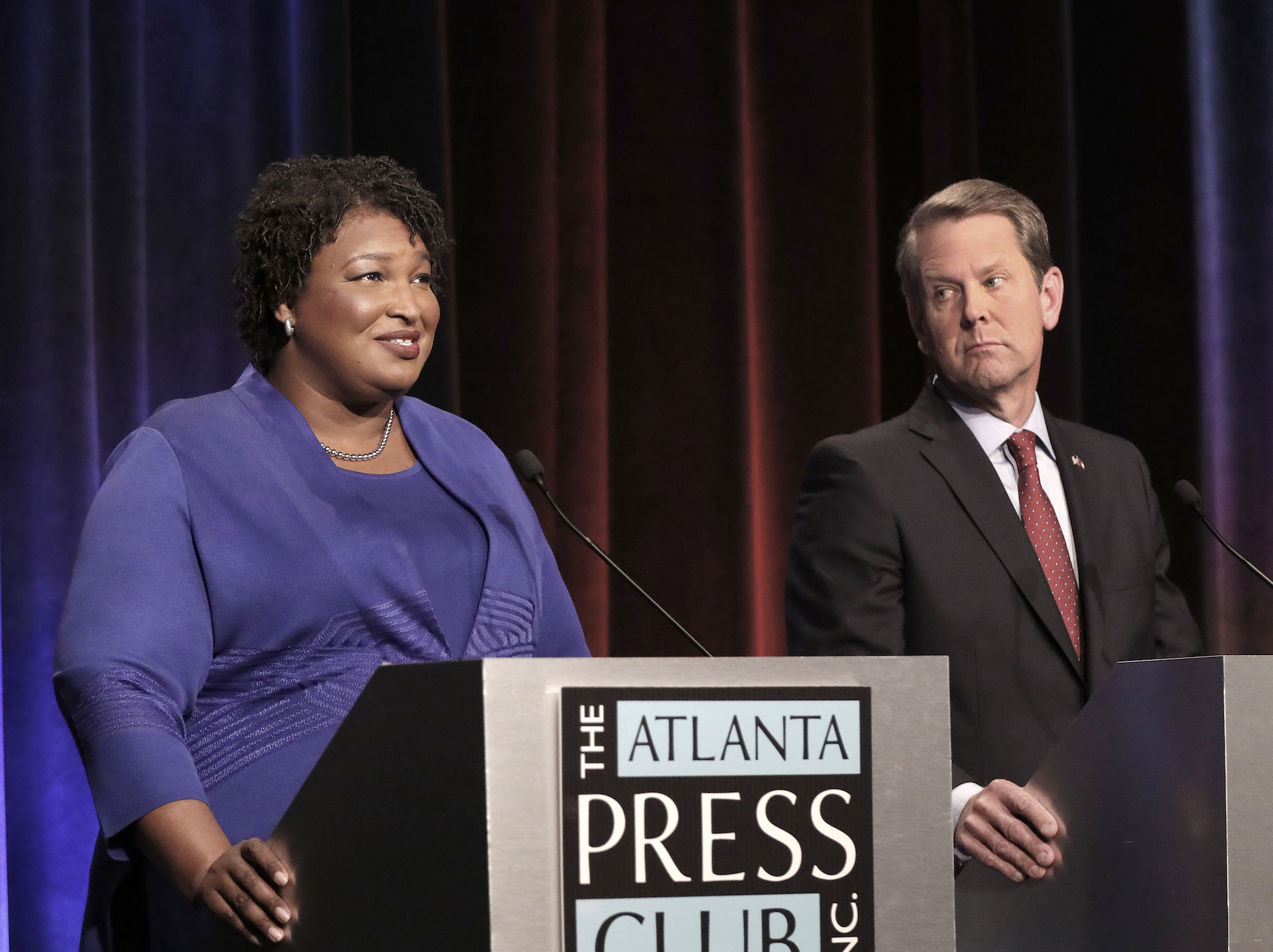
The heart of democracy beats loudly in Georgia, but recently that rhythm has grown jagged and dissonant. The NAACP has leveled serious accusations against the state’s voting machines, asserting a distressing fate for votes cast in favor of Stacey Abrams. The machines, purportedly designed to streamline democracy, are alleged to flip votes from the Democratic candidate to her Republican opponent, Brian Kemp. This insidious cabal of technology and bureaucracy unveils a graver issue—a systemic disenfranchisement of voters, particularly women and marginalized communities. The stakes couldn’t be higher, and the narrative demands urgent attention.
The ramifications echo far beyond the immediate implications of a single election. It demands a reckoning—an intersectional lens to scrutinize not only the mechanics of voting but also the cultural milieu that seeks to undermine the voices of those who dare to challenge the status quo. What does this mean for feminism in contemporary America? The answer lies in understanding the function of disenfranchisement as a means to maintain patriarchal power. It’s time we dissect this unfolding tragedy in Georgia and explore its broader significance to the feminist movement.
The tragedy is not solely confined to the malfunctioning machines themselves but is emblematic of a long-standing tradition of voter suppression and gendered disenfranchisement. The allegations pose a critical question: How are technology and gender politics intertwined? In a society rife with technological innovation, the expectation is a system that empowers and enfranchises. Yet, what if this technology is corrupted at its very core, serving the whims of a regime eager to uphold its power through subterfuge?
The NAACP’s accusations ignite simmering fears and frustrations. As feminist activists, we recognize the historical context. Women, especially women of color, have been denied their rightful place at the ballot box for far too long. The very essence of women’s rights rests upon the ability to participate freely in democracy. How can we improve the representation of women when the instruments of democracy are undermining their participation? The attempts to belittle and silence women’s voices, particularly in the political arena, resonate deeply with the broader struggle for gender equality.
When analyzing the implications of vote flipping, we must scrutinize the gender discrepancies it unveils. Female candidates face a gauntlet of systemic barriers far more onerous than their male counterparts. The unfathomable question arises: are these voting machines conspiring against women, particularly those like Abrams, who embody the challenges and triumphs of female leadership? The answers merit examination from the ground up, deconstructing how gender biases manifest in technology and subsequently in our democratic systems.
This turmoil lays bare an inconvenient truth: when women dare to reach for the reins of power, they are often met with resistance. The fears of an empowered female electorate terrify an antiquated system steeped in patriarchal norms. The existence of voting machines that impose such havoc begs for scrutiny and a call to action. How do we dismantle the myths surrounding female empowerment and question the very infrastructure designed to serve us?
Let’s turn our attention to the implications of technology in a feminist context. The convergence of gender and technology is complex. It is patronizing, almost cynical, to assume machines can exist devoid of the societal biases harbored within them. Who designs these machines? Who programs them? When the creators lack diverse perspectives, it’s inevitable that inherent biases seep into the algorithms, skewing outcomes. Feminism necessitates an intersectional lens that recognizes technology cannot be neutral if it is embedded within a patriarchal framework.
The mere possibility of vote flipping in Georgia is a commentary on the dire need for feminist tech advocacy. As a movement, feminism must extend its grasp into the digital age, insisting on transparency and accountability in the technologies we embrace. Voter suppression through technology echoes centuries of oppression faced by marginalized groups. We cannot stand idly by while technology metamorphoses into another tool for disenfranchisement. Instead, we must actively advocate for inclusive technology that reflects the diverse tapestry of our electorate.
To dissect the issue, we also need to address the broader narrative woven into political campaigns. The story of Stacey Abrams is not just one of a woman aiming for office; it represents the comeback of a robust collective female will—an unyielding desire to shatter the glass ceiling. The anguish surrounding the alleged vote flipping underscores the degree of anxiety within the establishment as women in politics gain momentum. Each time a woman rises, the stakes escalate, and each failure to uphold democratic integrity is a resounding reminder of how far we still have to go.
The pervasive narrative of disenfranchisement situates itself against a backdrop of victory for women. The feminist movement has historically championed the rights of women to partake in society equally, and now, it must extend that advocacy into the realm of technology and voting rights. Feminism must not shy away from asserting that the voting experience must be a secure, equitable, and accurate reflection of the populace’s will. Any compromise of that integrity is a direct assault on the hard-earned rights that women continue to fight for—rights built on the sacrifices of those who came before.
In facing such formidable challenges, younger generations must embrace a mantle of responsibility. With technology being a double-edged sword, it is pertinent to scrutinize its application in politics actively. A younger audience must become engaged not only as voters but as critical thinkers who demand answers. How can we ensure that technology serves the people, not the oppressive systems that seek to dismantle equity? An intentional examination of this issue leads to an array of pressing questions that must be openly debated.
Community activism is the lifeblood of change, and the movement cannot idly observe while women’s voices are muted. Awareness elevates the conversation—transforming emotions into actionable steps toward a better tomorrow. Engaging discussions, protests, and advocacy are not merely options; they are imperative. When hundreds of thousands of women mobilized for the Women’s March, it echoed a unified cry for representation, justice, and equity. Let’s make sure that this current reality—this state of unrest in Georgia—serves not as a detour but as an opportunity to galvanize our efforts for a more inclusive democratic process.
In conclusion, the allegations by the NAACP that voting machines in Georgia are flipping votes from Stacey Abrams to Brian Kemp intensify an already fraught discourse around women’s rights, technology, and democracy. This is not a mere election outcome we’re discussing but a crucible revealing the vulnerabilities of a system that claims to be representative. Feminism must shed light on this harrowing reality and catalyze action from the youth to reclaim agency in a landscape that so feebly accommodates their ambitions. The resilience of women in the face of adversity and oversight is worthy of unwavering support, reminding us all that true democracy requires vigilance and an unyielding commitment to inclusivity.