

















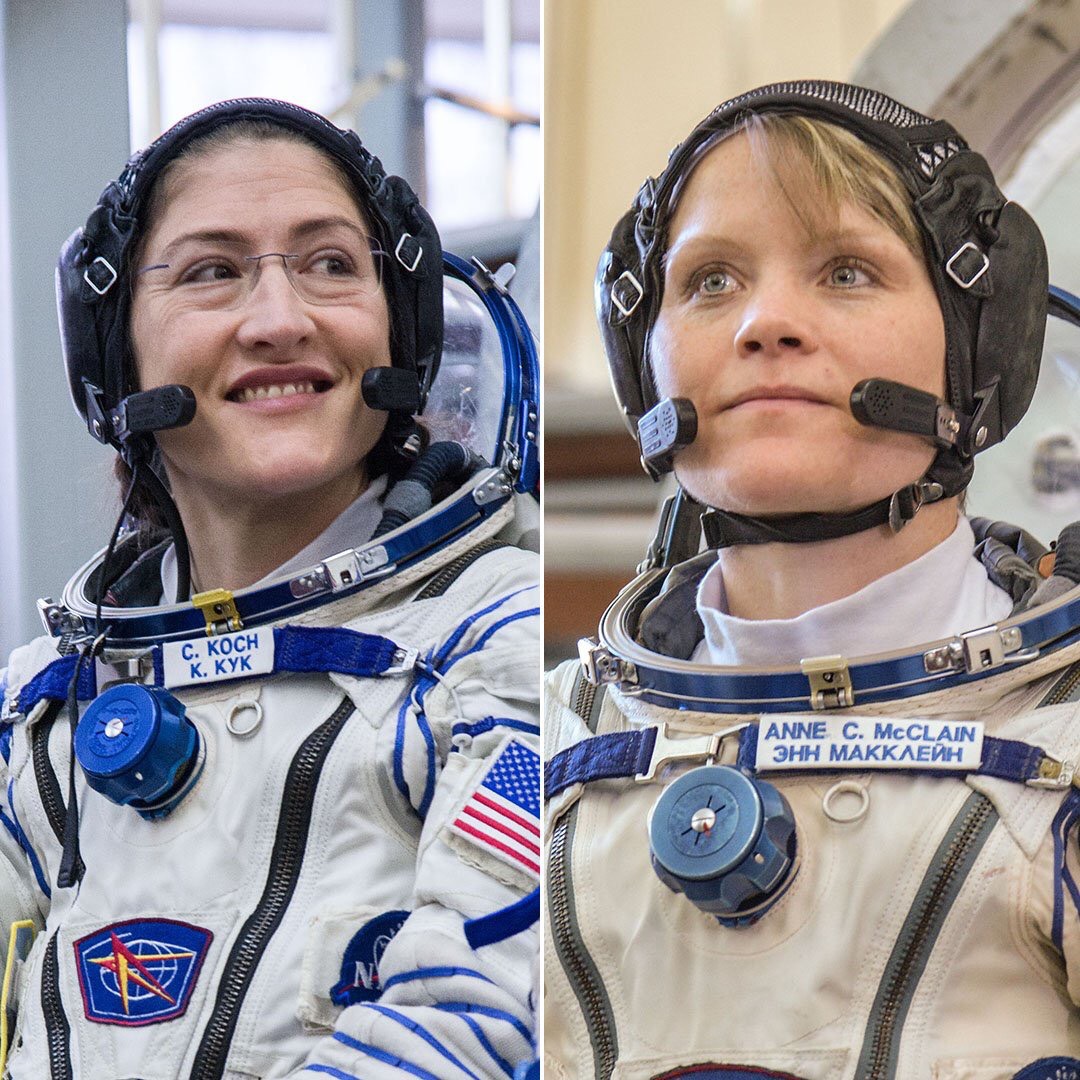
The abrupt cancellation of NASA’s first all-female spacewalk sends ripples of discontent across not just the space community but also the broader feminist movement. This setback symbolizes a deeply entrenched societal issue: persistent gender inequality, even in fields touted for their progressive values. The announcement, attributed to a ‘spacesuit shortage,’ illuminates the pervasive systemic shortcomings that plague women’s advancement in science, technology, engineering, and mathematics (STEM). It’s time to critically examine the implications of this cancellation through a feminist lens.
Why does a spacesuit shortage serve as a microcosm of a much larger problem? It’s not merely an operational glitch; it’s a glaring demonstration of how institutional myopia can marginalize women’s contributions. When we dissect this situation, the question arises: how can a space agency, a symbol of innovation, be unprepared to equip its astronauts, particularly when they highlight the significance of gender representation? Thus, we delve into the conundrum of the spacesuit shortage and its ramifications for gender equality.
Let us peel back the layers of this incident to unveil the multifaceted implications for feminism.
Examining the Underlying Infrastructure: Spacesuits and Gender Inequity
The failure to provide adequately fitted spacesuits for female astronauts is emblematic of a broader cultural dilemma. NASA’s frequent oversight concerning the basic yet vital apparatus needed for all-female missions raises questions about the design and manufacturing processes that often ignore women’s needs. When we consider that women have actively participated in space missions since Sally Ride’s groundbreaking flight in 1983, the systemic oversight becomes even more glaring.
Spacesuit design has traditionally catered to a male demographic, ignoring the physiological differences that women experience. Thus, we must interrogate the industries that manufacture these suits. If these manufacturers failed to account for women’s anatomical needs for decades, are we not witnessing a systemic inequity that is implicitly endorsed at every organizational level? Feminism calls for accountability across the board, urging us to scrutinize how ingrained gender biases can present barriers to women’s success, even in the most futuristic fields.
This failure to prepare is not isolated; it is an indictment of a broader culture in which women’s contributions are often an afterthought. How can we expect young women to aspire to careers in STEM when the very institutions meant to foster inclusivity demonstrate such negligence? The cancellation of an all-female spacewalk, a powerful symbol of gender equity, thus transforms into a stark reminder of the prevailing patriarchal structures constricting progress.
Symbolism and Aspirations: The Strength of Representation
The concept of representation holds profound significance in the feminist discourse. The planned all-female spacewalk was not just a mission; it encapsulated a rallying cry for girls around the globe. It was a testament to the capabilities of women, challenging long-held perceptions that attributing strength and capability to one gender is misplaced. The ambition of having women walk side by side in the vacuum of space should have ignited a notion of relentless aspiration. Instead, the cancellation swathes that ambition in disappointment.
Consider the little girls looking up at the stars, imagining themselves in space, boldly going where no woman had gone before. When their horizon suddenly retracts, reduced by organizational limitations, how might their dreams diminish? The all-female spacewalk was poised to inspire the next generation. Now, it serves as a warning—an acknowledgment that the gender divide in STEM fields isn’t merely an abstract statistic; it is real and tangible. The fight for representation is never solely about numbers; it is about reasserting women’s rightful place in arenas that have historically sought to exclude them. If NASA fails to pave the way, which institutions will take the lead?
A Future Denied: The Psychological Impacts on Women in STEM
Let us not underestimate the psychological repercussions resulting from this setback. Research has shown that underrepresentation leads to feelings of isolation and inadequacy among women in male-dominated fields. The fact that the first all-female spacewalk was so tantalizingly close ignited the hopes of many. Now, it has all but dashed those dreams. The consequences of this cancellation extend into the psyche, threatening to undermine the self-confidence of aspiring female astronauts and scientists.
How are we to cultivate an environment where women feel empowered to pursue careers in STEM if we continue to witness glaring announcements of failure? It’s imperative that institutions like NASA recognize their role in shaping societal narratives. Women need to see entities that not only symbolize hope but also deliver on that promise consistently. If institutions waver, the implications can be devastating—catalyzing self-doubt and perpetuating the cycle of gender inequity.
Turning Back the Clock: The Historical Context of Gender Discrimination in NASA
The recent developments surrounding the all-female spacewalk should not be viewed in isolation from historical patterns of gender discrimination that have characterized NASA’s trajectory. The United States’ space agency, despite its scientific achievements, has not escaped the shadow of sexism. Women in NASA have often faced barriers that male counterparts do not, leading to a deeply entrenched inequity that spans decades.
The narrative of women’s exclusion in NASA is not a relic of the past but an ongoing saga. While great strides have been made, such as recognizing women’s capabilities and talents, this cancellation serves as a reminder that we are still clawing our way out of systemic patriarchy. Are we truly prepared to acknowledge that setbacks like these are often guided by deeply rooted beliefs that women are a secondary consideration?
The future demands a re-examination of our socio-political landscape. If we deviate from discussing the implications of incidents like the failed all-female spacewalk, we risk losing the momentum gained toward gender equity and representation in STEM. It is time we engage in a critical dialogue that acknowledges these systemic failures while committing to rectifying them.
Conclusion: Marching Forward with Unyielding Resolution
The cancellation of NASA’s first all-female spacewalk due to a spacesuit shortage exposes a concerning reality that transcends mere operational shortcomings; it provides an opportunity for transformative change in our societal fabric. Feminism urges us to question why women are persistently underestimated and underprepared, even within the halls of innovation and exploration.
Now is the time to galvanize an unyielding resolve to dismantle the systemic barriers that hinder women’s progress. In its painful disappointment, this incident should serve as a rallying point, galvanizing collective action against the cultural and institutional obstacles that perpetuate gender inequity. As advocates of feminism, we must ensure that this error does not remain locked in time but catalyzes a movement toward a more inclusive, equitable future for every aspiring woman in space.