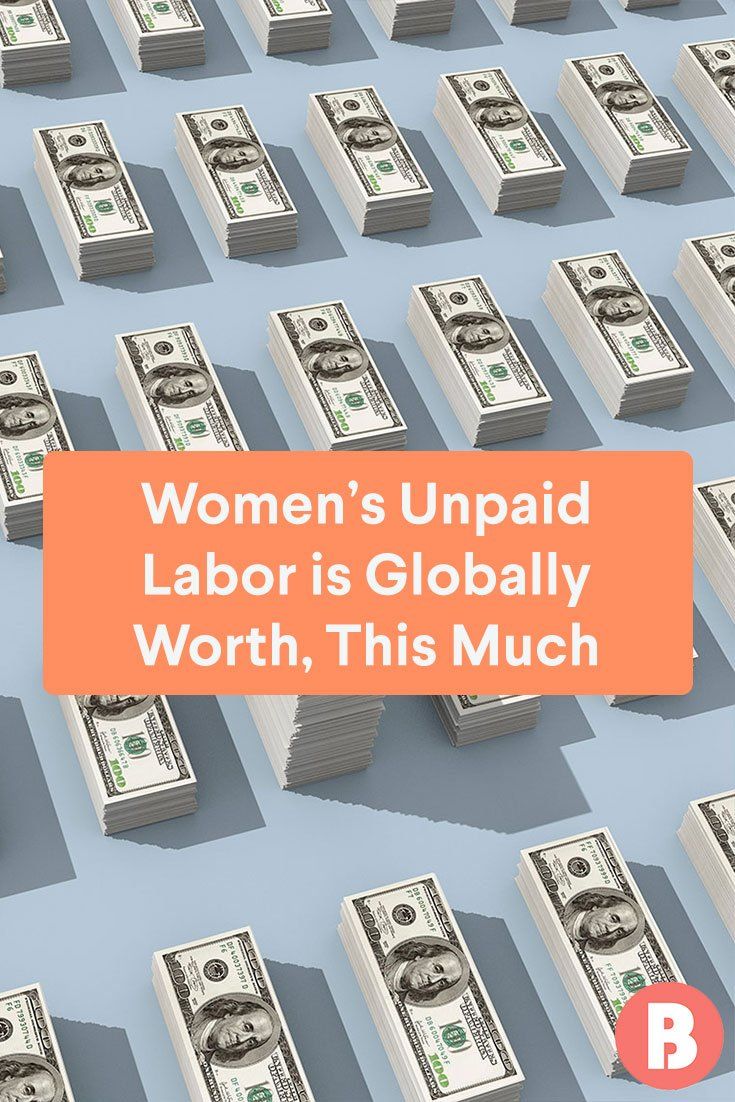
In an era marked by relentless progress and transformative movements, the shadow of disparity continues to loom ominously over women’s labor. A recent Oxfam study underscores the staggering reality that women’s unpaid labor is globally worth a mind-blowing $10.9 trillion. This figure, arresting in its magnitude, beckons us to scrutinize the underlying structures that perpetuate the undercompensation and undervaluation of women’s work. As feminist activists and advocates, it is imperative to unpack the implications of this study, to challenge the status quo, and to forge a new narrative that acknowledges women’s labor in all its forms.
The persistent undervaluation of women’s labor demands a multifaceted examination. We must interrogate the societal norms that dictate perceptions of work, recognize the historical context of gender roles, and bring to light the economic ramifications of ignoring women’s contributions. By doing so, we can better advocate for policies and practices that truly honor and compensate the labor of women.
Economic Analyses: Understanding the Invisible Workforce
At the crux of our discourse lies the notion of “invisible labor.” This term captivates the very essence of what the Oxfam study delineates: the countless hours women devote to caregiving, household maintenance, and informal labor that are systematically rendered invisible in traditional economic analyses. The term “work” is often narrowly defined, sidelining the myriad tasks that sustain households and communities. This exclusion not only skews economic data but perpetuates a cultural narrative that trivializes women’s efforts.
Consider, for instance, the realm of caregiving—a vocation historically and disproportionately shouldered by women. From nurturing children to caring for elderly relatives, the labor involved is Herculean, yet it often garners little recognition in economic discourse. When a child is raised or an elderly person cared for, that labor is crucial to societal functioning. However, it seldom translates into economic benefits or merit. This creates a paradox where the essential nature of women’s work is eclipsed by a financial framework that fails to capture its true value.
This profound undervaluation is exacerbated by the capitalist machinery that thrives on the extraction of labor from marginalized groups. As the wheels of our global economy turn, women find themselves ensnared in a precarious cycle—contributing to the economy through unpaid or underpaid work, all while being denied their rightful economic recognition. This systemic inequity begs the question: How can we recalibrate our economic structures to account for the invaluable contributions of women?
Historical Context: Gender Roles and Economic Disparity
To understand the systemic undervaluation of women’s labor, one must delve into the historical and cultural constructs that shape our perceptions of gender roles. The roots of gendered labor are entrenched in patriarchal societies that have long relegated women to the domestic sphere. This historical legacy persists today, perpetuating the myth that women are inherently suited to caregiving roles, while men dominate spheres of economic production and decision-making.
This socialization begins at an early age, with girls often encouraged to pursue nurturing roles while boys are steered towards positions of leadership and authority. These gender norms not only shape aspirations but also influence economic realities. Women, conditioned to believe their worth stems from nurturing capacities, may limit their engagement with formal labor markets or accept subpar wages when they do participate.
However, we stand at a crossroads. In the face of growing acknowledgment of women’s rights and gender equality movements, the push for change is palpable. The feminist movement has gained momentum, advocating not only for equal pay but also for the recognition of women’s labor in all its forms. To dismantle the prevailing gendered work culture requires an audacious reimagining of these roles and a challenge to the economic systems that uphold them.
Policy Imperatives: Towards a More Equitable Labor Environment
The findings of the Oxfam study serve as an urgent call to action for policymakers. Addressing the inequities in women’s labor requires comprehensive reforms that recognize and value their contributions. These reforms must be multifaceted, addressing aspects from labor laws to social safety nets. For instance, implementing policies that enable paid family leave and affordable childcare services can alleviate the burdens disproportionately borne by women.
Furthermore, introducing measures that promote equitable pay for care work, whether through direct compensation or by recognizing it in economic indicators, is essential. The creation of a formal structure to assess the economic impact of unpaid labor emerges as a vital need. By incorporating women’s labor into GDP calculations or similar benchmarks, we confront the invisibility that currently shrouds their contributions.
Moreover, corporate social responsibility must evolve beyond token gestures. Companies should cultivate an environment that not only promotes gender diversity but also compensates all labor equitably. Equity audits can be instrumental in identifying disparities within organizations, fostering accountability, and challenging discriminatory practices. An investment in equitable labor practices is not an expense; it’s a catalyst for sustainable economic growth.
Shifting Perceptions: Changing the Narrative Around Women’s Labor
Perhaps the most insidious aspect of women’s unpaid labor is the societal narrative that surrounds it. The pervasive framing of caregiving and domestic responsibilities as voluntary or merely “natural” dismisses the profound expertise and effort intertwined in these roles. It is imperative to confront and reshape these narratives, elevating the discourse around women’s labor and emphasizing its significance as foundational to societal functioning.
As champions of feminism, it is our duty to advocate for cultural shifts that celebrate caregiving, domestic, and informal labor as integral rather than ancillary. Gender-neutral conversations around work must replace language that devalues predominantly female professions. We should advocate for the recognition of women as skilled laborers across all sectors, penetrating the consciousness of both the public and private sectors.
The evolution of societal narratives is buoyed by the power of representation. Highlighting stories of women whose unpaid labor has driven economic progress can illuminate the path forward. Documentaries, literature, and other forms of media serve as conduits for sharing these experiences, engendering empathy and inspiring action.
In conclusion, the compelling data from the new Oxfam study provides an opportunity for introspection and galvanization in the feminist landscape. The realities of women’s unpaid labor must no longer be relegated to the margins; rather, they must be acknowledged as vital contributions to our global economy. It is time for policy reform, cultural shifts, and a reimagining of labor valuation to converge—creating a future where women’s work is recognized, respected, and justly compensated. The world cannot afford to dismiss the labor of women that bolsters society as a whole. Let us forge ahead, resolute in our commitment to challenge injustice and advocate for equity in women’s labor.