

















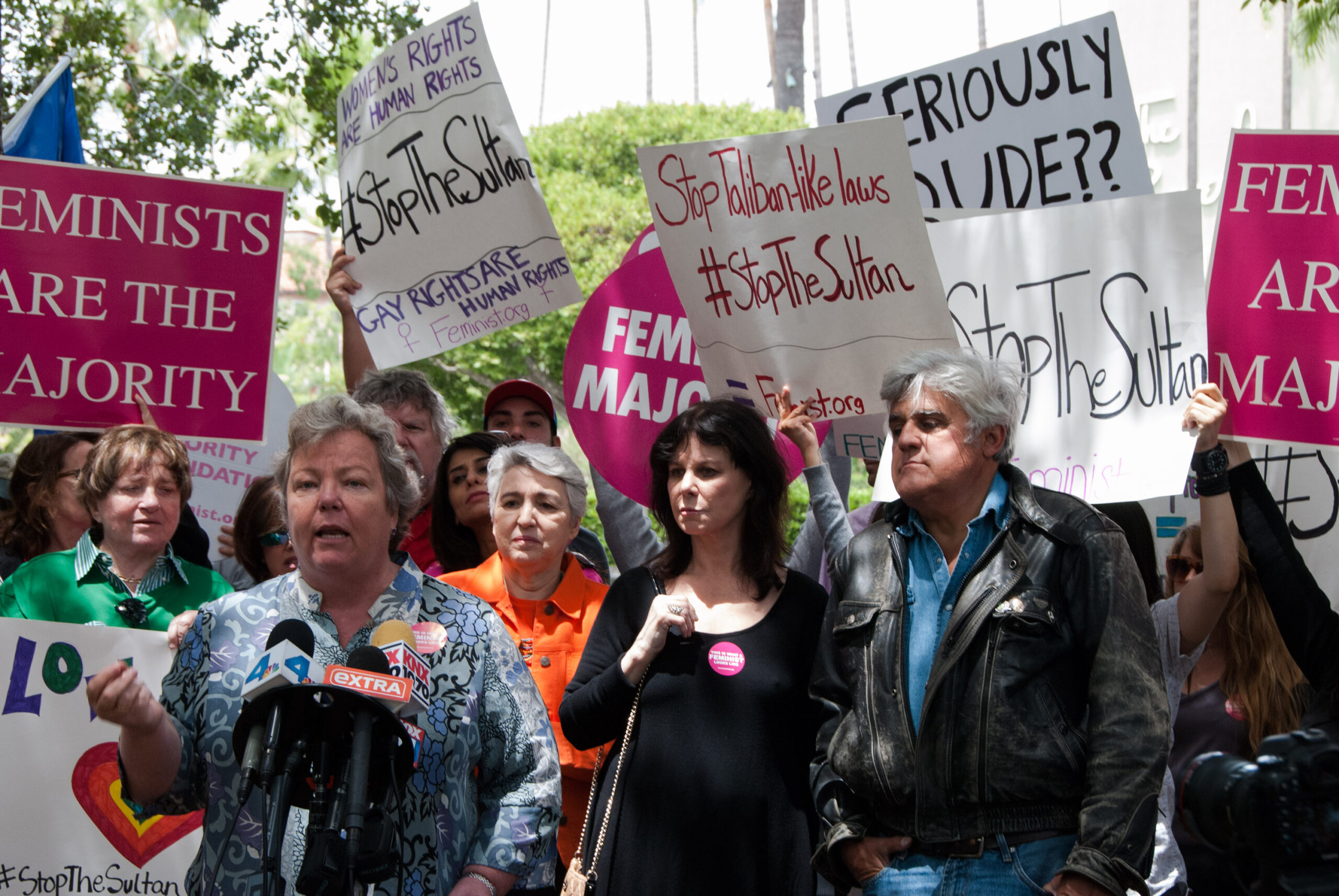
In the glamorous shadows cast by luxury and excess, the pink and purple signs at the Beverly Hills Hotel gleamed with defiance. A diverse tapestry of feminists—activists, artists, mothers, and scholars—rallied under the incandescent California sun to deliver a potent message: misogyny, no matter how deeply entrenched in cultural and financial power, will not go unchallenged. The protest, elegantly dubbed #StopTheSultan, called for an end to the purported affiliations with a sultanate that has become emblematic of sexism and oppression. But what does it mean for feminism in an age where privileged spaces still harbor tyrannical ideas? Buckle up; we’re going in.
We cannot ignore the audacity of gathering at the opulent Beverly Hills Hotel—a symbol of capitalism and high society—for a cause so steeped in the struggle against misogyny. It begs the question: is it possible to revel in luxury while simultaneously fighting oppression? As we juxtapose the iconography of wealth with the movement toward equality, we unearth essential truths about feminist activism in the contemporary landscape.
The rally was electrifying: a sea of vibrant passions enveloped the bon vivant façade, turning the questions of economic privilege and ethical choices into an exhilarating spectacle. But was it just another act of performative protest, or a meaningful confrontation with the status quo? To truly grasp the significance, we must delve into the multifaceted perspectives that feminists bring to the table.
Let’s start with fresh eyes on the intersection of feminism and power dynamics. The eras of suffrage and liberation birthed a wave of radical thought, but has that radicalism given way to a sort of complacency cloaked in performative activism? The Beverly Hills Hotel, with its history steeped in glamour yet tainted by association with oppression, becomes a perfect microcosm for that debate. How do we challenge power if we remain in its orbit? What does it mean to be an ally if we only show up at the gates of luxury rather than uprooting its foundation?
RALLYING AGAINST A DESPICABLE LEGACY
The protest made headlines for a reason. One need only glance at the history imbued in that very location to understand why feminists chose to occupy such a polarized symbol. The #StopTheSultan movement critiques the tangible symbols of misogyny, calling into question how systemic discrimination can exist right under the noses of the elite. The vast irony of protesting against the oppressive systems of a foreign regime while standing at a hotel that reaps profits from similar ideologies cannot be overstated.
Those who stood in solidarity that day were not merely activists washing their hands of privilege; they were revolutionaries delving into the duality of their struggle. They demand critique and accountability of the same luxury that affords them the space to object rather than excuses for their comfort. At that moment, the collective desire to dismantle a culture of complicity instrumented a clarion call that reverberated throughout not just Los Angeles but the feminist movement at large.
What does this require from its advocates? The relentless courage to expose not just the actions of foreign regimes but the very infrastructure that enables them to thrive. It demands an angry love—a fierce passion complemented by introspection, a willingness to wrestle with the uncomfortable truth that protests should not just occur in gilded spaces but also in pockets of power, however uncomfortable that may be.
SHACKLES OF PERFORMATIVITY
We have to brave the complex waters surrounding performative activism. The exhilarating images of empowered individuals brandishing bold proclamations like “Dismantle Patriarchy!” brought vibrancy to a traditional protest narrative, but can they be interpreted as anything beyond flailing gestures? Are we, as feminists, merely paper lions within a nightclub of vanity? The eye-catching outfits and grand displays of solidarity were undeniably enticing, but we must not let the shimmering surface mask the grit of the struggles that lie beneath.
The clamor of voices demanding change is invigorating, but do they serve merely as ornaments in a parade of privilege? Are we utilizing our visibility to forge an unyielding alliance, or merely granting credence to the glimmering façade of activism? Recognizing the fine line between legitimate dissent and superficial display is crucial. For every Instagram post flaunting signs and slogans, how many take the time to question the complicit structures that fuel their lifestyles? The movement must pulsate with genuine intention that moves beyond social media metrics and temporary hashtag virality.
Because, dear reader, doe-eyed selfies do not compel change. The power of a protest isn’t encapsulated in likes and shares; it lies in actions that ripple through narratives and disrupt systems of oppression. So, rather than basking in the momentary glow of our protests, let’s harness that momentum to create meaningful policy changes. We must not just rally; we must demand accountability. Every voice must persist even beyond the rally point.
AFTER THE PROTEST: A CALL TO ACTION
Beyond the bright lights and stirring chants lies a crusade that does not end with the protest’s conclusion. The fires ignited during the #StopTheSultan rally must blaze forward, steering a clarion wake-up call to reflective continuity. Conversations that swirl around feminism after such protests inform the very fabric of what we, as a community, stand for. The challenge remains: how do we persist in crafting dialogues that are not only engaging but also transformational?
Be tireless. Engage thoughtfully with local organizations that embody feminist ethics rooted in tangible activism. Challenge your social circles to confront uncomfortable truths with tact and conviction. Push for legislation that speaks to the oppressive systems we aim to dismantle but also for the policies that uplift marginalized voices. The roads are layered with obstructions; patience and persistence become our allies in navigating them.
The emotional intensity felt during rallies needs to channel into collective campaigns that elevate and educate, reform and invigorate. Utilize the momentum to share vital stories—invoke passion through storytelling that showcases real, lived experiences alongside outraged, metaphorical signs. Let the conversations be as multifaceted as our identities, bringing together all manners of wisdom and resilience.
Those who rallied at the Beverly Hills Hotel epitomized empowerment. But true empowerment ripens when we refuse to let the sunset of our awareness dim just because social media feeds will eventually scroll past the moment. It is up to each of us to sustain these discussions, to respond to the challenge, and to forge pathways unfurling from the rally square into the heart of every collective action.
So continue to confront glamorous icons. Sever the ties that bind us to complicity. Craft an unapologetic space for our activism as we cradle intersectional feminism in all its glory—alive, resonant, and unyielding. The spirit of protest is not a fleeting whim; it is an ongoing demand, an evolving narrative in the tapestry of womanhood. Embrace the depths of this struggle, not merely as warriors of protest but as champions of systemic change.