

















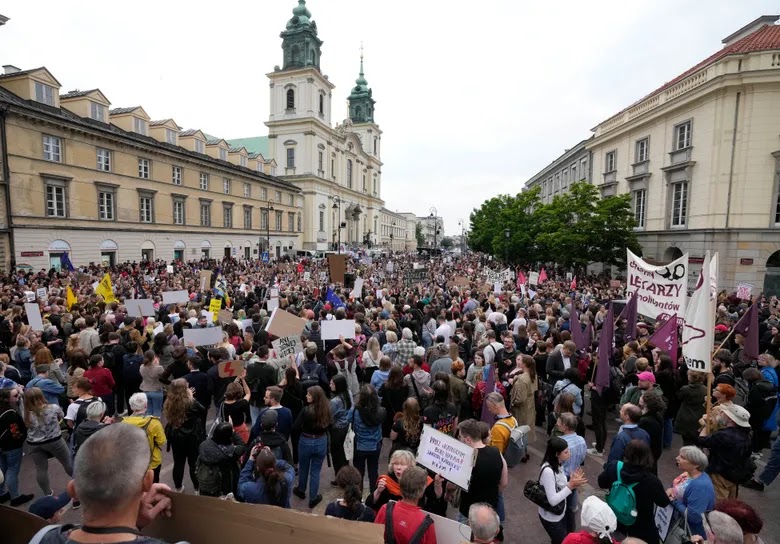
The clamorous streets of Poland have become a battleground. The clash of ideologies reverberates as Polish women have intensified their calls to loosen the stringent anti-abortion laws that have long governed their reproductive rights. This fervent movement, emerging from the heart of feminist advocacy, transcends mere legal reform; it embodies a defiant assertion of autonomy, dignity, and human rights. The time has come for a nuanced perspective that delves deeper into the socio-political tapestry of this struggle, one that challenges societal norms and dares to envision a future unshackled from archaic constraints.
The Context: A Regressive Legal Framework Stifling Women’s Rights
To comprehend the gravity of the current uprising, one must first appreciate the patriarchal underpinnings of Poland’s anti-abortion laws, which rank among the most prohibitive in Europe. Enshrined in a culture deeply influenced by Catholic doctrine, these laws circumscribe a woman’s right to choose, leaving her vulnerable to moral policing. The ruling party’s unwavering alliance with the Church further entrenches these regressive attitudes, creating an environment rife with stigma and surveillance.
But the legal framework is more than a mere set of codes; it reflects an ideology that reduces women to vessels, stripping them of their bodily autonomy. This is where the feminist perspective sharpens its focus, illuminating the intrinsic link between reproductive rights and broader gender equality. A woman’s right to make decisions about her own body is fundamental, not negotiable.
The Human Face of Reproductive Rights: Personal Narratives of Hardship
As the protests have surged, they have been fueled by haunting personal stories that echo the emotional and physical toll exacted by draconian laws. Take, for example, the case of a woman who discovered severe fetal abnormalities late in her pregnancy but found herself trapped in a Kafkaesque dance of bureaucracy and moral condemnation. Forbidden from terminating the pregnancy, she was forced to grapple with the harrowing choice between carrying her child to term or risking her own health and mental well-being. Stories like hers galvanize the movement, transforming abstract statistics into palpable human experiences.
It is crucial to recognize that the ramifications of these laws are not isolated to individual tragedies. They ripple through families and communities, highlighting the urgent need for societal empathy and understanding. This intimate storytelling doesn’t just inform; it compels action. By sharing their realities, these brave women humanize the debate, dismantling the dehumanizing rhetoric surrounding abortion, often dominated by political dogma rather than genuine concern for women’s health.
The Feminist Response: Solidarity, Activism, and Reimagining Justice
The response from the feminist community has been vibrant and multifaceted. Feminism in Poland is not a monolith; it’s a dynamic landscape that includes grassroots organizations, intersectional coalitions, and digital activism. The importance of solidarity cannot be overstated. As women unite—across class, race, and even age—they forge a communal identity rooted in shared struggles and aspirations. This intersectionality enriches the discourse, ensuring that varying perspectives and experiences are acknowledged and celebrated.
Activism has also taken root in unexpected realms. Social media has emerged as a vital platform, allowing for the rapid dissemination of information and mobilization of protests. Viral hashtags and online campaigns have given voice to those historically silenced and marginalized. The feminist movement in Poland demonstrates that resistance is not limited to physical protests; it expands into the digital sphere, creating a new frontier for activism.
Moreover, envisioning justice in this context extends beyond legal reform. Feminists advocate for comprehensive sex education, universal access to healthcare, and mental health resources, recognizing that genuine autonomy involves dismantling the socioeconomic barriers that inhibit informed decision-making about one’s body. Legal changes must accompany systemic transformations to foster a holistic liberation narrative.
The Global Context: A Ripple Effect of Resistance
Polish women’s struggles cannot be entirely understood in isolation; they resonate with women worldwide grappling with similar patriarchal legacies. The anti-abortion movement, emboldened by conservative resurgence in various nations, is a stark reminder that the fight for reproductive rights is far from a concluded chapter. Feminists across the globe are watching closely, learning from Poland’s defiant stand, as these women embody the tenacity required to confront institutional injustices.
The parallels are stark when examining similar movements across continents. In the United States, the recent Dobbs v. Jackson Women’s Health Organization decision has intensified the discourse on bodily autonomy. Activists invoke Poland’s fight as a cautionary tale—demonstrating how quickly hard-won rights can be eroded. This global interconnectedness highlights not only the solidarity among activists but also the urgent necessity of vigilance and resistance against regression.
Visions for the Future: Shaping a New Era of Reproductive Freedom
Looking ahead, the movement for reproductive rights in Poland is poised to ignite discussions that extend beyond the immediate battles. What does a post-reform society look like? How can Poland, in its quest for liberation, become a beacon of hope for others entrapped in similar struggles? The future of reproductive freedom in Poland must integrate broader feminist principles that promote not only the right to choose but also the right to comprehensive healthcare and empowered reproductive decisions.
Furthermore, there lies an imperative for an inclusive dialogue that amplifies marginalized voices within the feminist movement, particularly those of women of color, working-class women, and LGBTQ+ individuals. Their experiences are equally valid and crucial for shaping a holistic narrative that advocates for justice in its myriad forms.
In envisioning policies that reflect these values, Poland might also consider models from countries that have successfully expanded reproductive rights. Free access to contraceptives, comprehensive sex education, and supportive healthcare systems are pillars worth emulating. Understanding and implementing these principles could transform Poland into a truly progressive nation regarding women’s rights.
Conclusion: The Power of Defiance
Polish women’s resolute stand against oppressive reproductive laws illuminates a path forward that other nations may well find inspirational. Their fight transcends mere legal adjustments; it encapsulates a transformative vision for a society where women’s rights are enshrined as human rights. As they march forth, wielding their experiences and voices, they carve a narrative of strength, resilience, and demand for justice.
The world watches—bearing witness to a declaration that will resonate across borders. Polish women are not just advocating for their rights; they are embodying a collective struggle that reverberates in solidarity with women everywhere, igniting a fervent call for systemic change that honors the sanctity of choice and the power of bodily autonomy. This is feminism in action, raw and unapologetic—a poignant reminder that the quest for justice is both a personal and collective endeavor, with the power to reshape societies.