

















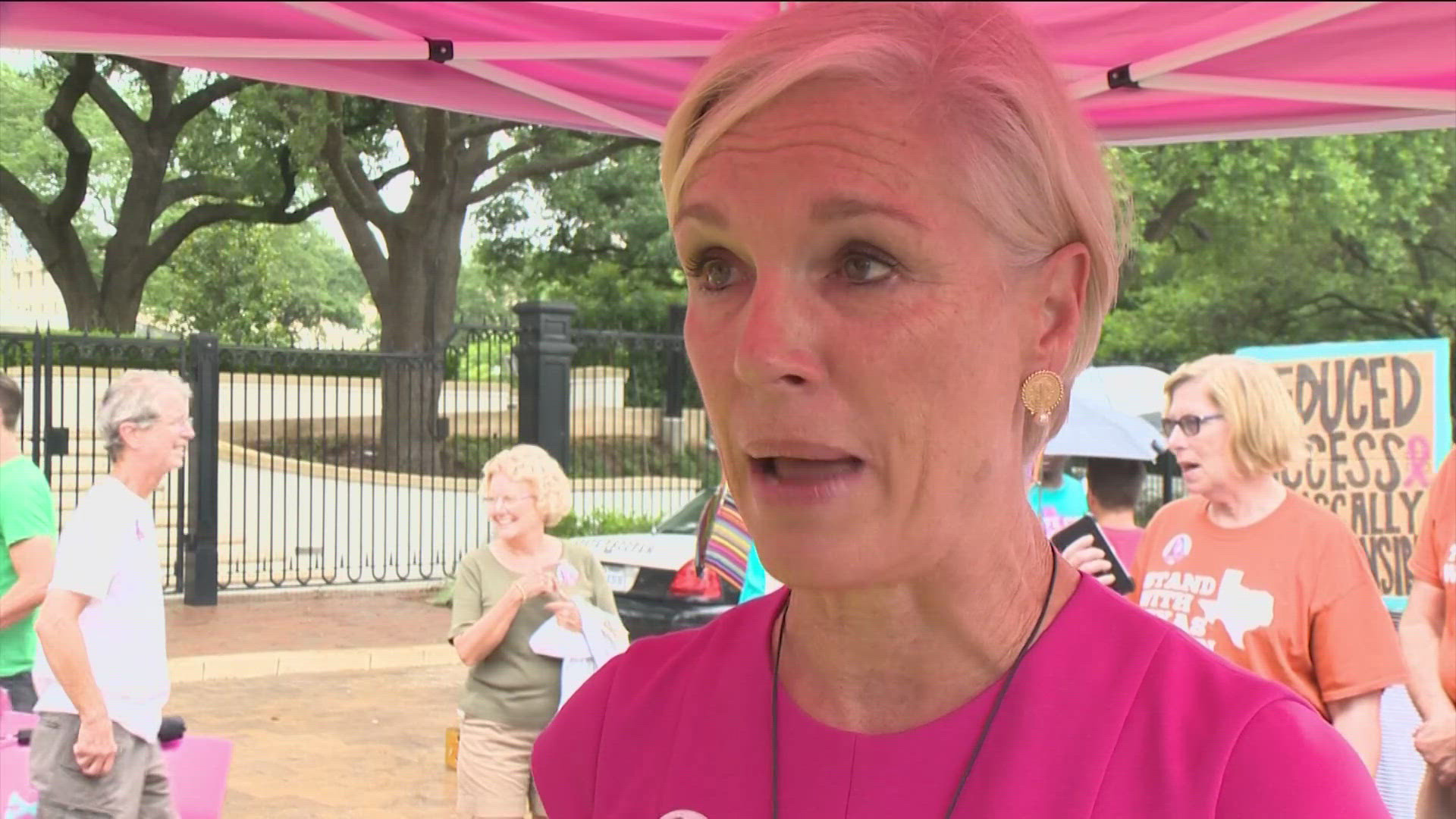
In yet another of what seems to be an endless cycle of loss among those who bravely champion women’s rights, the passing of Cecile Richards has reverberated throughout the feminist community. At the age of 71, this prominent abortion rights advocate’s death prompts not only mourning but a critical examination of her legacy, the implications of her work, and the road that lies ahead for the movement she so fervently supported. In an era where reproductive rights are perennially under siege, Richards’ contributions demand our attention, appreciation, and urgent reflection.
The Legacy of a Warrior: Cecile Richards and the Fight for Reproductive Rights
Cecile Richards embodied the spirit of a feminist warrior. Serving as the president of Planned Parenthood for over a decade, she defended a woman’s right to choose with tenacity and strategic acumen. Under her leadership, Planned Parenthood not only fought legal battles but effectively galvanized a grassroots movement that championed education, access, and health services for women across the nation. Raising awareness around reproductive health issues, Richards challenged societal norms that sought to portray abortion as a taboo subject, advocating fervently for its normalization as an essential facet of health care.
But what truly set her apart was her ability to galvanize. Richards recognized that the fight for reproductive rights was not merely about legislation; it was about people, communities, and narratives. She harnessed storytelling, an underutilized tool in activism, to underscore the real-life implications of reproductive health policies on women’s lives. With Richards’ passing, we must assess how her narrative tactics can inspire future generations of feminists to speak their truth and engage with empathy while demolishing stereotypes and dismantling stigma.
Gender Politics: The Broader Implications of Her Fight
Richards’ death comes at a time when gender politics are increasingly polarized. The struggle she waged is not solely against anti-abortion laws; it is a central facet of a larger, more profound quest for gender equality. Access to reproductive health services is inherently tied to economic justice, body autonomy, and personal agency—issues that are firmly rooted in feminism’s foundational principles.
Today, as the Supreme Court tips precariously towards potentially overturning precedents such as Roe v. Wade, the battle that Richards fought becomes even more poignant. Her work illuminated the intersectionality essential to the feminist struggle. A comprehensive understanding of women’s rights must account for race, ethnicity, sexual orientation, and socio-economic status. Richards understood the importance of inclusivity, highlighting that reproductive access isn’t just a women’s issue—it’s a societal issue. Her death urges urgent renewal in our collective feminism, insisting on an intersectional approach that comprehensively addresses the struggles faced by women across different spectrums.
Empowerment vs. Stigma: The Dissonance in Women’s Reproductive Health
The dichotomy between empowerment and stigma remains a central theme in the rhetoric surrounding reproductive health. Richards fostered a narrative where women could take ownership of their choices without fear or shame. Yet, the stigma around abortion still lurks insidiously in the background, influencing healthcare policies and personal choices alike. Empowerment in this arena is far from unequivocal, as many women continue to face societal ostracism for choosing to terminate a pregnancy.
The unfortunate reality is that the stigma does not simply evaporate with the loss of an advocate. Cecile Richards’ legacy is, therefore, not merely a celebration of her achievements; it is an urgent call for continuing the fight against the stigma surrounding abortion. Future activists must emphasize normalization through education and open discourse, leveraging Richards’ courageous stance as both armor and inspiration. It compels us to create environments where women are not only informed but also assured in their decision-making processes, free from judgment.
The Future of the Movement: Who Will Fill the Void?
As we reflect on Richard’s impact, an inevitable question arises: who will step into the void left by this formidable leader? The feminist movement is a tapestry woven from countless voices, yet the loss of strong frameworks leaves a palpable gap. The necessity for new champions arises in these moments of transition—individuals who can galvanize support, inspire movements, and uphold the principles that Richards fervently defended.
It is critical for emerging leaders in the reproductive rights movement to not only embrace the principles of accessibility and choice that Richards epitomized but to adapt and evolve these messages for contemporary audiences. The digital landscape offers unprecedented opportunities for engagement—social media campaigns, virtual activism, and interactive platforms can be harnessed to amplify voices, particularly those of marginalized women. The onus falls upon upcoming advocates to ensure that the conversation around reproductive rights remains vibrant, committed, and, most importantly, inclusive.
Richards’ Vision: A Call to Action
In honoring Cecile Richards, we must avoid romanticizing her narrative into a neat, consumable summary of triumph. Instead, it is imperative to recognize the complexities and backlashes that characterize the realm of abortion rights. Ongoing legislative challenges and societal stigmas must be seen not as isolated incidents but as intricate parts of the rich, multifaceted struggle that defines feminism today.
This isn’t merely a moment of commemoration but a clarion call to action. Each one of us has a role to play in shaping the future of reproductive rights. Advocacy can take many forms: volunteering, donating, educating, or simply having open discussions with friends and family. It is imperative to plant the seeds of compassion, knowledge, and understanding within our community, drawing inspiration from the narrative, vitality, and courage that Cecile Richards embodied.
In conclusion, like all great leaders, Cecile Richards leaves behind a complex legacy fraught with challenges and opportunities. Her story is not just one of accomplishments but is interwoven with continual reminders of the struggles ahead. The feminist movement needs a renaissance of identities, ideas, and actions—her contributions serve as both a compass and a rallying cry. This journey for reproductive rights is ongoing, and while we mourn Richards’ departure, we also commit ourselves to persist in her fight with renewed vigor and fierce determination. Collectively, we must ensure that the discourse around reproductive rights remains vibrant and empowered, as we continue to advocate for a world where every woman can navigate her choices unencumbered by stigma and surrounded by support.