

















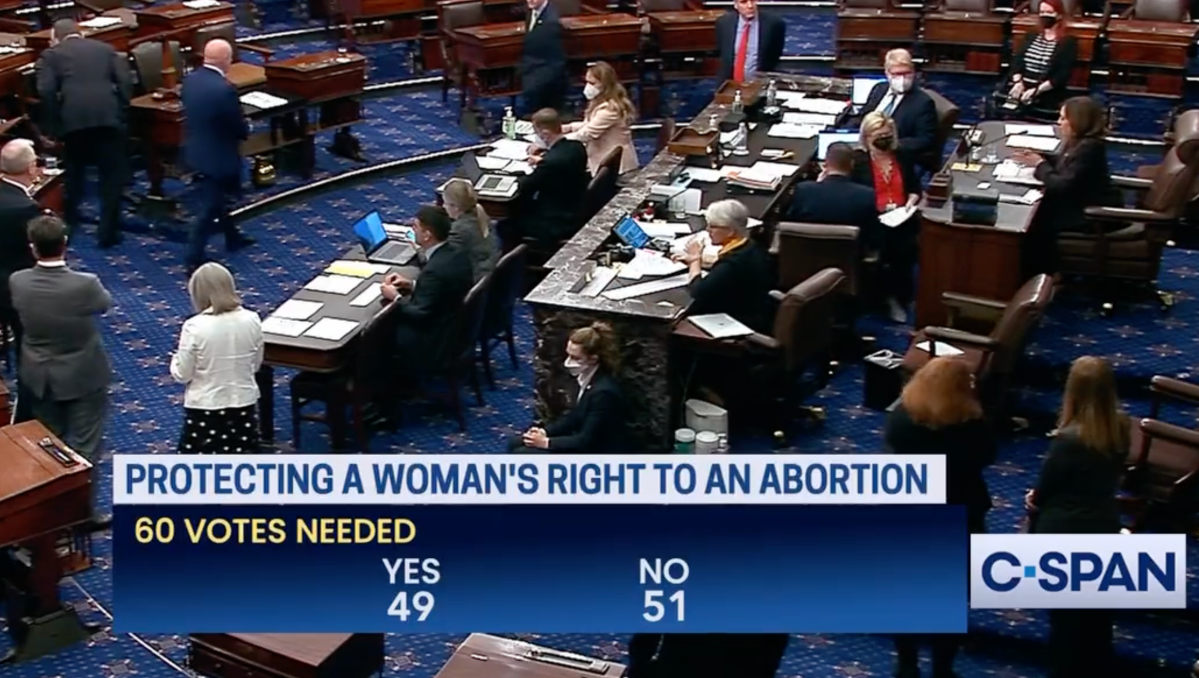
In a gripping display of political resilience, the U.S. Senate has weathered the relentless pressure from the anti-abortion lobby, marking a noteworthy stand for reproductive rights in a country embroiled in a tumultuous debate. The alignment of the Senate against regressive measures not only underscores the potential for legislative progress but also illuminates the broader societal ethos that upholds women’s autonomy over their bodies. From a feminist perspective, this moment serves as both a milestone and a clarion call for ongoing vigilance in safeguarding the rights that have been hard-won through decades of advocacy.
The stakes are astronomical. At its core, the battle for reproductive rights transcends mere policy; it is a manifestation of the broader struggle for gender equality. As lawmakers navigate the complex interplay of personal liberties and legislative fiat, it becomes increasingly apparent that the implications of these decisions resonate deeply within the fabric of feminist ideology. The Senate’s determination to thwart anti-abortion initiatives is not merely a political maneuver—it is, in fact, a restoration of agency to those who have historically been marginalized in reproductive conversations.
To comprehend the significance of the Senate’s refusal to capitulate to anti-abortion extremism, one must first analyze the tenets of feminist thought that underpin reproductive autonomy. The right to choose constitutes a fundamental aspect of bodily integrity, a principle which asserts that individuals possess sovereign authority over their physical selves. This existential autonomy is increasingly threatened by draconian laws that seek to curtail reproductive options. Thus, the Senate’s stance reveals an inherent understanding of the intersectionality of rights, whereby reproductive freedom becomes a battleground for broader social justice issues.
Furthermore, the implications of the Senate’s decisions reverberate far beyond the legislative chamber; they inspire grassroots movements championing women’s rights and bodily autonomy on multiple fronts. The repudiation of oppressive legislation promotes an environment where feminist activism thrives, galvanizing communities to unite in their pursuit of equality. Organizations advocating for reproductive rights find renewed vigor as they mobilize supporters in response to legislative attempted overreach, fostering a sense of solidarity that has historically led to tangible change.
Despite this momentous progress, it is imperative to critically assess the dimensions of the Senate’s resistance. The political realm is often riddled with pitfalls of complacency and distraction. While triumph over the anti-abortion lobby is commendable, it is essential to demand comprehensive reproductive justice that addresses the needs of the most marginalized within our society. The conversation must center not just around the right to choose, but also around equitable access to healthcare services, education about reproductive health, and economic security for those who bear the brunt of these policies. Intersectional feminism insists upon an inclusive approach that recognizes and tackles the compounded injustices faced by women of color, low-income individuals, and LGBTQ+ communities, thereby reinforcing the necessity for a broad-based coalition in the fight for reproductive rights.
As we examine the ramifications of the Senate’s bold decision, we must also acknowledge the power of public sentiment in shaping policy. The collective voice of constituents—imbued with the fervor of activists, parents, and concerned citizens—has proven pivotal in amplifying demands for reproductive justice. Polling data consistently illustrates a burgeoning majority of Americans who favor reproductive choice, creating a fertile ground for legislative representatives to uphold such principles. The Senate’s resolve can thus be seen not only as a defiance of the anti-abortion lobby, but as a reflection of the democratic process responding to the evolving perspectives of its constituency.
Moreover, the Senate’s stand invites introspection regarding the role of ethics in politics. Reproductive rights counselors and activists must cultivate a critical dialogue that delves into the moral considerations surrounding abortion. While the anti-abortion lobby often weaponizes morality to influence public opinion, feminists must articulate a nuanced ethical framework that respects individual choice while addressing the socio-economic implications of unwanted pregnancies. Engaging in this discourse will elevate the conversation, inviting those who might be swayed by emotional appeals to understand the complexities inherent in the issue. This can pave the way for transformative norms around morality that are inclusive rather than restrictive.
However, it is crucial to remain vigilant. History has taught us that progress is seldom linear. The anti-abortion lobby is notoriously tenacious, employing various strategies to undermine reproductive rights, including judicial appointments and state-level legislation aimed at dismantling protections. These tactics represent a systematic erosion of rights that demand unwavering scrutiny and activism. The permanence of legal protections can be easily compromised by political tides, hence the collective responsibility is to ensure that the narrative surrounding reproductive rights remains at the forefront of public consciousness.
To outpace the anti-abortion lobby, feminist movements must leverage modern technology and social media platforms to disseminate information and mobilize support. The digital landscape offers unprecedented opportunities for organizing, offering tools for activists to forge connections, educate the public, and advocate effectively for reproductive freedom. It is essential for contemporary feminists to embrace these innovations, utilizing them to create an informed electorate that actively defends reproductive rights against the incursion of regressive policies.
In conclusion, the Senate’s firm stance against anti-abortion lobby pressure encapsulates a significant victory for the feminist movement and serves as a reminder of the power of cohesive advocacy. Yet, this moment should not breed complacency among advocates; instead, it ought to ignite a fervent commitment to pursue a comprehensive vision of reproductive justice. The persistence of oppressive ideologies necessitates an unapologetic, intersectional struggle—one that engages allies across diverse demographics and confronts the profound systemic inequalities that continue to undermine women’s rights. By amplifying our collective voices and demanding unwavering commitments to reproductive autonomy, we can ensure that victories are not merely fleeting moments in legislative history, but rather the foundation for lasting change.