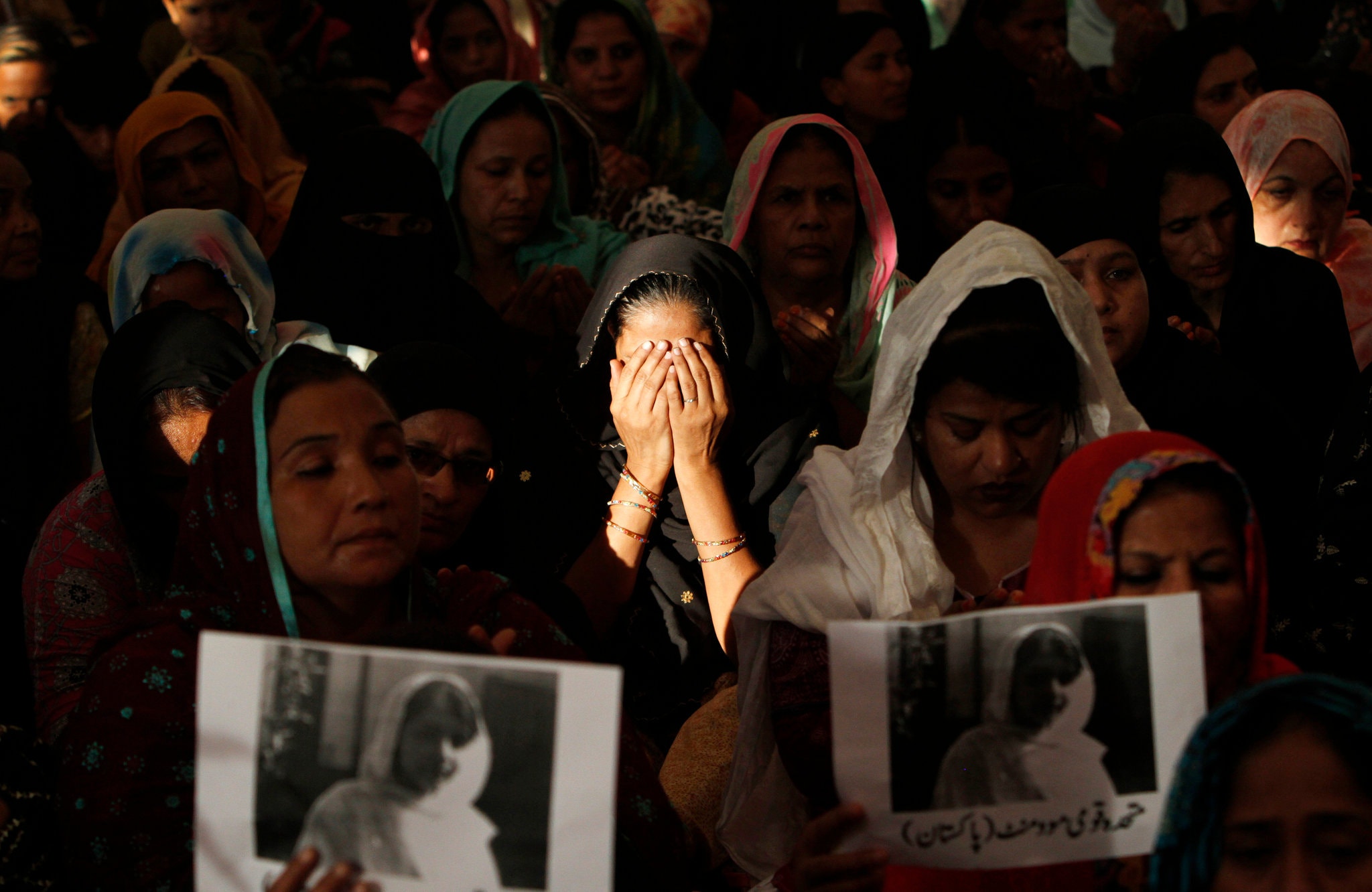
In a world cloaked in myriad shades of injustice, the act of violence against women is a searing reality that echoes far beyond borders. Recently, an astonishing, yet disheartening incident surfaced in Pakistan, where a beauty salon became the scene of a dreadful act perpetrated by extremists who targeted women seeking a moment of respite and self-expression. This brazen attack not only sends ripples of horror through the collective conscience but also serves as a grim reminder of the persistent struggle women face in the pursuit of autonomy and recognition. Through the lens of feminism, this incident demands a thorough examination of its multifaceted ramifications.
To truly grasp the depth of this violence, it is imperative to contextualize its implications in the broader societal fabric. The attack is not merely an isolated act of terror; it is a calculated assault on the very essence of womanhood, personal freedom, and the increasing agency women are carving out within patriarchal societies. This violence is emblematic of a fear that extremists harbor: the fear of empowered women who dare to transcend the constraints of their prescribed roles.
The Societal Nexus: Beauty and Agency
Beauty has long been relegated as a superficial pursuit, often dismissed by critics as a frivolous endeavor lacking substance. However, within the framework of feminist discourse, beauty takes on a wholly different significance; it becomes a potent locus of agency and expression. For countless women, visiting a beauty salon transforms into an act of asserting individuality, embracing self-care, and fostering community. A woman who adorns herself does so not simply for the gaze of others but as a profound statement of self-love and defiance.
The beauty salon, often regarded as a sanctuary of sorts, offers women the chance to reclaim a semblance of control in their lives—a rare opportunity in spaces where their identities are often overshadowed by societal expectations. By launching an assault on such havens, extremists aim to dismantle this burgeoning femininity, to instill fear, and to perpetuate a narrative of subservience. The act goes beyond violence; it is a grotesque illustration of the lengths to which patriarchal forces will go to regress women’s rights and silence their voices.
Repercussions on Community: The Ripple Effect of Violence
The repercussions of such an attack extend far beyond the immediate physical harm inflicted on the victims. The psychological and emotional toll on the broader community reverberates through families, neighborhoods, and society at large. Women, embroiled in an ongoing struggle against societal constraints, may feel dissuaded from entering public spaces or pursuing self-empowerment. This self-censorship, born from fear, undermines decades of hard-won progress.
Moreover, the attack amplifies the cycle of oppression, compelling women to retreat further into their shells, which only serves to embolden those who perpetrate such violence. The very act of intimidation fosters a chilling atmosphere where women are systematically coerced back into societal roles dictated by their male counterparts. This insidious dynamic inadvertently reinforces sexist norms that dictate what women should aspire to—a chilling regression in the fight for equality, which should concern every arm of society.
The Intersectionality of Feminism: Class, Culture, and Identity
Feminism is not a monolith. It is essential to recognize the distinct layers of identity, culture, and class that intersect within the dialogue around violence against women. The attack on the beauty salon is not merely a critique of gender; it reflects broader systemic inequalities that plague Pakistan. Women from varying socio-economic backgrounds experience violence and discrimination differently; their realities are shaped by a tapestry of intersecting oppressions. Thus, it is crucial to engage with feminist activism through a lens that considers these myriad perspectives.
Understanding the ways in which class and culture interact with gender allows for a more nuanced perspective on the implications of such violence. For instance, a woman from an affluent background may have more opportunities to seek refuge or support networks than a woman from a marginalized community. However, when both are subjected to violence, the outcome is often the same: a society shackled by fear and oppression. Thus, solidarity among women of differing backgrounds becomes imperative, for unity is strength in the face of adversity.
The Role of Men in Feminist Activism: Allies or Enablers?
As we dissect the layers of this heinous act, it is crucial to consider the role of men within the feminist movement. The narrative often positions women as solitary figures battling against a myriad of systemic issues, while men are presumed to be mere antagonists. However, such a binary oversimplifies a complex dynamic. It is vital to engage men as allies in the fight against gender-based violence, challenging the societal norms that dictate masculinity and reinforcing the notion that men too must take a stand against misogyny.
Men have the power to redefine gender norms by actively opposing the ideology that perpetuates violence against women. They can challenge their peers, educate themselves, and advocate for systemic change rather than allowing the status quo to persist unchecked. This evolution requires an introspective approach where men recognize their privilege and commit to dismantling oppressive structures that harm not just women, but society as a whole.
The Path Forward: Advocate, Educate, and Empower
In the aftermath of violence lies an opportunity for advocacy that transcends the individual experience of pain. For those committed to the feminist cause, the imperative to educate and empower becomes paramount. Initiatives focusing on women’s rights, community support systems, and educational programs can pave the way for systemic change, challenging the dominant narratives that have long subjugated women in societies like Pakistan.
Change cannot occur in isolation; it requires collaboration among grassroots organizations, activists, policy-makers, and communities. The voices of those affected must be at the forefront. As we mobilize efforts to combat gender-based violence, it is essential to emphasize the importance of intersectionality within feminist activism, ensuring that all women’s experiences are recognized and validated.
Ultimately, the shots fired at the beauty salon are not simply a horrific incident to be chronicled; they are a clarion call to action. We must refuse to be silenced in the face of terror. Feminism demands that we challenge, confront, and dismantle the structures that perpetuate violence against women. It is a movement that requires every voice—loud, defiant, and unyielding—in the pursuit of a world where freedom, agency, and beauty are not privileges to be earned, but fundamental rights for all.