In the contemporary educational landscape, a glaring absence looms large over college campuses: the need for on-campus child care. As feminist activism burgeons within academic institutions, the Student Leadership Alliance has taken a bold stand, advocating for progressive change that addresses the unique challenges faced by student parents. No longer can we ignore the overwhelming pressures faced by student caregivers, particularly women, who bear the brunt of societal expectations. The urgency of this issue cannot be overstated; colleges must prioritize on-campus child care services as a fundamental aspect of their support systems, not merely as an ancillary benefit.
Defining the Student Parent Experience
Imagine a determined student, juggling multiple responsibilities: attending lectures, completing assignments, and perhaps holding down a part-time job, all while nurturing her child. The role of student parents, predominantly mothers, is characterized by relentless balancing acts and an incessant battle against societal stigma. These women often face insurmountable odds, such as financial strain and emotional exhaustion, as they strive to succeed academically and provide a stable environment for their children. The emotional toil of being both a caregiver and a student creates an unshakeable tension, yet it remains largely invisibilized within campus dialogues.
With nearly one in five college students in the U.S. being a parent, the time for change is now. The Student Leadership Alliance recognizes the exigencies of this demographic, calling for structural reforms that include robust child care programs on campuses. This is not merely a demand for convenience; it is a rallying cry for equity. The absence of child care services directly exacerbates systemic inequalities, particularly for marginalized groups, making it essential for institutions to step up and break down barriers.
Transforming Campuses into Family-Friendly Environments
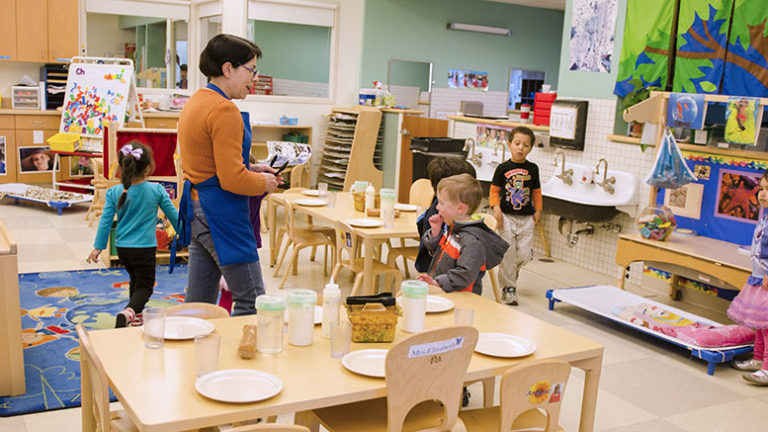
Institutions must be envisioned as family-friendly sanctuaries where diverse lifestyles are acknowledged and supported. The current paradigm—where access to child care is often relegated to off-campus locations, riddled with logistical challenges—must evolve. Imagine a future where bustling campuses are dotted with child care facilities, equipped not just with the basics, but designed with the needs of modern families in mind. The very architecture of educational institutions should reflect inclusivity and support, fostering a culture that empowers rather than ostracizes.
When colleges provide on-campus child care, they send a powerful message that student parents are valued members of the academic community. This initiative is not limited to mothers; it also recognizes the role of fathers and guardians who are equally committed. Investing in child care is a transformative action that could ultimately reshape the very fabric of academic life. It has the potential to disrupt the antiquated notions of gender roles, championing a dynamic exchange of parental responsibilities.
The Challenges of Navigating Educational Institutions
Beyond the logistical nightmare of securing child care, the stigma attached to being a student parent often proves to be a formidable obstacle. Motherhood, in particular, is frequently perceived as a hindrance to academic success. This pervasive stereotype can lead to feelings of isolation, alienation, and guilt among student parents. They may worry that their commitments at home will overshadow their educational pursuits, which can discourage them from participating fully in campus life—or worse, compel them to withdraw altogether.
By providing accessible on-campus child care, colleges can dismantle these prejudiced narratives. Child care services not only aid in alleviating day-to-day stressors but also normalize the presence of student parents in academic spaces. They become integrated members of the community, breaking down the barriers that have historically marginalized their voices. The dialogue shifts from one of exclusion to inclusion, generating an atmosphere where diverse experiences are woven into the educational tapestry.
Barriers to Implementation: Why Aren’t We There Yet?
Despite the clear advantages of offering on-campus child care, many institutions remain resistant to making this necessary investment. Financial constraints often top the list of excuses, but the real question must be posed: What are the costs of inaction? The hidden costs of not supporting student parents extend far beyond just lost tuition revenue; they encapsulate the talent and potential that goes unrealized when parents are forced out of education.
Moreover, the debate over resource allocation often highlights another layer of the issue: the prioritization of traditional student needs over those of non-traditional students. This systemic bias perpetuates ideas that certain student identities are more ‘deserving’ of support than others. Making the case for child care as a strategic investment requires advocating for cultural change within institutions—a paradigm shift that recognizes the importance of fostering diverse pathways to success.
Change is not merely about policy; it’s about perspective shifts. Colleges need to embrace the revolutionary idea that providing on-campus child care is not a burden but rather an essential service that enriches the educational environment for all. Creating a wider lens through which to view these initiatives is crucial in emphasizing that student parents are an asset to the campus community.
Empowering Student Parents as Catalysts for Change
What if we viewed student parents not as liabilities, but as powerful catalysts for change? The courage they demonstrate in pursuing their education while raising children speaks volumes. Rather than being sidelined, their needs should inform the fabric of institutional policies. They should be at the forefront of discussions about child care services, lending their voices to advocate for a more inclusive educational landscape.
Recruiting student parents to share their narratives can illuminate the urgent necessity for on-campus child care. Schools can establish forums for student parents to connect, creating a supportive community that amplifies their experiences and needs. By championing these voices, institutions not only cultivate empathy but also drive home the point that inclusive policies lead to a richer academic tapestry—one where diverse perspectives amplify our collective understanding.
The Moral Imperative and the Path Forward
The call for on-campus child care is not just a practical request; it is a moral imperative steeped in the values that drive feminism and social justice. To deny student parents the support they need to thrive in an academic environment is to actively perpetuate cycles of inequality and marginalization. We must strive to reshape campus spaces so that they honor the multiplicity of identities and experiences that comprise them.
The Student Leadership Alliance’s advocacy for on-campus child care resonates profoundly within feminist discourse. It beckons a reevaluation of how educational institutions can act as agents of positive change in the lives of student parents. By recognizing the importance of providing child care, colleges are not just meeting a practical need; they are taking a bold stand against systemic biases and advocating for the rights of all students to pursue their education unencumbered by the burdens of their dual roles as learners and caregivers.
In conclusion, the imperative for change is manifest. On-campus child care must evolve from a luxury to a necessity, and it is our collective responsibility to champion this cause. The future is bright. It is time to envision campuses that are alive with the sounds of children playing, harmonious spaces where everyone—students, faculty, and families—can thrive together. Embrace this vision, and let us foster a new world where student parents are not mere survivors of academia, but empowered leaders in their own right.