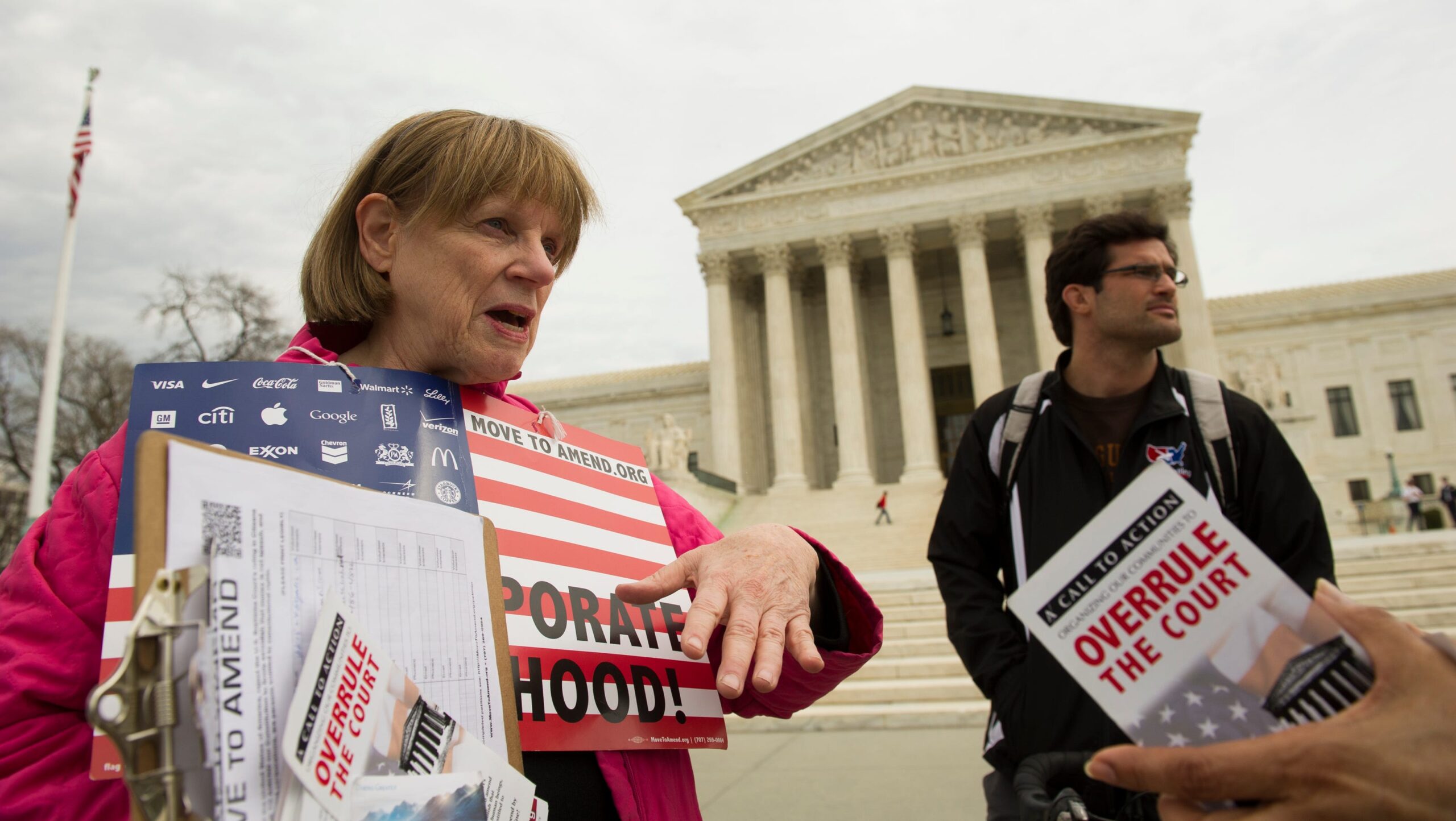
In an era where the struggle for gender equality permeates every facet of societal structure, the recent ruling by the Supreme Court to overturn aggregate campaign donation limits starkly underscores the gravity of economic power in political spheres. This decision ripples through the fabric of democracy, accentuating disparities that have historically marginalized voices, particularly those of women and other underrepresented groups. Herein lies a disquieting paradox: while campaign finance is often framed as an issue of free speech, it is, in actuality, an exercise of power that disproportionately privileges the affluent, thereby entrenching systemic inequalities.
Unchecked financial influence in politics does not just pose a threat; it catalyzes the obfuscation of feminist agendas, dilutes the efforts of grassroots organizing, and jeopardizes the integrity of democratic institutions. The intersection of wealth and political clout is particularly toxic for women, who have long struggled against patriarchal structures that render them voiceless in arenas that profoundly impact their lives. By dismantling limits on campaign donations, the Supreme Court has exacerbated existing inequalities, thereby necessitating a feminist critique of both the decision and its far-reaching ramifications.
The aggregation of political donations heralds an era of ‘big money’ politics, which has the potential to stifle the diverse tapestry of democratic discourse. Women, often underfunded in political aspirations, find themselves navigating a treacherous landscape where their voices are drowned out by the cacophony of billionaire interests. With the scales tilted further toward the wealthy elite, the prospects for candidates who champion women’s rights and equity dim considerably. This decision does not merely affect politicians; it reverberates through neighborhoods, workplaces, and communities, perpetuating a cycle of exclusion that undermines the principles of representative democracy.
The feminist movement has always been anchored in the struggle against oppression, advocating for inclusive representation across all spheres of society. However, if financial barriers to entry for political office continue to erode the candidacies of women, the movement’s momentum will stagnate. The ramifications extend beyond the electoral realm, as policies and legislation reflecting the needs and aspirations of women may be sidelined in favor of agendas that favor the corporate elite. Indeed, this ruling is an affront to the hard-fought gains of those who have labored tirelessly for gender equality, compelling a reckoning with the very institutions designed to uphold democracy.
Moreover, the argument that aggregating campaign donations constitutes an expression of free speech is inherently flawed when juxtaposed with the lived experiences of women navigating the complexities of political engagement. For too long, the narrative has centered on the privileged few who can afford to dominate the political conversation. In stark contrast, the socioeconomic barriers faced by women prevent many from participating in activism, lobbying, or campaigning. This systemic disenfranchisement is neither an accident nor an oversight; it is embedded within the patriarchal structures that uphold existing power dynamics. As such, the decision to dismantle campaign donation limits serves to fortify the very systems that perpetuate inequality, threatening to erase the strides made toward a more equitable political landscape.
Moreover, the pursuit of funding often erodes the authenticity and accountability of political candidates. As they become beholden to the interests of their financial backers, the fidelity to grassroots constituents wanes. Women, particularly those who have fortified the feminist cause with their lived experiences, are often the first to be sidelined when political priorities shift to accommodate financial limelight. The notion that one must “play the game” of corporate donations undermines the very principles of integrity and justice that feminists strive to embed in the political arena.
This ruling facilitates an environment where wealth becomes synonymous with influence, marginalizing those who seek to disrupt the status quo. Feminist politics thrive on challenging inequities, yet in a landscape increasingly dominated by monied interests, the chance for transformative change diminishes. The implications extend beyond individual candidates; they implicate the narratives and policies that shape our society. How can one expect to enact equitable gun control, reproductive rights, and educational reform if female representatives are outpaced by a barrage of capital-driven agendas? The challenge is real and insidious, necessitating a recalibration of how society—or the ruling class—perceives both influence and advocacy.
In dissecting the repercussions of this Supreme Court ruling, we must confront the uncomfortable truth that economics and political agency are inextricably linked. The recent dismantling of financial restrictions on campaign contributions sets a perilous precedent for future generations of women. They are left to grapple with an electoral system that rewards those willing to exploit their monetary clout while dismissing the authentic grassroots movements that have long championed women’s rights. In this regard, the feminist movement must reclaim the narrative, highlighting how the dynamics of wealth in politics intersect with social justice.
Moreover, the discourse on this matter must encompass the broader implications for social fabrics resisting patriarchal oppression. The effectiveness of feminist activism hinges upon broad coalition-building, where diverse voices unite to challenge structural inequities. Yet, when financial barriers overshadow these efforts, the very coalition-building essential for systemic change begins to unravel. The Supreme Court’s ruling could act as a catalyst for mobilization, igniting feminist movements to confront the complexities of campaign finance reform with renewed vigor, or it could stifle hopes for genuine political participation—one reaction hinging on collective resolve.
In conclusion, overturning aggregate campaign donation limits has unleashed a torrent of implications, primarily detrimental to the cause of feminism and equitable representation. Women, as key stakeholders in the fabric of societal progression, must not be relegated to a position of silence amid the roar of financial prowess. This pivotal moment necessitates an urgent response from feminists—a clarion call for collective action, advocacy, and a recommitment to dismantling the economic barriers that have long stymied equality. The fight for women’s rights does not exist in a vacuum; it is embroiled in the broader political struggles that demand fierce vigilance in the face of systemic inequality. It is time to challenge not just the ruling but the structures that permit such decisions to reverberate unchecked.