

















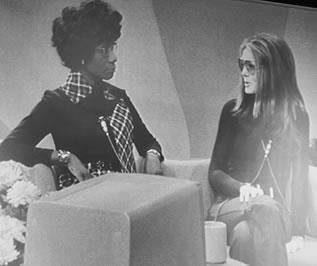
In the landscape of feminism, the confluence of Gloria Steinem and Shirley Chisholm presents a rich tableau that continues to reverberate through modern discourses. Their iconic image, a moment captured in time, stands as a powerful testament to the dynamic interplay between race, gender, and politics. To dissect their joint endeavors is to unravel not just the history of feminism, but also to engage with the complexities of intersectionality. It unveils the myriad ways sexism pervades society, and how these two formidable women tackled it, target by target.
Theirs is not simply a story of camaraderie; it’s a crucible of fervent activism that illustrates the necessity of inclusivity within feminist movements. As we navigate this discourse, it is crucial to acknowledge the multi-dimensional struggles both women faced and to understand that their legacies must inform the feminist movements of today.
In examining their lives and contributions, we delve into the essence of their activism, recognizing that the fight against sexism is not monolithic but rather an intricate tapestry woven from diverse experiences and cultural contexts.
Steinem and Chisholm: A Study in Contrast and Collaboration
At first glance, the juxtaposition of Gloria Steinem and Shirley Chisholm brings to light an intriguing contrast: one a white woman from a privileged background, the other a Black woman who rose from the margins of society. This contrast is not merely superficial; it informs their approaches to feminism in profoundly different ways. Steinem, often heralded as a leader of the second wave of feminism, emphasized equality within existing structures. She harnessed media and public platforms to amplify women’s voices, advocating for women’s rights through a lens heavily influenced by the realities of the predominantly white and middle-class women of her era.
Conversely, Chisholm’s resonance came from her intersectional identity and unwavering commitment to civil rights. As the first Black woman elected to the U.S. Congress, Chisholm approached feminist issues with an understanding that race and gender are inextricably linked. Her famous declaration, “If they don’t give you a seat at the table, bring a folding chair,” encapsulates her philosophy; the fight for representation isn’t just a feminist issue, but a broader battle against systemic racism. While both women sought gender equality, their routes diverged—Steinem negotiated the landscape of feminism with established power structures, while Chisholm boldly sought to dismantle and reconstruct those structures altogether.
Their partnership evolved against a backdrop of societal unrest and burgeoning feminist discourse, creating a fertile ground for collaborative activism. Together, they epitomized the feminist movement’s potential to transcend boundaries. However, the nuances in their frameworks often led to tensions that mirror contemporary debates within the feminist movement itself.
Facing Misogyny: The Weight of Double Discrimination
In their respective journeys, Steinem and Chisholm encountered an omnipresent foe: sexism. However, their experiences were imbued with different layers of discrimination. For Steinem, the struggle focused largely on breaking through the glass ceilings that limited women’s opportunities in predominantly male domains. She faced the skepticism of male journalists and was often sexualized, her credibility undermined by her gender. The question of “Can women lead?” often overshadowed her potent voice. Yet, her ability to articulate feminism’s aims—empowerment, autonomy, and equality—drew a significant following.
Chisholm’s experience, on the other hand, was compounded by race. Her campaign for the presidency in 1972 was not merely a challenge against patriarchal structures but also against deeply entrenched racial biases. Chisholm faced hostility not just from men but from the broader society that viewed her identity as a hindrance rather than an asset. The trials she faced were a stark reminder that feminism must embrace racial diversity to be truly effective. Each woman’s fight illuminated different facets of sexism; Steinem’s narrative is often heard, while Chisholm’s must be amplified within conversations on feminism.
Shared Ideals: The Vision for an Inclusive Feminism
Steinem and Chisholm were united by their vision for an inclusive feminism. Both understood that the fight against sexism cannot exist in a vacuum; it must be intertwined with justice for all marginalized groups. While their strategies may have differed, their commitment to a more equitable society remained steadfast. This shared ideal is the bedrock for modern feminism, which increasingly grapples with questions regarding intersectionality. Their collaboration demonstrated that feminism must evolve to address the multifaceted nature of oppression.
This collaboration serves as a prototype for contemporary feminist movements. Today’s discourse must grapple with issues of race, class, sexuality, and disability. Feminism cannot be a monolithic entity; it must reflect the diverse voices of all women. This is the call to action—embracing a feminism that champions unity, not division, recognizing that the path to liberation is collective.
Challenging the Status Quo: The Legacy of Activism
The legacy left by Steinem and Chisholm is not a relic to be admired, but a dynamic blueprint that encourages ongoing activism. To honor their journey is to ignite fresh dialogue on the current state of feminism. Where Steinem articulated the need for systemic changes within society, Chisholm championed the idea of grassroots mobilization as a counterbalance to institutional limitations. Both strategies remain relevant: the systemic critiques offered by modern feminists underscore the need for legislative changes alongside the urgent call for grassroots activism that propels societal change.
In understanding that feminism must be proactive rather than reactive, the lessons learned from Steinem and Chisholm’s activism can guide contemporary movements. Their commitment to solidarity serves as a reminder that the feminist movement is not without its challenges, and must continue to iterate, confront, and adapt. True change will only be achieved through collaborative efforts that recognize and celebrate diversity.
Ultimately, Steinem and Chisholm’s enduring image resonates with a vital truth: their resolve to combat sexism, no matter its form, forged pathways that continue to inspire today’s activists. Acknowledging their contributions encourages reflection and motivates action in the fight against gender-based discrimination. In today’s world, the lessons from their partnership can breathe life into marginalized voices, encapsulating a definition of feminism that is deeply inclusive and relentlessly global.
As we navigate the tumultuous waters of contemporary feminism, let us not forget the foundational lessons imparted by these two trailblazers. Their commitment to fighting the good fight—side by side—reminds us that the essence of feminism is not merely about achieving equality but about ensuring that equity is accessible to all. The fight for an inclusive future is unwavering; may their legacy thrive in the passionate hearts of those who pursue it.