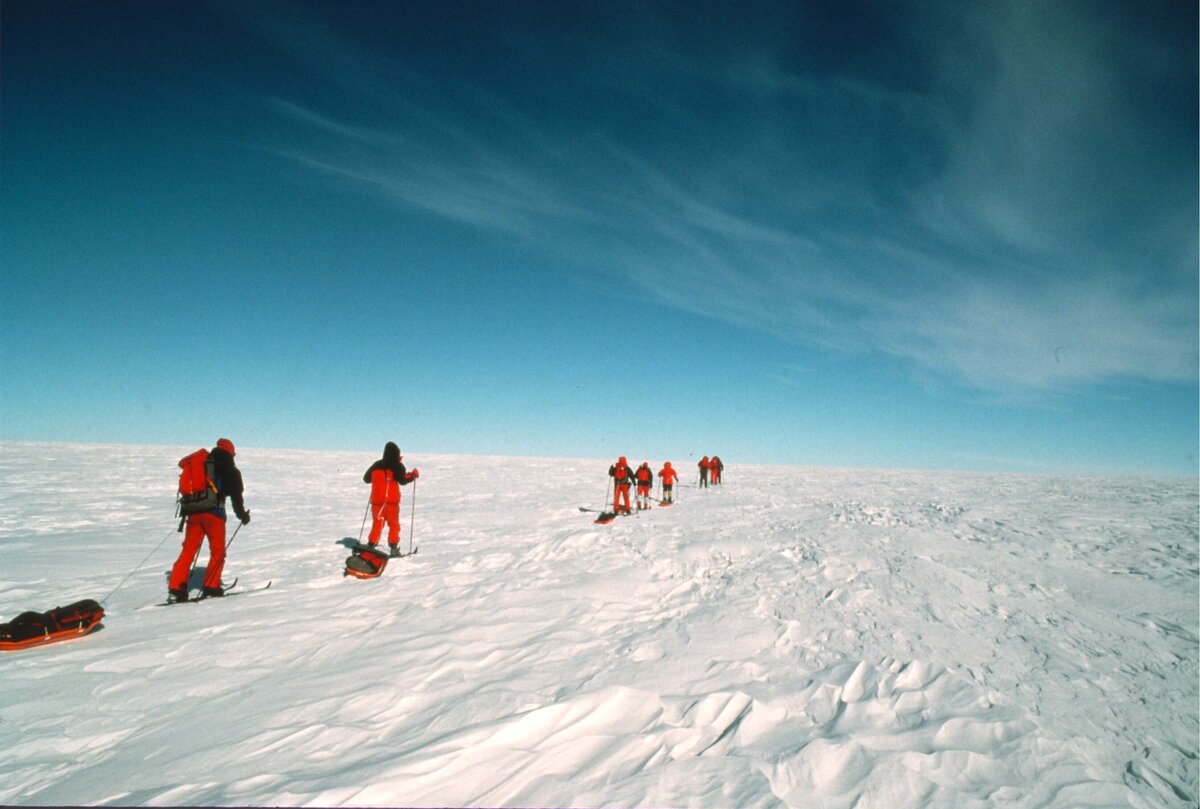
In a world where narratives of exploration have predominantly been dominated by men, the recent achievement of two women skiing across the Antarctic landmass constitutes not just a remarkable physical feat but a profound feminist statement. This journey transcends mere athleticism; it serves as a clarion call for re-thinking gender roles in extreme sports, illuminating the intersectionality of feminism, representation, and the wilderness. This article seeks to unravel the various layers of this historic achievement, offering a nuanced discussion of its implications on society and the feminist movement.
To grasp the significance of two women undertaking such an arduous expedition, it is essential to contextualize this achievement within the historical frame of female explorers. Women have been pushed to the peripheries of exploration narratives, often relegated to the roles of supporting characters in the stories of their male counterparts. For centuries, the harshness of extreme environments has been depicted as the exclusive terrain of masculinity, symbolizing strength and valor. Yet, the determination and resilience displayed by these two women boil down to challenging archaic paradigms—a testimony that courage knows no gender.
In the wake of this groundbreaking expedition, it becomes paramount to dissect societal myths surrounding physical limitations and emotional fortitude. The notion that women are somehow less capable of withstanding the rigors of extreme conditions is not only a misjudgment but a vilification of female prowess. Historically, narratives have positioned women as delicate and fragile, dependent on men for protection and survival. However, contemporary explorers are rebuffing these stereotypes, redefining what it means to be a pioneer in remote, formidable landscapes. As the Antarctic has long been associated with male explorers and their triumphs, witnessing women navigate its boundless expanse radically alters the narrative, allowing for a revitalization of female representation in adventure sports.
Moreover, this achievement serves as a platform for broader discourse. The female ascent to prominence in extreme sports is emblematic of a transformative societal shift, one that insists on dismantling traditional constructs of femininity. These women, through their unwavering spirit, embody the ethos of feminist activism, standing as living rebuttals to the constraints of gender norms. By staking their claim on the icy ground of Antarctica, they usher in an era where women’s authority and agency in ostensibly masculine domains assert a new narrative. Their ski tracks symbolize defiance, paving the way for future generations of women in adventure and exploration.
The psychological aspect of their journey should not go unnoticed. Mental fortitude plays an equally vital role alongside physical strength. To venture into a desolate, freezing expanse where survival often teeters on the edge of doubt requires an unparalleled psychological resilience—something that women have long cultivated, oftentimes in the face of societal diminishment. The act of embracing vulnerability, of confronting fears head-on, speaks volumes about the nature of courage. To aspire to conquer the Antarctic signifies not merely a personal victory but a collective triumph for women everywhere. It boldly asserts that human tenacity is not confined by gender expectations.
Let’s dig deeper into the societal repercussions of such an expedition. By shifting focus toward women’s experiences in extreme conditions, more equitable representations emerge in media and discourse. This expedition instigates critical dialogues around the concept of who gets to be an explorer and what qualities we valorize in narratives of adventure. These women’s endeavor invites society to re-conceptualize the attributes that signify leadership, exploration, and ultimately, heroism. The intimacy between exploration and identity reconceptualizes the definitions of bravery and pioneering, rendering visible the oft-ignored contributions of women to the larger tapestry of exploration.
Furthermore, the interaction between this achievement and other feminist movements cannot be understated. The advent of a global society increasingly attuned to issues of diversity and representation establishes fertile grounds for reexamination. As women in various fields—science, politics, and environmental advocacy—continue to push envelopes, this sporting adventure stands as a microcosm of a larger movement. In this era of intersectionality, these women exemplify how integrating diverse female perspectives into realms previously considered ‘off-limits’ can yield richer understandings of human experience.
However, with this recognition comes the responsibility to acknowledge the broader implications of such adventures. While the triumph of skiing the Antarctic is monumental, it also calls for reflection on the accessibility and sustainability of these ventures. Despite the romantic ideals of exploration, the ecological consequences of human interference in pristine environments must temper our enthusiasm. The essence of feminism must also encompass an awareness and respect for the natural world that we inhabit. Hence, as these women make history, the broader feminist perspective demands discourse on responsible exploration, advocacy for environmental stewardship, and a commitment to addressing the complexities entwined in the tales of conquest.
In conclusion, as we celebrate the audacities of two women skiing across the Antarctic landmass, we must also engage in profound contemplation of what their adventure signifies. This moment in history, punctuated by efforts of individual agency, flourishes as a microcosm of feminist resistance against entrenched gender hierarchies. It magnifies the intricate dance between adventure and identity, showcasing how this historic achievement is not merely a victory of strength over nature but a reimagining of the narratives surrounding female capability and empowerment. May this expedition galvanize a new wave of female explorers, inviting them to carve their own paths through the wilderness and beyond, inspiring future generations to transcend traditional boundaries and echoing the anthem of audacious feminism across uncharted territories.