
















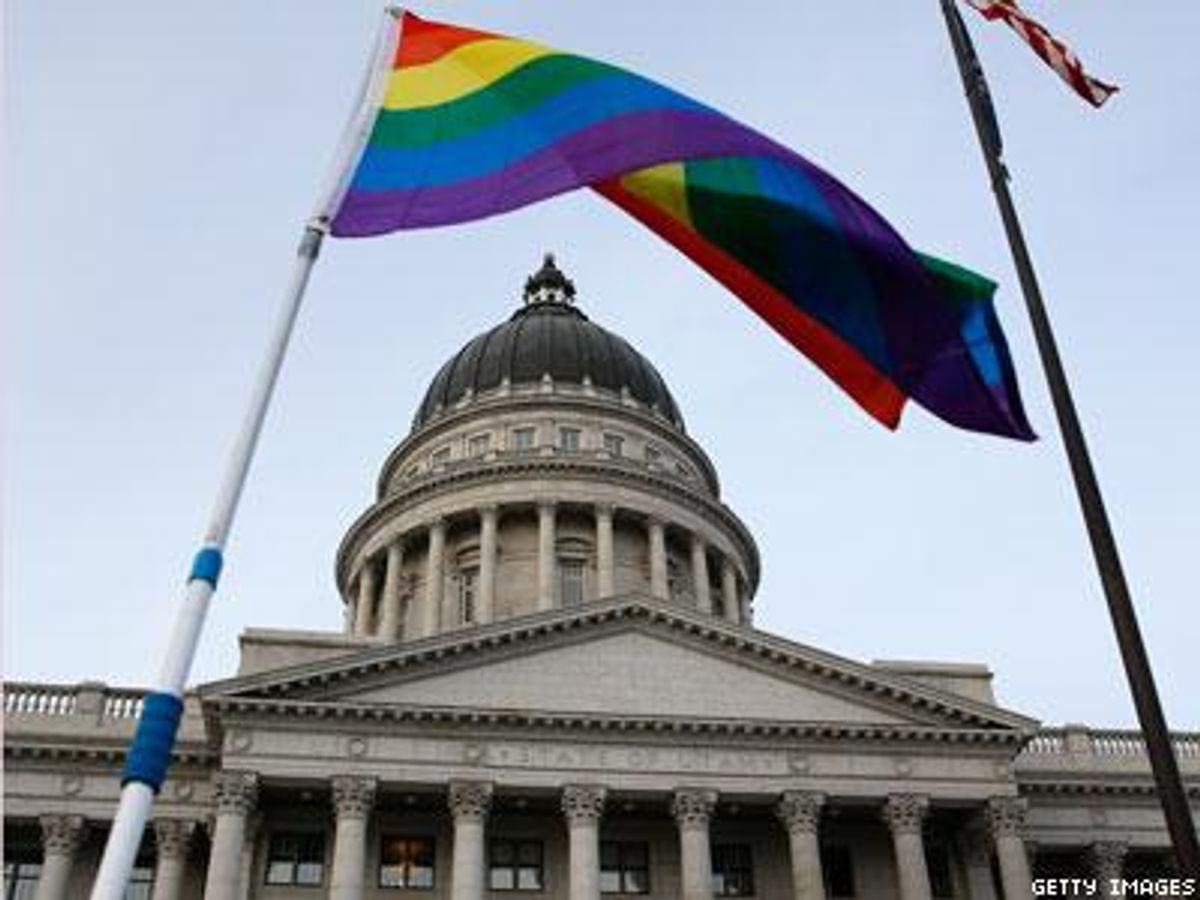
The seismic shifts in societal norms around marriage are punctuated by a pivotal ruling that not only acknowledges the rights of same-sex couples but also lays bare the entrenched inequities perpetuated by historical governance. The recent declaration by a U.S. judge, mandating the recognition of 1,300 same-sex marriages performed in Utah, reflects a monumental step toward equality. But let’s delve deeper. Beyond the legalities and the heartwarming narratives, what implications does this have for feminism, LGBTQ+ rights, and the sheer essence of love in all its forms?
Feminism has long fought against a patriarchal system that seeks to define the parameters of love and marriage. With this ruling, we can observe a broader reconfiguration of what family looks like in the 21st century—a passionate repudiation of obsolete norms and an insistence on inclusivity. Recognition of same-sex marriages is tantamount not merely to legal validation, but underscores a radical rethinking of gender, sexuality, and societal stability.
The undercurrents of this case speak volumes, hinting at a narrative far larger than just a legal decision. It propels us to question: Who benefits from the traditional institution of marriage? And who bears the brunt of its traditional confines? History lends us the tools to examine these predicaments critically.
The evolving interpretation of marriage—as an institution that elevates personal liberty and human rights—opens a gateway for other marginalized sectors to challenge their own inequities. This is no mere legal victory; it is a clarion call for a more inclusive future.
So, how do we navigate this complex matrix of gender and love within the framework of feminism? Let us consider the impact of the Utah ruling through various lenses.
The Legal Milepost: Challenging Patriarchal Constructs
The immediate outcome of the judge’s ruling is the legal recognition of marriages that had previously been overlooked. But does this really equate to justice? Not entirely. The legacy of marriage is deeply interwoven with patriarchal privilege. Historically, this institution has often served to entrench patriarchal power—arising out of traditions that limit the autonomy of women and queer individuals alike.
Recognizing same-sex marriages can stir the temple of oppression, but we must not misconstrue legality as the end of the journey. A ruling from a court does not dismantle age-old ideologies; it merely challenges them. Thus, this recognition is not just about enrolling same-sex partnerships into the marital canon but about radically re-envisioning the institution of marriage itself.
The recognition of diverse familial structures allows us to unearth questions surrounding gender roles. Are we prepared to confront the idea that love transcends binary definitions? Are we ready to articulate new definitions of family that include not just those who fit traditional molds but also those whose identities resist such constraints?
To elevate the conversation, we must address that recognition must extend beyond mere legal frameworks into the realm of social acceptance. It becomes imperative to facilitate discourse that champions understanding and embraces all forms of love. Feminists are tasked with ensuring that this momentum does not merely rotate around the recognition of same-sex marriages but fuels broader societal change against systemic oppression across all spectrums of identity.
Revoking the Marriage Monopoly: A Catalyst for Further Reforms
While the Utah ruling heralds a significant victory, it is critical to recognize that the fight is far from over. The privilege afforded to heteronormative relationships vividly continues. LGBTQ+ individuals are often ensnared in a quagmire that denies them dignity and respect, cloaked in the guise of tradition or religious dogma. This judge’s ruling helps to undermine the longevity of that heteronormative monopoly over marriage.
Feminism, in this context, must embrace an intersectional approach to critique the broader socio-economic implications of marriage. Historically, marriage has been tied to property rights and lineage, which reinforces gender inequities. While the recognition of same-sex marriages signals progress, nuances such as economic inequities can hinder genuine equality. For instance, examine the economic ramifications that LGBTQ+ individuals face in a society still rife with discrimination.
Women often find themselves disproportionately affected in these situations. The lack of equitable treatment in marriage laws—which often fail to address issues like insurance, inheritance, and tax benefits—suggests that simple legal recognition is not enough. Feminism, thus, finds itself in a position to push for reforms that dismantle biases intrinsic to the pairing of marriage with financial security.
Visibility and Representation: Breaking Stereotypes
As we explore the impact of recognizing same-sex marriages, it’s crucial to reflect on visibility and representation. This ruling emboldens queer voices, allowing them to challenge conventional narratives surrounding love and fidelity. Feminism insists that marginalized voices rise above the din, and this ruling encourages the generative discourse surrounding gender, sexuality, and identity.
This moment serves as a reminder that love comes in diverse forms and embodies multifaceted experiences. Recognizing same-sex marriage is, therefore, not just an acknowledgment of couples fulfilling traditional romantic ideals but a space for profound conversations about commitment, parenting, and reciprocal relationships devoid of heteronormative constraints.
The ruling acts as a fertile ground for budding activists—both within and outside LGBTQ+ communities—to harness their narratives and challenge societal norms. Their stories are irrefutable testaments to the resilience and vibrancy of love that exists beyond stringent labels, thus combatively pushing against a framework that thrives on rigid categorization.
Building Alliances: LGBTQ+ Rights and Feminism
A progressive approach to feminism is one that cultivates collaborative alliances across differences. The ruling serves as a clarion call for feminists to work hand-in-hand with LGBTQ+ movements to tackle broader issues like reproductive rights, bodily autonomy, and economic justice. To truly champion equality, it becomes essential to forge a united front that celebrates every shade of love and existence.
This ruling is a reminder of the power of solidarity. When diverse groups unite, their combined strength propels us toward a reimagined future, free from the shackles of outdated norms. Every activist should ponder what it means to embrace and empower various facets of identity as an essential element of social justice. The fight for the recognition of same-sex marriage must fuel broader discussions about human rights, safe spaces, and equitable treatment in every arena.
The Utah ruling signifies monumental progress in the fight for LGBTQ+ rights, marking a defining moment in feminist discourse. It ignites a conversation about the essence of love, challenges historical interpretations of marriage, and reinforces the necessity of intersectional feminism. The struggle for authenticity persists, and it becomes clearer that victory is not just about laws that validate love but crafting a societal ethos where love, in every form, is recognized and celebrated.
As we strive toward an adaptive and inclusive framework, this ruling serves as a reminder that love is not confined to legal definitions. It transcends, breaks boundaries, and redefines the family. A world where all forms of love are recognized, accepted, and celebrated is the world we should fervently seek, not just for the present, but for generations to come.