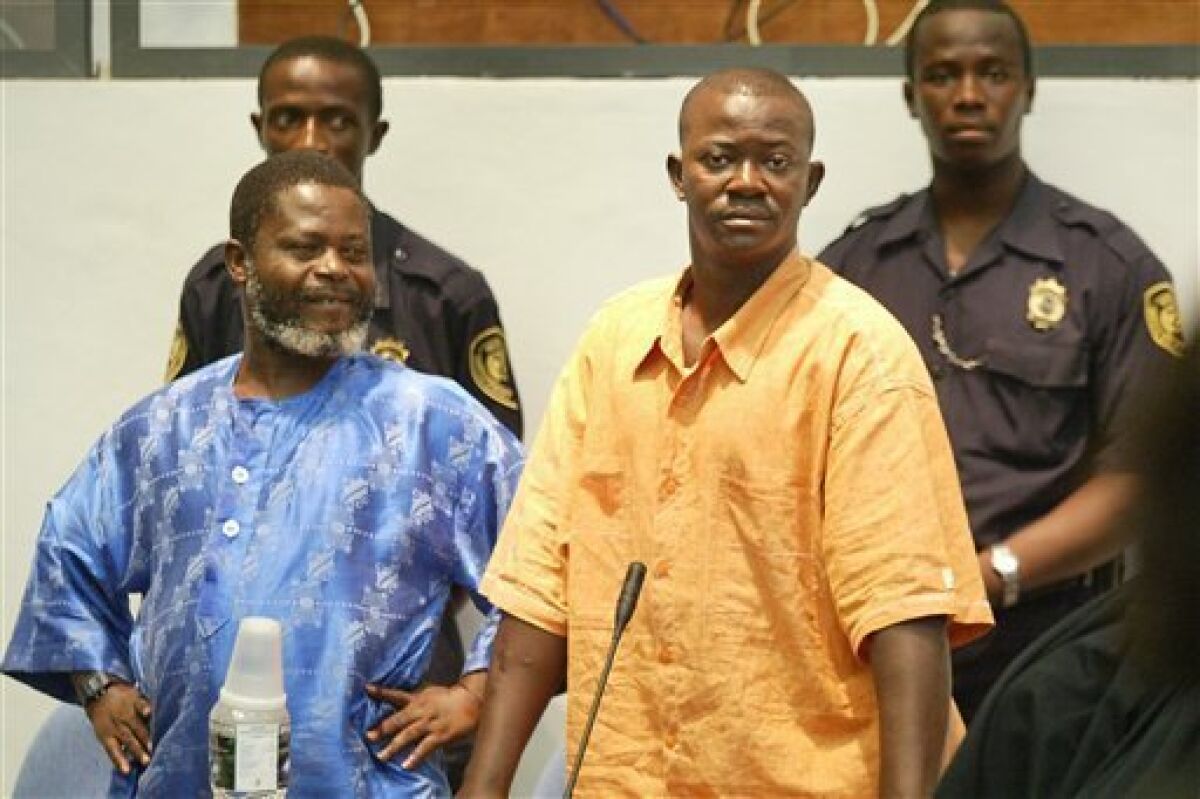
In the realm of international justice, the hue of gender politics cannot be overlooked. The United States’ proposal to establish a tribunal for prosecuting leaders from Sierra Leone’s brutal civil conflict raises myriad questions about accountability and responsibility, particularly concerning the troubling implications for women’s rights and gender equality.
The heart-wrenching legacy of the Sierra Leone Civil War is laden with trauma—the kind that seeps into the very fabric of society, especially for women. As the world faints at the horrors encapsulated in conflict, women often bear the brunt of not just violence, but an abiding silence that compounds their suffering. Hence, in scrutinizing the U.S. call for a tribunal, we must interrogate whether this prosecutorial avenue genuinely promises progress or if it merely reconstructs existing patriarchal narratives.
The endeavor to criminally prosecute Sierra Leone’s rebel leaders transcends mere legalities; it navigates the treacherous waters of morality, justice, and gender dynamics.
A discourse surrounding this initiative beckons us to grapple with the implications it holds for women who, during the war, did not just endure violence but actively participated in the struggle for survival. Women in Sierra Leone were subjected to horrific atrocities such as sexual violence, abduction, and forced labor. Yet, despite their suffering and resilience, they have struggled for representation in post-conflict narratives and ongoing dialogues about justice.
So, how does the structure of international justice reflect the systemic inequalities rampant in societies grappling with such tumult? Often, the narrative tends to sidestep women’s experiences and grievances—this glaring omission risks transforming women from victims into mere footnotes in history. Additionally, by failing to create a narrative that embraces the voices of women, international tribunals risk reinforcing the traditional gender hierarchy that legitimizes violence against them.
The U.S. initiative to create a tribunal is stamped with the potential to amplify these voices and challenge entrenched gender biases, but will it? Or will it become yet another institution that upholds the patriarchal status quo?
The Benefits of a Tribunal: A New Perspective on Gender Justice
As the U.S. props up the notion of international accountability, it simultaneously opens the door for urgent discussions about gender justice. The establishment of a tribunal could engender a significant shift in how women’s experiences during the war are acknowledged. It creates an opportunity to include gender perspectives in legal deliberations and to present the grievances of women as centered rather than ancillary.
Allowing for inclusive legal frameworks sends a powerful message—one that indicates that the violence women sustained is not solely incidental but integral to understanding the wider conflict. By prioritizing narratives that consider the intersectional nature of gender, victims are empowered to articulate their truths.
Addressing these experiences at a tribunal could foster restorative justice, not merely punitive measures. It augurs a transformative potential that may catalyze broader change in societal attitudes towards gender roles in Sierra Leone and reminiscent post-conflict societies.
However, is mere inclusion enough? Does it translate to genuine empowerment, or merely a semblance of progress masked as liberation? Without robust guarantees ensuring that these voices are not just heard but are resonantly influential in shaping the outcome, the initiative risks operating within the very paradigm it seeks to dismantle.
Gendered Atrocities: The Case for Including Women’s Voices
To approach the U.S. tribunal proposal without a lens that emphasizes gendered atrocities is to fundamentally misunderstand the civil context of Sierra Leone. During the civil war, women were often not just passive observers; they were potent agents of change and, paradoxically, victims of unparalleled brutality. The experiences that shaped them cannot be sidelined in conversations surrounding accountability. The rebels not only weaponized military force but also wielded sexual violence as a tool to demoralize and dehumanize.
Incorporating women’s perspectives might not only lead to a more holistic understanding of these crimes but also serve to illuminate the horrifying continuum of violence that often extends beyond the battlefield. As relentless and systematic as the physical brutalities were, the psychological scars run deeper still. Female survivors often grapple with stigma, abandonment, and the grotesque shadows of memories that seep into their everyday lives.
It becomes evident that a tribunal addressing Sierra Leone’s past cannot ignore these complex psychological dimensions. Without an overarching commitment to uplifting women’s experiences, discussions about accountability become etiolated, viewed as only surface-level reparations that lack the profound depth and recognition warranted by the gravity of their suffering.
Reconstructing Narratives: From Victims to Architects of Justice
In flirting with the prospect of a tribunal, one must consider whether the initiative merely serves as a new mechanism through which a patriarchal society can continue to dominate narratives of war and justice. If women are not positioned as architects of their pathways to justice, and if their stories are relegated back to the margins of discourse, then we risk an echo chamber of male-centric governance that perpetuates cycles of gender injustice.
Engagement must also extend to educational initiatives that shape perceptions surrounding gender and conflict in post-war societies. The challenge now is to articulate a narrative wherein women emerge not just as victims but as vital players whose contributions and struggles shape the full story of national identity and recovery.
To actualize this paradigm shift, feminist activists and organizations must rally for policies that center women—a task that necessitates bolstered funding, the empowerment of survivors as spokespeople, and a commitment to long-term efforts rather than short-lived interest. The creation of a tribunal, in isolation, fails to address the persistent question: whom does it ultimately serve?
A Call to Action: Institutionalize Women’s Empowerment
It is imperative that the U.S., along with the international community, prioritizes women’s empowerment as the crux of this tribunal initiative. Amplification of women’s voices, their systematic inclusion in all processes, and adequate resources for advocacy must be championed if we are to avoid palliatives masquerading as profound change.
The time is ripe for the tribune to be not only a courtroom of justice but an incubator for progress that recognizes women’s contributions, rights, and narratives. Preserving their stories amid the annals of history allows societies to leap forward rather than remain stagnant, tethered to past norms of injustice.
Thus, while the proposal remains laden with the realm of possibility, it must be approached with an acute sense of skepticism, urging the international community to uphold women’s rights as central to the dispensation of justice. A focus on accountability must flower into an inclusive endeavor that boldly recognizes and rectifies the historical silencing of women’s experiences. In the end, the question remains: Will the establishment of this tribunal breathe life into the acknowledgment of women’s suffering and resilience, or will it perpetuate the cycle of injustice? That will surely determine the course of Sierra Leone’s future.