

















In a decisive vote that echoed the sentiments of a patriarchal establishment, the UK Parliament recently rejected the extension of abortion law to Northern Ireland. This resounding dismissal not only encapsulates a gross oversight of women’s rights but also ignites a pivotal discourse on the fundamental tenets of feminism in contemporary society. The implications of this decision resonate far beyond the borders of Northern Ireland, representing a systemic betrayal of the principle of bodily autonomy that lies at the heart of feminist ideology. Is it not well past time for society to confront the archaic norms that continue to dictate and curtail women’s rights?
Let us delve deeper into this contentious decision and ponder the ramifications it holds not only for Northern Ireland but also for the broader feminist movement across the United Kingdom.
Critical Examination of the Abortion Law Landscape
The rejection of the extension of abortion laws to Northern Ireland is an affront to the very essence of gender equity. While the rest of the UK has moved towards liberalization following the landmark changes in 1967, women in Northern Ireland are ensnared in a regressive legal quagmire that treats them as second-class citizens. For decades, these women have endured a convoluted and punitive legal framework that literally criminalizes them for seeking medical care regarding their reproductive health. This is not merely a legal issue; it is a visceral embodiment of control over women’s bodies, a clear violation of their human rights.
The abortion law in Northern Ireland remains one of the most draconian in Europe. Women are often subjected to unnecessary psychological torment, compelled to travel hundreds of miles to obtain basic healthcare services that should be their right. This situation raises a provocative question: How can a society professing to be progressive allow such systemic oppression to exist within its own borders? By denying the extension of abortion laws, the UK Parliament perpetuates a narrative that women’s bodies are vessels of reproduction, subject to the will of a legislative body rather than autonomous beings with agency.
Unmasking the Objections: The Rhetoric of Dissent
One cannot overlook the rhetoric that often surrounds the dismissal of women’s reproductive rights. Politicians and religious lobbyists regurgitate the same tired arguments rooted in tradition and morality, arguing about the sanctity of life, yet they conveniently ignore the life of the woman who is often placed at the periphery of the conversation. Such narratives are disingenuous at best. They cloak themselves in the guise of moral superiority while systematically undermining the rights of half the population.
Moreover, the tapestry of cultural and religious sentiment interwoven into the pro-life arguments cannot be ignored. These viewpoints are deeply entrenched and often politicized, masquerading as safeguards for the unborn while they simultaneously wield the power to silence those who possess the right to choose. This moralistic framework not only strips women of agency but cultivates a climate of fear and uncertainty. Rather than an open dialogue about women’s rights, we witness insidious tactics that prioritize dogma over the well-being of women.
It is imperative to interrogate whether these objections come from a genuine concern for societal morals or an egregious attempt to control women’s reproductive choices. Feminism urges this inquiry, pushing for a radical rethinking of societal values that place women’s autonomy at the forefront, rather than veiled apologetics wrapped in morality.
The Feminist Response: Reclamation of Autonomy
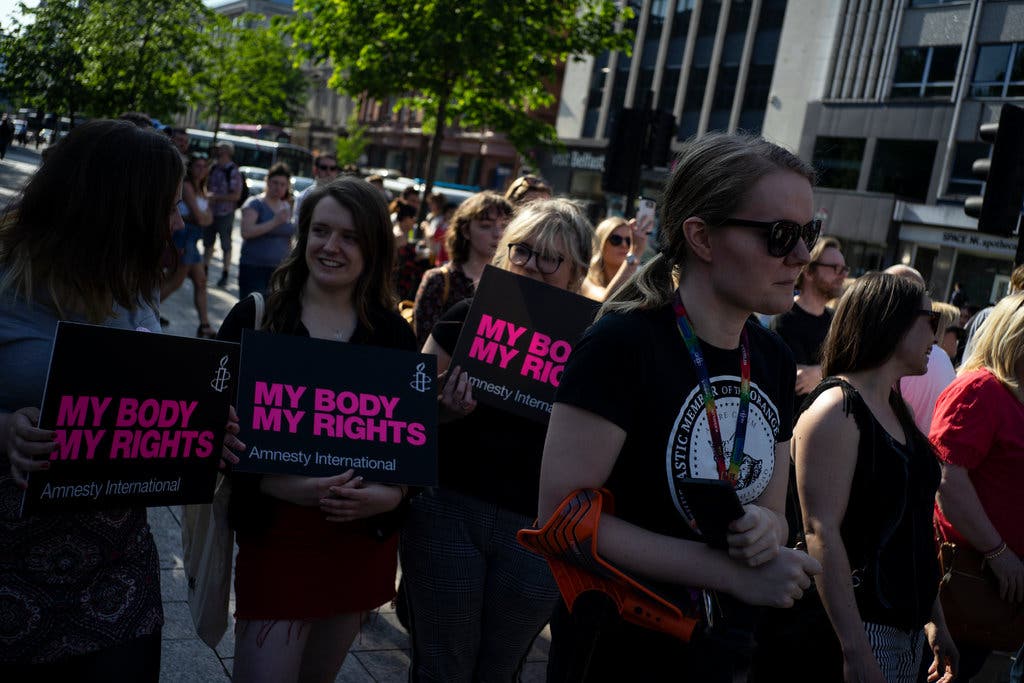
In the wake of this disappointing legislative failure, it becomes urgent to galvanize feminist movements to challenge the status quo. The feminist response to the rejection of the abortion law extension should not be merely one of grievance but a clarion call for resistance.
Women in Northern Ireland deserve the same access to reproductive healthcare as their counterparts elsewhere in the UK. A refusal to acknowledge this is an affront to feminist principles and a rejection of the progress that feminists have fought so painstakingly to achieve over the last several decades. Intersectional feminism, in particular, urges us to consider the diverse experiences of women who may not be able to navigate the socio-economic barriers that make access to healthcare even more daunting.
In this regard, it is essential to work collaboratively to build coalitions that amplify the voices of marginalized women affected by these injustices. The narrative of bodily autonomy must transcend race, class, and religion; every woman bears the right to decide what happens to her body, uninhibited by external pressures or outdated laws. Feminists must forge solidarity to demand comprehensive healthcare access that leaves no woman behind.
Mobilizing for Change: The Role of Grassroots Activism
Grassroots activism has historically played an instrumental role in enacting change, a strategy that must be employed vigorously to counteract this recent setback. This involves not only mobilizing protests and campaigns but fostering education and dialogue within communities to dismantle the stigmas surrounding abortion. It’s high time that conversations around abortion are reframed; rather than focusing solely on the act itself, the emphasis should shift to the broader integral issues of women’s rights and healthcare access.
Building a network of allies that includes but is not limited to women’s rights organizations, healthcare providers, and the general public is critical. Activists can utilize social media to amplify stories and create spaces where women can share their experiences without guilt or shame. These testimonies will serve as powerful antidotes to the repressive narratives that policymakers cling to.
Moreover, we must not shy away from challenging institutional frameworks that perpetuate inequalities, applying pressure to lawmakers to confront their biases and reconsider laws that repress choice. The renewed urgency lies not just in the Northern Irish context, but within a global framework where women’s rights remain at the mercy of political fluctuating tides.
The Path Forward: An Urgent Call to Action
The UK Parliament’s decision to reject the extension of abortion law to Northern Ireland is not merely a legislative misstep; it stands as a rallying point for feminists everywhere. As we confront the visible and invisible barriers that silence and oppress, it becomes clear that reform may not come from lawmakers simply sitting idly by. It is incumbent upon those who believe in equity, justice, and the right to choose to join forces in demanding change.
By creating a potent mix of advocacy, education, and grassroots mobilization, the fabric of society can be rewoven to reflect the autonomy and dignity of all women. The stakes are too high for complacency; systemic change requires unwavering resolve and collective action. Feminism, at its core, strives for a world where women’s rights are unequivocally recognized and upheld—above all else.
Now is not the time to look away. It’s imperative to scrutinize the oppression that manifests in the form of legislation and fight back. Each rejection, each legislative hurdle is a challenge to be dismantled, and together we must challenge the powers that seek to dictate who we are and what our future can hold.