The German military, like many other institutions steeped in tradition, has long been regarded as a bastion of male dominance. However, the burgeoning inclusion of women in the Bundeswehr is not merely a progress marker but a clarion call for a broader reassessment of gender roles within the armed forces. The feminist perspective on this development is imperative—not just for understanding the intricacies of gender equality but for igniting a movement that challenges the status quo.
Women have begun to carve out substantial spheres within the military, a domain historically molded by patriarchal narratives that sought to confine women to the periphery. Yet, it is imperative to visualize this transition not just as a quantitative increase in female personnel but as a qualitative transformation in the ethos and operational paradigms of the military.
Women in the Bundeswehr are demanding recognition not simply as symbols of progress but as integral constituents of a reimagined military identity. This demand for equal status is monumental, challenging doctrines of masculinity that have long dictated both military strategies and societal perceptions of gender roles.
Women’s Representation: Breaking the Glass Ceiling
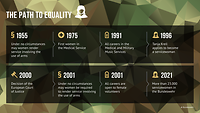
The integration of women into the Bundeswehr marks a profound shift in the military landscape. The statistics speak volumes: the percentage of female personnel has notably increased over the past decades. Yet, this representation extends beyond mere numbers; it presages systemic change that could redefine what it means to be a soldier.
The traditional image of a soldier has been so deeply entrenched in cultural consciousness that challenging it invites both intrigue and resistance. Women in combat roles, leadership positions, and logistical support are dismantling stereotypes that suggest femininity and militaristic prowess are antithetical. In doing so, they confront not only the glass ceiling within their ranks but also the broader societal constructs that deem women unfit for combat or defense roles.
Embracing New Leadership Paradigms
As more women ascend to leadership roles within the Bundeswehr, the military is on the cusp of adopting new leadership paradigms that value collaboration over domination. This shift is not just beneficial for women but also for the institution as a whole.
Feminist leadership, characterized by inclusivity and empathy, stands in stark contrast to the traditional authoritarian models that have long prevailed. With women at the helm, military strategies have the potential to incorporate a multifaceted understanding of conflict, one that recognizes human rights, social justice, and diplomatic avenues as equally vital. As female leaders emerge, they usher in a narrative that embraces diversity of thought and experience, thus elevating the operational effectiveness of the military.
The mere presence of women does not guarantee equality; hence, awareness and training are essential. Initiatives to foster gender-sensitive training programs within the Bundeswehr aim to create an environment where camaraderie transcends gender binaries. The need to sensitize male colleagues to the capabilities and rights of their female counterparts is paramount. This not only enhances morale but also fortifies the collective strength of the armed forces.
The Intersection of Feminism and Militarization
At first glance, the intersection of feminism and militarization may appear paradoxical. Yet, a deeper analysis reveals a complex relationship, rooted in the quest for equality that challenges entrenched power dynamics. Feminism asserts that women’s roles should not be limited to passive support; they should actively shape military narratives and policies.
The push for gender equality within the Bundeswehr is also indicative of larger feminist movements worldwide that advocate for women’s rights in traditionally male-dominated sectors. By embracing a militarized feminist stance, women in Germany seek not only to assert their presence but to redefine warfare and security through a lens that acknowledges the significance of gender.
As the German military continues to evolve, it grapples with the conundrum of balancing tradition and progress. Are the values of security and defense inherently masculine, or can they be redefined through a more feminine lens? Therein lies the crux of the debate: while militarization often evokes images of aggression, a feminist approach can infuse concepts of security with empathy, understanding, and accountability.
Challenging Patriarchal Narratives
The long-standing patriarchal narratives surrounding the military must be dismantled for genuine equality to take root. The prevailing notion that war and combat are inherently masculine endeavors necessitates a recalibration of storytelling within military discourse. Women have unique experiences that can fundamentally alter how conflicts are perceived and engaged with.
Every battle fought is not merely a contest of might but also a confrontation of ideals. When women’s accounts, perspectives, and insights are included, the military’s approach to strategy and policy transcends binaries of ‘us versus them’ and ‘strength versus weakness’. Such a narrative fosters a more holistic understanding of warfare, leading to solutions that prioritize human dignity and ethical considerations.
Moreover, the militarization of women’s rights movements must be addressed. Feminism does not exist in a vacuum, and the inclusion of women in the military raises challenging questions about complicity. Does promoting women in the military ultimately legitimize existing power structures, or does it break them down? This paradox unveils a provocative dialogue about the true meaning of empowerment and agency.
Conclusion: Towards a New Military Reality
The journey towards gender equality in the German military is fraught with challenges but replete with promise. The narratives woven through the fabric of this transition have the potential to illuminate paths towards inclusivity and balanced representation.
As women continue to assert their rightful place in the Bundeswehr, they forge connections between seemingly disparate ideals: feminism, militarization, and emotional intelligence. The implications of these shifts extend beyond the military realm, potentially catalyzing transformations in societal attitudes toward women’s roles across various sectors.
In a world often plagued by weapons and warfare, the story of women achieving equal status in the German military is not merely a chapter in a larger book of feminism—it is a manifesto that challenges power dynamics, reshapes narratives, and redefines what strength truly means. The time has come for all of society to bear witness to this fascinating evolution—one that promises not only a shift in the military but in the broader constructs of gender and equality.