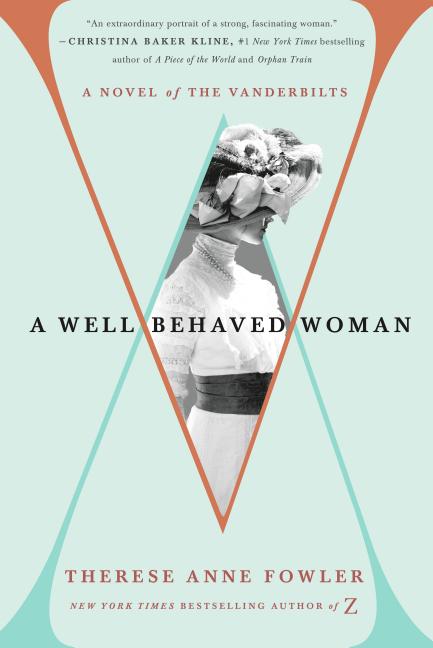
To delve into the pages of “A Well-Behaved Woman: A Novel of the Vanderbilts” is to embark on a journey through the opulent yet stifling corridors of a bygone era, where the power dynamics of wealth, gender, and societal expectations coalesce in a dizzying ballet of ambition and restraint. The novel, penned with exquisite care, invites the reader to witness the life of Alva Vanderbilt, a woman who, in the gilded cage of New York’s high society, sought freedom and self-identity against the backdrop of Victorian mores.
The title itself serves as a provocation, beckoning us to question the very nature of behavior deemed acceptable for women within this milieu. Alva Vanderbilt, a woman of striking intelligence and tenacity, embodies the conflict between conventional femininity and the fierce desire for autonomy. The novel’s portrayal of her transformation from a compliant daughter to an audacious matriarch subverts the archetype of the ‘well-behaved woman’ and lays bare the societal chains that bind women to expectations of docility.
The Vanderbilts, those titans of industry, epitomize a unique duality. They are both idolized for their unimaginable wealth and scrutinized for the very same reason. The grandeur of their mansions, the opulence of their soirées, and the sheer scale of their influence complicate the narrative of the American Dream. In this landscape, the individual often disappears beneath the weight of collective grandeur, leaving behind shadows rather than legacies. Alva, however, emerges not simply as a footnote in her husband’s story but as a central character in the unfolding drama of her time.
At its core, the narrative is an exploration of power. One might liken Alva to a phoenix, rising from the ashes of prescribed femininity. She is embroiled in the creation of her own identity amid relentless societal pressures. The metaphor of a phoenix not only encapsulates her struggle but also aligns with the tumultuous transformations of the era itself. The Gilded Age is oft-captioned as a time of excess, yet it was simultaneously a crucible for social reform and the redefinition of women’s roles.
Alva’s ambitious journey is replete with the risks that accompany rebellion. Therein lies the beauty of the narrative—a rich portrait of a woman navigating amongst the double-edged swords of privilege and power. Her marriage to William K. Vanderbilt, a union sparked by societal aspirations rather than romantic love, becomes a battleground where personal desires must wrestle with imposed expectations. The author deftly illustrates this tension, contrasting the public persona Alva must uphold with her private longings for agency and recognition.
The setting of the novel serves not merely as a backdrop but as a living entity that reflects Alva’s internal struggle. The opulent mansions filled with lavish parties symbolize both the grandeur of wealth and the suffocation of societal expectation. Alva’s efforts to design her dream home—The Breakers—culminate in a space that becomes a testament to her defiance against stifling norms, showcasing her vision and taste, while simultaneously serving as a prison for her individuality.
Moreover, this juxtaposition raises intriguing questions about the intersection of art, identity, and societal norms. Alva’s passion for architecture and design highlights a recurring theme within the novel: the reclamation of space as a means of self-assertion. Each room she crafts is a vivid stroke on the canvas of her identity, painting a picture that defies the limitations imposed by her male counterparts.
The narrative reaches deeper into the concept of legacy, suggesting that the true inheritance of the Vanderbilts extends beyond mere monetary wealth. Alva’s life story encapsulates a legacy of courage and defiance, paving the way for future generations of women who would continue to grapple with the shackles of gender expectations. The author presents Alva not merely as a historical figure but as a prototype of resilience, challenging the reader to consider how her story reverberates through time. What does it mean to be a ‘well-behaved woman’ today? Alva’s journey offers a semblance of an answer—perhaps behaving well is truly a guise for perpetuating systemic constraints, while rebellion is the first step toward rewriting one’s story.
The novel’s vivid characterizations bring to life the myriad of figures that surround Alva, each contributing to the complex tapestry of her experience. From her supportive friends to her antagonistic foes, these relationships mirror the broader societal dynamics that shape her world. The dialogues, rife with wit and sharp observations, propel the narrative forward, allowing glimpses into the minds of both allies and adversaries.
In conclusion, “A Well-Behaved Woman” is more than just a story of one woman’s quest for independence; it serves as a clarion call for all who dare to redefine the parameters set against them. Alva Vanderbilt’s legacy, interwoven with ambition and defiance, remains a poignant reminder of the ongoing struggle for women’s rights, echoing into contemporary discussions about gender and power. The novel compels readers to reflect not just on history but on the actions necessary to carve out space for narratives that have long been muted. In reclaiming her story, Alva Vanderbilt urges us all to question our own ‘well-behaved’ lives and inspires a generation to embrace the chaos of authentic existence.