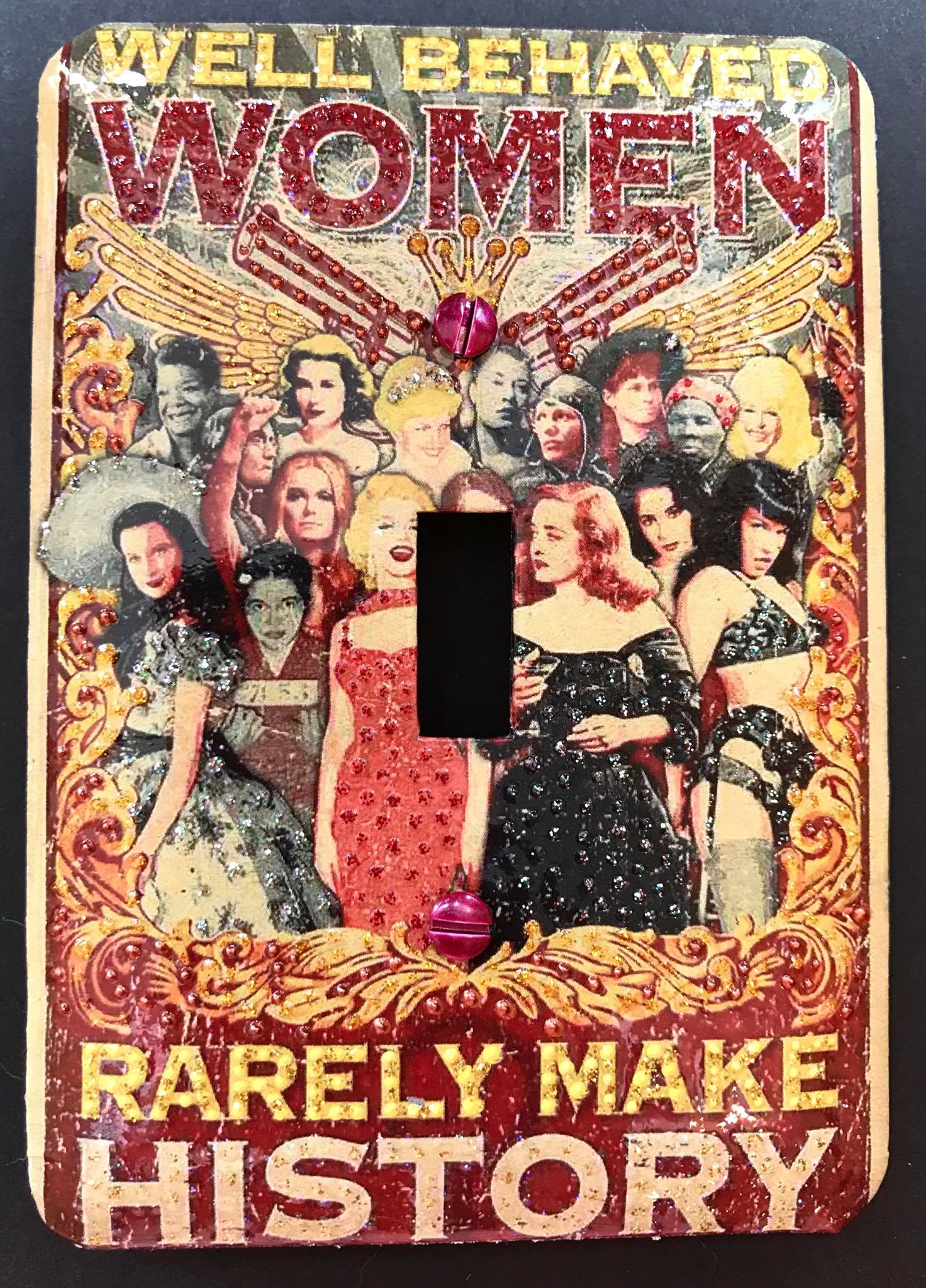
In a world often characterized by conformity and obedience, the notion that a well-behaved woman rarely makes history stands as a clarion call for rebellion against social norms. It is a statement that, at first glance, may inspire a plethora of defenses for the docile and demure. However, upon closer inspection, it reveals itself as a manifesto for the strong-willed, the audacious, and the unapologetically bold women who eschew societal expectations. Women who dare to disrupt the status quo are the ones who ignite change and propel humanity forward.
Firstly, let’s unpack the term “well-behaved.” This phrase, often used to signify compliance or modest comportment, insinuates that women should adhere to a prescriptive set of behaviors deemed acceptable by patriarchal standards. Whether it’s being quiet in meetings, not voicing dissenting opinions, or prioritizing others’ needs over their own, this so-called ‘good behavior’ is frequently at odds with the very fabric of progress. Historically, women who arguably changed the world—think Cleopatra, Marie Curie, or the suffragettes—were anything but “well-behaved.” Their tenacity and refusal to conform led to seismic shifts in their respective fields and beyond.
Consider the suffragette movement. Women who fought for the right to vote were routinely labeled as unruly or undesirable. Their actions—picketing, protesting, and boldly demanding equality—were anything but “well-behaved.” Yet, today, we recognize their contributions as pivotal to the democratic fabric of society. This juxtaposition begs the question: why is it that the very characteristics that drive women to achieve greatness are often demonized in the name of propriety?
To further dissect this issue, it is essential to acknowledge the cultural conditioning imposed upon women from a young age. Girls are often raised with the expectation to be polite, accommodating, and to avoid conflict. This indoctrination subtly cultivates an environment where assertiveness is misconstrued as aggression. Consequently, when women do stand firm for their beliefs, they are often penalized for their “bad behavior.” Such societal backlash reinforces the narrative that women should remain passive participants in their own lives.
Moreover, the expectation to be “well-behaved” creates a dichotomy that denigrates those who choose to deviate from the norm. A dissonance emerges: women who conform are rewarded, while those step out of line often face ostracism, both in personal and professional realms. Yet, history has shown that some of the most celebrated breakthroughs originate from the very rebels deemed misfits. Think of Frida Kahlo, whose unapologetic self-expression through art challenged societal standards of beauty and femininity. Her legacy, born from a refusal to conform, tells a narrative imbued with strength and, yes, defiance.
It is imperative to dispel the myth that ambition and kindness are mutually exclusive. Women in positions of power often face scrutiny for exhibiting qualities typically celebrated in men, such as assertiveness or confidence. This scrutiny not only undermines their accomplishments but also perpetuates a cycle of self-doubt among women aspiring to leadership roles. Asserting oneself in a boardroom or making demands for equal pay should not be viewed as a transgression but rather a natural extension of one’s desire for equitable treatment.
Furthermore, the glorification of “well-behaved” can stifle creativity and innovation. Conformity does not breed groundbreaking ideas; rather, it stifles them. Organizations that prioritize diverse voices—including those willing to challenge norms—experience higher levels of creativity and problem-solving capabilities. Those who adhere to the status quo miss out on a wealth of perspectives that can invigorate and drive success. In this sense, encouraging women to embrace their “bad” behavior may well be a recipe for revolutionary advancements.
The conversation around the “well-behaved” versus “bad” dichotomy extends to education, where girls often find themselves penalized for speaking out in class or for exhibiting too much passion. Educational environments that favor compliance over curiosity miss out on nurturing the next generation of trailblazers. This framework of suppressing ambition under the guise of discipline is pernicious and ultimately detrimental to progress.
As we forge ahead in an increasingly complex world, it is crucial to recognize that being a well-behaved woman should not be the gold standard. Women must be empowered to innovate, to challenge, and to resist societal pressures that dampen their spirits. The phrase “Well-behaved women rarely make history” shines as a beacon of hope for those willing to diverge from the established path. It encourages an affirmation of boldness—to embrace the messy, unsanitized reality of existence that often accompanies the pursuit of greatness.
In conclusion, the path to transformation and societal advancement is littered with the remains of those who have dared to step outside the bounds of well-behaved submission. It is essential to celebrate, uplift, and give voice to those whose tenacity defies convention. For as history illustrates time and again, the extraordinary achievements of women are seldom born from complacency. Instead, they arise from the passionate hearts of those who refuse to be neatly folded into the molds society has crafted for them. Let us then embolden the women who disrupt and dismantle, for it is in their audacious journeys that true history is made—and that, dear friends, is entirely okay.