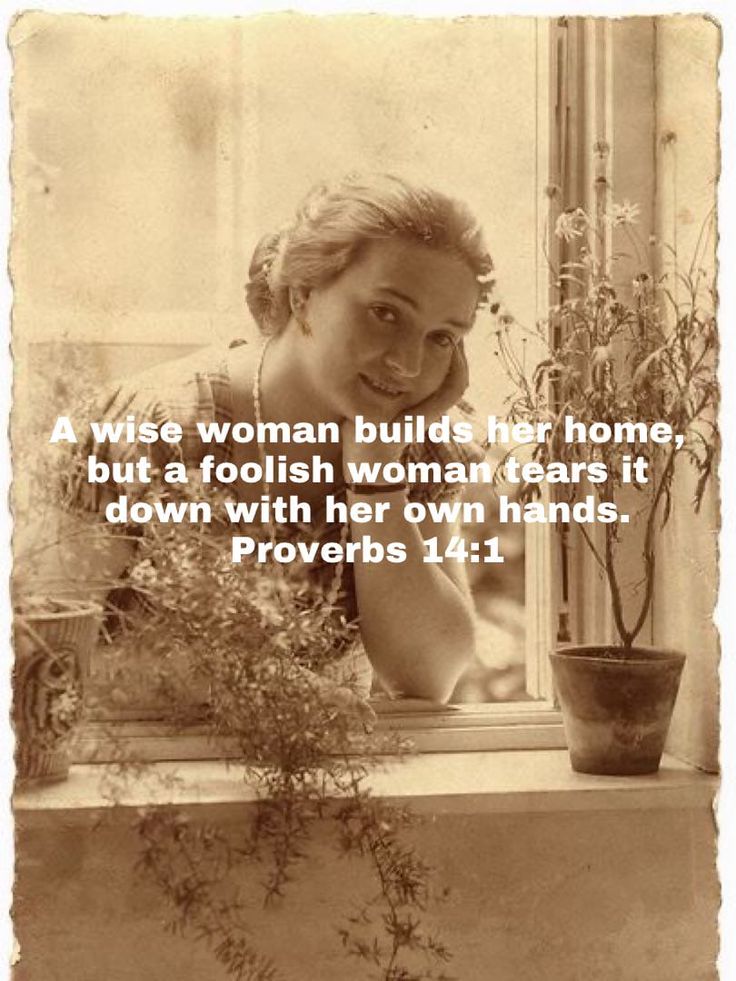
In a world that often peddles antiquated gender norms and constricting stereotypes, the phrase, “A wise woman builds her house,” beckons a multifaceted exploration. This proverbial statement, while seemingly straightforward, conceals profound insights into the dynamics of gender, power, and societal expectations. Here, we will dismantle the superficial interpretations that have plagued this notion and delve into what it truly signifies for modern women and society at large.
At first glance, this proverb seems to reinforce traditional roles assigned to women—those of caretakers and nurturers. However, it is imperative to interrogate what “building” truly entails. This phrase should not be relegated to the confines of domesticity. Instead, it is a vivid metaphor for creation in its broadest sense. To build a house is not merely about the physical structure; it symbolizes the edifice of one’s life, relationships, career, and legacy. It implies a proactive force, one that is not passive but fiercely inventive and transformative.
One must ponder: What does it mean to build? It signifies agency, intelligence, and foresight. A woman who “builds” is an architect of her destiny. She engages in relentless self-improvement, expanding her intellectual horizons, and cultivating her skills. This proactive perspective challenges the antiquated narrative that views women as mere participants in someone else’s story. Instead, it posits them as the authors of their own narratives—a radical shift in perception that prompts the question of why such transformation is routinely resisted.
The second part of the proverb—“but a foolish woman tears it down”—serves as a cautionary tale against self-sabotage, yet it is often misinterpreted as a moral indictment of women who may not conform to traditional expectations. In reality, it is a poignant reminder of the self-destructive behaviors that stem from societal pressures and internalized misogyny. Often, women find themselves in a relentless tug-of-war with their aspirations due to deeply ingrained societal narratives that devalue their contributions. The real folly lies not in a woman’s choices but in the systemic barriers that thwart her from building her life’s structure.
Indeed, the societal landscape is fraught with challenges that women contend with daily. Imagine a woman who strives to create a successful career, yet faces relentless scrutiny at every turn. The expectations are steep: to be nurturing while also being ambitious, to foster proficiency but also seek validation in a male-dominated arena. In many ways, the foolish actions that may “tear down” a woman’s house often originate from a society that finds it easier to diminish rather than empower. True wisdom involves recognizing and dismantling those illusions, both personally and collectively.
This proverb calls for a broader conversation about what constitutes wisdom in the realm of womanhood. Is wisdom synonymous with conformity to traditional roles? Or does it lie in the audacity to defy norms and create alternate realities? To build a house today means more than cultivating family ties; it encompasses advocating for social justice, embracing professional ambitions, and seeking authentic self-expression. The wise woman of today sees beyond the confines of societal expectations and dares to dream—even when the world suggests she should settle.
Moreover, the implications of “building” extend into the community and societal fabric. When a woman builds her house—when she invests in her education, her mental health, and her career—she inadvertently lays the foundation for others to follow suit. Therein lies a shift in perspective: the act of building is not a solitary endeavor. It reverberates across generations. Empowering one woman can lead to a ripple effect that transforms communities. Let us not forget the power of collective action. A wise woman does not build in isolation; she seeks to uplift those around her, forging alliances that redefine strength.
Furthermore, the currency of wisdom is not merely found in personal successes but in the advocacy for systemic change. A wise woman builds her home while simultaneously questioning the structural inequalities that seek to dismantle it. She understands that true wisdom engages with the complexities of life—challenging the patriarchy, engaging in political discourse, and championing the rights of all marginalized voices. This multi-dimensional approach enriches not only her own experience but also contributes to a more equitable society.
Ultimately, “A wise woman builds her house” is a clarion call for a renewed understanding of femininity. It implores us to reconceptualize what it means to be wise, urging women to navigate life’s complexities with intention and purpose. This perspective is not merely a guideline; it spurs curiosity about the untapped potential residing within. Every effort a woman makes to build—be it in her career, her family, or her community—serves as a testament to her resilience and brilliance.
In closing, let us redefine what it means to build and to be wise. Embrace the nuance, the complexity, and the possibility. A wise woman does not merely construct buildings; she creates legacies, shapes narratives, and transforms societies. The time has come for women to reclaim and reinterpret the meaning of this proverb. As we embark upon this journey, let us build boldly, with the promise of a future that is not only envisioned by us but constructed through our tenacity and strength.