The granddaughter of a suffragette with a pocket watch tucked into her corset, the modern-day feminist stands at a crossroads—one bathed in neon-lit slogans of equality yet haunted by the specter of white hegemony. She clutches a laptop in one hand, glowing with emojis of fists and hearts, and in the other, a history book yellowed with time. The age-old question lingers: If feminism is the tide lifting all ships, why does the deck still tilt when the crew shifts? The answer isn’t found in furthering sisterhood alone. It’s buried in the very architecture of how “sisterhood” has been constructed—unevenly, exclusively, and with an unapologetic wink to whiteness.
—
Part One: The Myth of the “Global” Feminist Unity
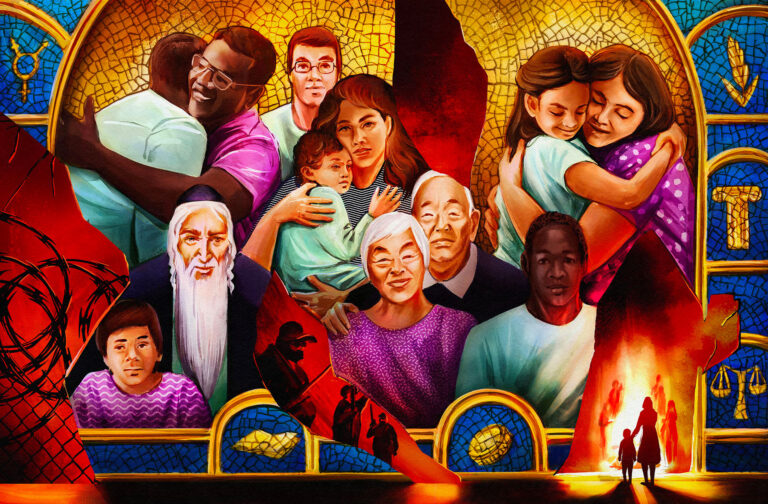
Picture a feminist gathering: a sea of solidarity, yes, but stop a few strides and notice the absent faces—the women of color, the queer women, the ones whose liberation the movement has too often *forgot to include in the guest list*. The so-called “global” sisterhood isn’t a unified front. It’s a mosaic where some tiles have been cracked, some deliberately stained a paler shade. Western feminism, steeped in the ghosts of second-wave activism, has long been a playground (or so the narrative goes) for women with white skin and financial means. Where, exactly, does this leave the Malala Yousafzai—or the 14-year-old African girl with no ID, both denied opportunities in the name of culture, religion, or colonialism’s half-alived legacies?
We’ve been duped. The language of “women’s rights as human rights” is a Trojan horse hiding the reality: *not all rights are created equal*. While one woman’s battle is for access to contraceptives, another’s fight is just to avoid honor killings while her family burns banknotes in protest at the idea of independence from patriarchal violence. The global feminist narrative is a story still being written—and it’s missing something critical. The erasure of intersecting oppressions hasn’t been so much a quiet mistake as a deliberate blind spot.
—
The Uncomfortable Truth: How White Feminism Sold Sisterhood As Save-Yourself Club
If feminism were its own religion, the tenets would look something like this: worship at the altar of capitalism, with a side of performative allyship, and the holy sacrament? A “girl power” aesthetic made for Instagram filters, conveniently forgetting that “girl power” wasn’t designed for the woman whose hands have never known the luxury of “personal brand.” Third-wave feminism, the one that claims it finally “included” marginalized voices, was born not of a collective awakening but an economic one—safe for corporations to profit, with diversity sprinkled in like glitter on a burger.
White women in the West have not lacked opportunity—they’ve lacked responsibility. Where a Black woman’s body is hyper-violentized on the street, the white woman’s body is hyper-privilege-ified. There’s no global equality in the fact that your abortion access has become a debate point while 14 million women worldwide *lack it* due to systemic, structural silence. Sisterhood here is a transaction—“support me, and I’ll include you,” says Western feminism, only for the inclusion to mean “sit here, off to the side.”
—
White Supremacy: The Hidden Curriculum Of Feminist Ideology
The elephant in the feminist closet has many names: whiteness, racism, patriarchal gatekeeping—but to address it fully, we must name it what it is: *a global economic and cultural system that weaponizes gender*. The same men who occupy the halls of power are the same men whose wealth was built off stolen land, enslaved bodies, and exploited labor—labor that includes women’s. So why should the critique change once feminism enters the scene? It shouldn’t, and yet, the framework demands it does.
The feminist movement has too often functioned like a charity auction where the “donors” (white women) decide who gets a seat at the table and who gets a program. This is not the sisterhood it claims to be. Whiteness is not just an individual flaw to check in the corner. It is the scaffolding—the pillars and mortar—that props up the entire structure. We can tear down each racist comment on Twitter and celebrate trans women and still allow the system to continue breathing, because somewhere along history’s long march, sisterhood became a code word for self-interest.
Consider these numbers: globally, women earn only 77 cents for every dollar a man earns. But when you peel back the layers, you’ll find that Black women and Indigenous women make *half* of that—because their labor has always been less than “fully human.” The global sisterhood ideal ignores this harsh reality, treating the symptom (unequal opportunity) without challenging the disease (the framework).
—
Rewriting Sisterhood: From Sister Circle To Anti-Capitalist Alliance
The feminist movement must finally acknowledge what it has denied for decades: sisterhood cannot be *progressive* without the destruction of white supremacy. This means dismantling not just individual acts of prejudice but the architectures of white supremacy—everything from curriculum representation in schools, to media platforms that amplify one voice over ten thousand, to economic structures that let white men hoard 80% of all wealth globally.
What does a true global sisterhood—one without erasures—look like? It is one where the woman in the refugee camp has the same voice as the woman attending an Ivy League school. It is a feminism that recognizes how intersectionality isn’t just a buzzword—it is a *survival tactic*. The same system that devalues Black women’s reproductive freedom also devalues Black men’s lives entirely. Feminism that doesn’t see this link isn’t just “incomplete” anymore—it is *complicit*.
—
The Cost Of Our Silence: Why The Battle Begins Now
Let’s take a moment to confront the reality: if a young woman in Saudi Arabia can be married at 14 and a white, Western feminist in Canada demands “free periods,” then we’ve clearly separated the world into categories of human value. It’s a hierarchy with a gendered face. We are in deep trouble when a woman must trade bodily autonomy for economic survival, particularly when those demanding *their* rights won’t lift a finger for the structural systems that created this option. The cost of inaction isn’t just moral. It is systemic, existential.
The challenge we face now is one of radical inclusion—not the performative kind offered with a social media caption, but the kind that calls on the privileged to use their platforms to *push back*, not just stand by. It means that the “global” in feminist no longer implies *homogenized* or *Westernized*—but genuinely *worldwide*, acknowledging that not all women are alike because not all women’s experiences have been allowed to *count*. Sisterhood can’t be a club with tiered memberships. The revolution must be universal.
—
The Road Ahead: When Feminism Meets Revolution
If feminism must evolve from a movement for the “right girl” into a movement for *human liberation*, it must shed its complicity with capital and patriarchy. This means centering women around the *world* who are still fighting for the most fundamental human rights: life, safety, and bodily autonomy. It’s a fight where the battles overlap—against global capitalism, white supremacy, and the state’s denial of rights—and the victory will be shared only if it is *shared equally*.
The play is done. The costumes are ripped off. It’s time to play for keeps.