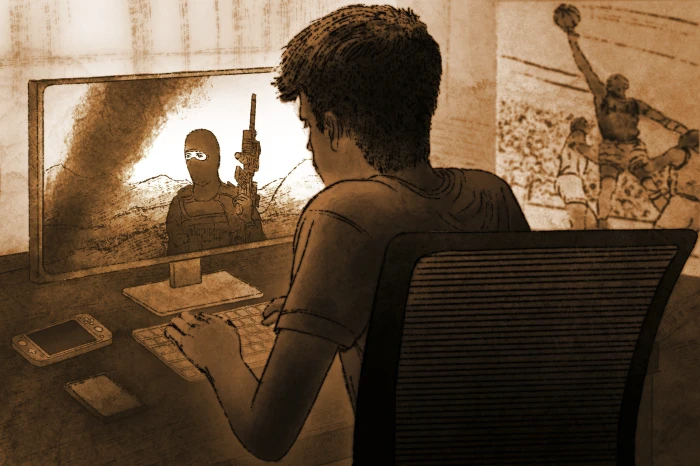
In the labyrinthine corridors of adolescent relationships, the “friend zone” is often perceived as a shadowy chamber — a space where youthful yearnings and unreciprocated affections intertwine, creating a crucible of emotional turbulence. This complex territory is not merely a social setback; it can act as a catalyst for profound psychological shifts, particularly among teen boys navigating the tumultuous terrain of identity and belonging. When feminism enters this narrative, advocating for equality and challenging traditional gender roles, it can sometimes become misunderstood or misrepresented, setting the stage for alarming ideological radicalization. Examining how the friend zone intersects with feminism reveals a compelling story of disillusionment, entitlement, and the search for agency in a rapidly changing social landscape.
The Friend Zone: Myth, Misconception, and Emotional Alchemy
The friend zone is often depicted in cultural lore as a punitive realm, a cold exile where affection is denied in favor of platonic connection. This metaphorical chamber, though frequently trivialized, harbors complex emotional chemistry. It can distill feelings of rejection into a potent mixture of resentment and confusion. For teenage boys, whose identities are still malleable and influenced by peer validation, the friend zone can ignite a profound crisis. This crucible burns away naivety and exposes a raw wound of perceived emasculation — a sentiment intertwined with cultural narratives around masculinity and desirability.
When affections are unreturned, the emotional alchemy in the friend zone sometimes corrodes self-worth. The boy who once felt entitled to romantic attention begins to feel invisible, sparking a cognitive dissonance between his self-perception and social reality. In this space, feminism’s call for autonomy and choice may be misinterpreted as a barricade erected against him, not as a framework for mutual respect. The disjunction between expectation and experience fuels frustration and breeds fertile ground for radicalized interpretations.
Feminism Through the Lens of Adolescent Male Experience
To many teen boys, feminism can appear as an enigmatic force reshaping traditional courting rituals and power dynamics. Its insistence on equality and the dismantling of patriarchal privilege challenges long-standing norms that have defined masculinity for generations. Adolescents may perceive this shift as a loss — a forfeiture of the social scripts that once guaranteed relational success and identity affirmation.
Feminism’s insistence on consent, autonomy, and the rejection of entitlement runs counter to the ingrained belief that romantic or sexual interest is a transactional reward for social capital or adherence to masculine norms. This paradigm collision often leaves teen boys adrift, struggling to reconcile their developmental needs with the new social expectations. Their response to this upheaval varies; some embrace the evolution, but others retreat into antagonistic posturing that can veer toward radicalization.
Entitlement and the Entropic Spiral of Resentment
At the core of the friend zone’s dark magnetic pull lies a toxic thread: entitlement. The adolescent mind, swayed by cultural conditioning, may erroneously interpret friendship as a contractual agreement where affection is owed. When feminism dismantles this assumption, it disrupts the expected reward system, precipitating an entropic spiral characterized by increasing bitterness and a corrosive sense of injustice.
This emotional descent is not merely about unrequited love but about perceived betrayal by a world that promised recognition for conforming to prescribed masculine roles. For some, this devolves into a radical rejection of feminist ideals, framing them as antagonists or gatekeepers rather than as champions of equality. This reframing compounds isolation and can steer boys toward echo chambers where grievances fester unchecked.
Online Echo Chambers: Amplifiers of Anguish and Radicalization
In the digital age, the emotional reverberations of the friend zone and misunderstandings surrounding feminism echo louder and more persistently than ever. Online forums and social media platforms become arenas where disaffected teen boys congregate, seeking solace or validation. These platforms, however, often curate content that nurtures grievance and cultivates extremist perspectives.
Within these virtual enclaves, feminist discourse is frequently distorted, repackaged as an adversarial ideology aimed at emasculating men. This narrative fuels a siege mentality where the friend zone is mythologized as a systemic oppression, and feminism is recast as its instrument. The resultant radicalization is less about political ideology per se and more about emotional survival in the face of perceived existential marginalization.
Empathy as the Antidote: Reframing Relationships and Identity
Counteracting this trajectory requires cultivating nuanced empathy — an ability to understand and appreciate the transformative societal shifts feminism embodies, as well as the psychological challenges posed by the friend zone. Encouraging adolescent boys to see relationships not as transactional exchanges but as human connections founded on respect and consent is essential.
Fostering emotional literacy can dismantle entitlement, replacing it with genuine self-awareness and resilience. Schools, parents, and communities play a pivotal role in reframing narratives, guiding boys to interpret rejection not as a personal failure, but as an integral part of relational dynamics. Emphasizing shared humanity over adversarial gender constructs can dissolve the emotional fissures that lead to radicalization.
The Promise of Integration: Navigating Masculinity and Feminist Values
The friend zone’s potential to radicalize dissolves when adolescent boys are invited to engage with feminism not as a foe, but as a framework to enrich their understanding of identity and relationships. Integrative approaches that honor the complexities of masculinity while embracing feminist principles can empower teens to forge authentic connections.
By viewing feminism as a guidepost rather than a barricade, boys can transcend the limiting binaries of rejection and entitlement. This journey from alienation to alignment is fraught with challenges but promises a more inclusive, respectful, and emotionally intelligent future generation.
Conclusion: Beyond the Friend Zone — Toward Emotional Sovereignty
The friend zone should not be seen simply as a pitfall for teenage boys but as a vital crucible for emotional maturation. Its intersection with feminism, when misunderstood, can radicalize vulnerable minds seeking order in chaos. Yet, through empathetic dialogue, education, and inclusive narratives, the friend zone can become a gateway to emotional sovereignty rather than radicalization. In this alchemical transformation lies hope — that young men will emerge not embittered, but enlightened, ready to participate in a society where equality is not a battleground but a shared journey.