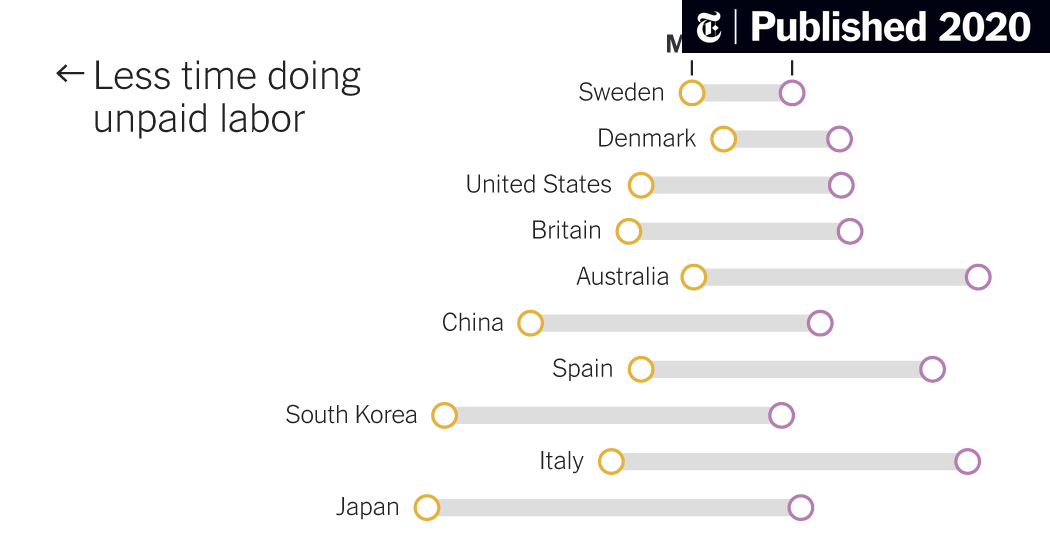
There’s an invisible economy that pulses beneath the surface of everyday life, an industry fueled not by factories or boardrooms, but by hands often unseen and voices rarely heard. Imagine for a moment if we could put a price tag on this silent engine—on the billions of hours women pour into unpaid labor every single day. The sum is staggering, so vast it has the power to topple our traditional understanding of economic might. If women’s unpaid labor were accounted for in the Gross Domestic Product (GDP), the implications would be seismic, rewriting the rules of fiscal measurement and exposing the deep-rooted inequities stitched into the fabric of society.
The Shadow Economy: Understanding Unpaid Labor
Unpaid labor, largely shouldered by women, lives in the shadows of the official economy. It includes caregiving, housework, child-rearing, emotional support, elder care, and other indispensable tasks that keep families and communities functioning. These activities are not just acts of kindness or familial duty; they are the foundation upon which all formal economic activity rests. Without nurturing hands preparing children for the workforce or managing households, the paid economy would falter dramatically.
Yet, this labor is invisible in economic statistics because it does not involve financial transactions, even though its value is undeniable. This invisibility is not accidental—it reflects a structural ignoring rooted in centuries-old gender norms that devalue women’s contributions, perpetuating economic and social hierarchies.
GDP’s Blind Spot: Why Economic Metrics Fail Women
The Gross Domestic Product is touted as the ultimate indicator of a nation’s economic prowess. It measures the market value of all final goods and services produced within a country. But herein lies its Achilles’ heel: the metric is blind to labor that escapes commodification. Housewives, caregivers, and volunteers who contribute relentlessly remain ghosts in the GDP machine.
This blind spot isn’t only a technical oversight; it reveals a fundamental bias in economic thinking. By valuing only market transactions, GDP simplifies complex human ecosystem interactions into neat columns on a ledger—at the expense of recognizing how society really operates. The exclusion of unpaid women’s labor obscures a significant source of economic vitality and social stability.
The Magnitude of Women’s Unpaid Labor: A Hidden Giant
Quantifying the value of unpaid labor is no simple task, but estimates consistently reveal astronomical figures. When converted into monetary terms, unpaid domestic work and caregiving could account for trillions of dollars worldwide—often equivalent to or exceeding the GDP of some of the largest economies. This revelation is not just a statistical curiosity; it hints at a massive, untapped economic engine.
Such figures are disturbing because they expose a blatant imbalance. Women sustain the lifeblood of the home and community labor markets, yet economic systems place little or no value on their indispensable toil. The explosion in GDP that would occur if women’s unpaid labor were officially accounted for would force a reckoning with long-standing economic and societal assumptions.
Feminism’s Radical Challenge to Economic Orthodoxy
Feminism challenges more than social norms—it challenges the very framework by which we gauge value and success. Recognizing unpaid labor as legitimate economic work threatens to upend conventional hierarchies that prioritize profit over care. It demands a paradigm shift that integrates emotional labor, caregiving, and household management into mainstream economic discussions.
This feminist reckoning confronts patriarchal capitalism head-on, calling for policies that do not just acknowledge, but remunerate, support, and redistribute unpaid labor. Concepts like Universal Basic Income, paid family leave, and expanded social safety nets are practical consequences of this radical reimagining. The thought alone—GDP figures swelling exponentially with recognition of unpaid women’s labor—provokes discomfort among entrenched interests that benefit from the status quo.
The Social and Political Stakes of Recognizing Unpaid Labor
Counting unpaid labor in economic measures is not simply about dollars and cents. It’s about justice, equity, and gender parity. By unearthing this hidden work, society exposes entrenched inequalities that have been normalized for generations. It highlights how women disproportionately bear the burden of social reproduction without adequate recognition or compensation.
This recognition can catalyze social transformation—lifting caregiving out of invisibility, providing pathways to empowerment, and reshaping public policy to align with lived realities. It pushes political institutions to confront uncomfortable truths about labor division, gender roles, and economic opportunity. In doing so, it opens doors to dismantling systemic gender oppression.
Transforming Value: Beyond Market Capitalism
Imagining a world where unpaid labor is acknowledged demands a radical shift away from market capitalism’s narrow definitions. It necessitates a more inclusive economy—one that values human well-being, relational care, and the ecosystem of support that nurtures societal growth. This transition calls for new accounting frameworks that incorporate care metrics alongside financial indicators.
Such transformation is not utopian fantasy but an urgent necessity. The pandemic illuminated the vulnerabilities of ignoring care work; health crises and social disruptions became magnified where unpaid labor went unrecognized. Valuing unpaid women’s work equally is vital to building resilient, equitable economies that serve everyone.
Conclusion: The Unseen Revolution Awaits
The potential GDP explosion if women’s unpaid labor were factored in is more than an economic quip—it’s a call to confront uncomfortable realities masked by centuries of neglect. Beneath the façade of economic progress lies a profound systemic blindness, a failure that feminism exposes with unflinching clarity. Recognizing and rewarding women’s unpaid labor is not just about reallocating resources; it’s about reclaiming dignity, redistributing power, and redefining what economic success truly means.
Only by peeling back the layers of invisibility can society begin the arduous task of reconstructing equitable structures that honor all labor, paid and unpaid. This is not merely a feminist issue; it is the cornerstone of a just and prosperous future that refuses to leave half the world’s labor in the shadows.