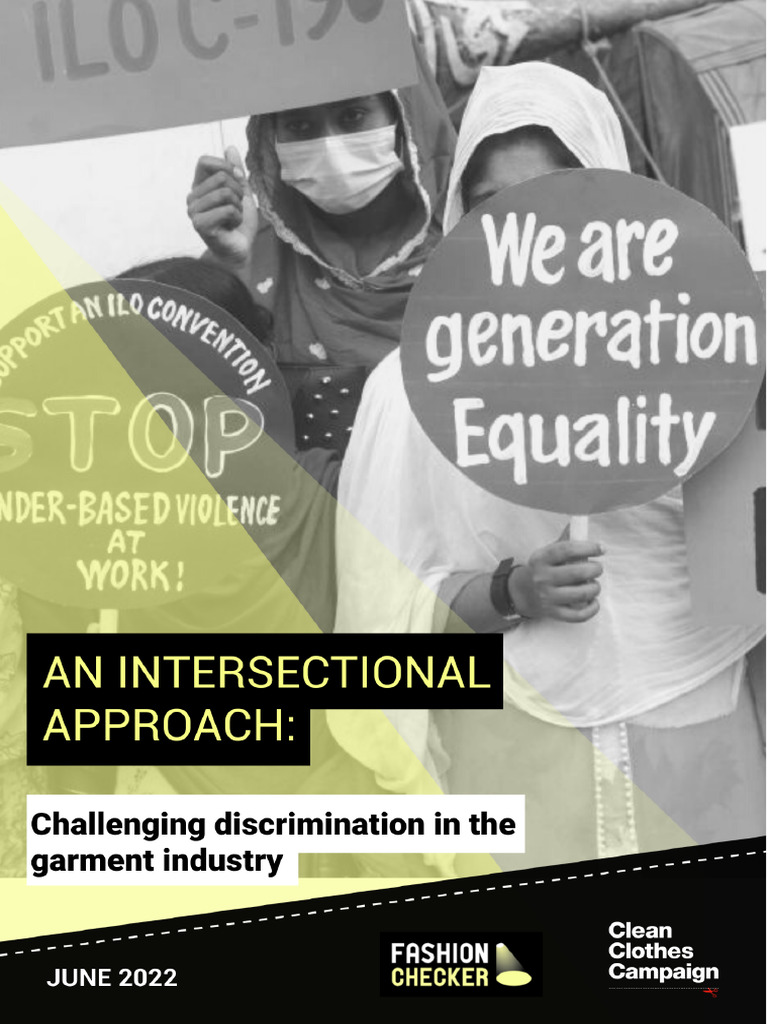
Feminism, labor, and consumerism—three seemingly disparate threads woven into the complex tapestry of global capitalism—converge with dizzying intensity when we peer beneath the glossy surface of fast fashion. At the heart of this maelstrom lies the garment worker in Bangladesh, whose grueling reality contrasts starkly with the carefree performativity of the Shein haul influencer. This dichotomy not only challenges conventional feminist narratives but demands a radical recalibration of how we understand labor, identity, and power in an interconnected world. Prepare to dismantle the simplistic binaries and plunge into an intersectional discourse that refuses to be sanitized, promising a provocative shift in perspective that unsettles and illuminates in equal measure.
The Invisible Machinations Behind the Thread
Bangladesh’s garment industry stands as a monolithic pillar in the realm of global apparel manufacturing, responsible for producing a staggering fraction of the world’s fast fashion inventory. Yet, behind this ostensible economic marvel lies a shadow economy of exploitation, invisibilized labor, and fractured human dignity. Female workers—predominantly women—constitute the backbone of this industry, their tenacity underscored by exploitative wages, oppressive working hours, and hazardous conditions. The sweatshop is not merely a location; it is a systematic extraction apparatus that strips away agency under the guise of economic necessity. Feminism, in this context, encounters a paradox: advocating for empowerment while witnessing structural subjugation perpetuated by purportedly progressive markets.
Intersectionality as a Crucible of Complexity
To apprehend the nuances of garment labor through a feminist lens, intersectionality is not a luxury—it is an imperative. The experiences of Bangladeshi garment workers cannot be distilled into gender alone; they are profoundly shaped by class, geography, ethnicity, and global economic hierarchies. Intersectionality exposes how these multiple axes of identity compound oppression, magnifying vulnerabilities. This feminist framework transmutes the worker from a faceless cog into a multidimensional subject whose struggles are inextricably linked to global structures of capital and patriarchy alike. Ignoring this complexity results in a myopic understanding that trivializes their agency and pain while fortifying the very systems feminism aims to dismantle.
The Shein Haul Influencer: Performance and Privilege
On the other side of this global equation is the Shein haul influencer—a symbol of consumption, performativity, and digital capitalism. Through glossy Instagram posts and viral TikTok videos, these influencers showcase mountains of ultra-affordable clothing, embodying a culture of immediacy and disposability. The haul is less about apparel and more about spectacle—the endless acquisition signaling identity, status, and autonomy. Yet, lurking beneath the surface is a disquieting complicity: these dazzling displays are entwined with the very labor forces they rarely acknowledge. Feminist discourse here encounters a provocateur: how does one reconcile the influencer’s performative empowerment with their inadvertent participation in a system marked by exploitation? The answer demands a radical rethinking of consumption as an interconnected social and political act.
Consumption as a Feminist Frontier
In the era of fast fashion, consumption cannot be disentangled from the politics of labor. Feminism, traditionally concerned with bodily autonomy and equality, must expand to interrogate the embodied implications of consumer choices. Every Shein haul video represents a constellation of labor conditions, environmental degradation, and capitalist excess. The feminist agenda, therefore, must pivot toward cultivating “conscious consumption” without falling prey to neoliberal individualism that reduces systemic critique to mere lifestyle choices. It calls for a collective reckoning—acknowledging privilege, demanding corporate transparency, and supporting models of sustainable, just production. This shift transforms passive consumers into active agents within a broader struggle for justice and equity.
Complicity and Accountability in the Digital Age
The omnipresence of social media has complicated the landscape of feminist activism, sending ripples through the dynamics of complicity and accountability. The Shein haul influencer, often young and media-savvy, navigates a fraught space where visibility equates to influence, and influence can either reinforce or disrupt oppressive systems. Yet, the ease of content creation and the relentless push for engagement foster a dissonance—awareness is not always synonymous with action, and performative gestures abound. Feminism’s challenge here is to transcend vanity metrics and cultivate a politicized consciousness that interrogates privilege, amplifies marginalized voices, and insists on systemic transformation rather than fleeting outrage.
Reimagining Feminism Beyond Borders
The garment worker in Bangladesh and the Shein haul influencer exist in a tangled web of global interdependencies that defy neat categorization. Feminism, to remain relevant and radical, must transcend parochial boundaries and embrace transnational solidarity. This necessitates dismantling the hierarchies that position Western forms of feminist expression as normative while relegating labor justice in the Global South to footnotes. It involves elevating stories of resilience and resistance that challenge imposed victimhood, recognizing agency in contexts of constraint, and building coalitions that amplify intersectional demands. Only through such a paradigmatic expansion can feminism hope to confront capitalism’s multifaceted grip on gendered labor.
The Promise of Disruption and Ethical Engagement
What emerges from this examination is not despair but a clarion call for disruption—a promise of transformation rooted in complexity and ethical engagement. The juxtaposition of the Bangladeshi garment worker’s lived reality with the Shein haul influencer’s performative consumption compels us to rethink how feminism interfaces with labor and consumer culture. The future of feminist praxis lies in embracing discomfort, confronting contradictions, and refusing facile solutions. It beckons activists, consumers, and creators alike to envision an economy and culture where dignity, equity, and respect are not privileges but norms. This is feminism’s radical frontier—a terrain bristling with challenge but rich with potential to reshape the way we see labor, identity, and power itself.