What if the very language we use to condemn rape—the weapon of choice in the patriarchal toolkit—stops being a sword and starts resembling a blunt stick? What if the fight-or-flight myth that shapes our legal and moral frameworks is, in fact, a charade for those who freeze or fawn? Feminism has repeatedly dismantled the illusions that perpetuate violence against women, and now it must turn its gaze toward the invisible barricades within rape’s own definition. Force is not just a roaring battle cry; it’s a silent gasp, a forced smile, a compliance that has been mistained for submission. Rape redefinition is long overdue—but will the world dare to include the freeze and the fawn?
The Fight-Flight Fallacy: A Definition Left in Shambles
The standard narrative of rape—rooted in a masculine, mythic retelling of human response to trauma—paints a two-dimensional picture: there is the victim who resists (fights), and there is the victim who flees (flight). This binary, so deeply embedded in law enforcement training, courtrooms, and even psychological models, relegates anyone whose survival strategy falls outside these binaries—which, let’s be honest, is almost everyone—to the realm of the “unconvincible.” If you didn’t scream or struggle like a warrior in a Hollywood action flick, were you really “forced” at all?
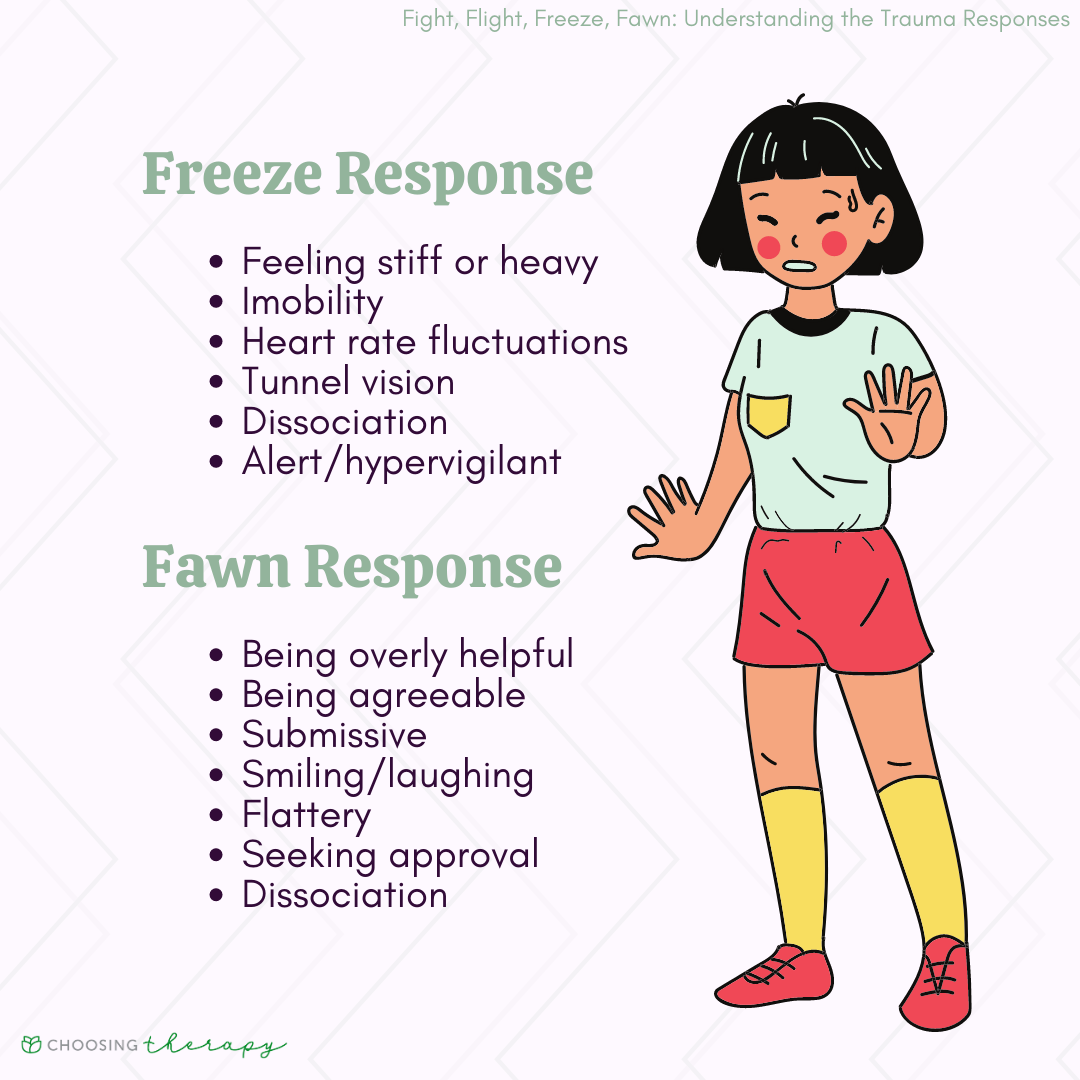
The freeze is the unsung hero of trauma—a biological override system that shuts down movement, speech, even cognition to preserve survival. It is not weakness but radical efficiency, a physiological gamble that prioritizes staying alive over fighting back. And then there is the fawn, a posture honed through millennia of gender conditioning: the sweet, softening compliance that tells aggressors a thousand years of “please” is louder than any physical “no.” These aren’t resistance failures; they’re alternative currencies of resistance, written in the vernacular of survival, not rebellion.
Feminism’s Forgotten Feminines: Why “Fight” Doesn’t Fit Half the People
Radical feminism is undying in its commitment to unearthing narratives that defy the status quo. Yet even now, in a world where women are redefining violence, healing, and bodily autonomy, the freeze and fawn responses persist as red flags for “insincere” resistance. Legal proceedings ask, *Where is the evidence?* but overlook the fact that evidence is not always physical. A victim who dissolves like honey in honey doesn’t leave behind fingerprints or video testimonials. Their resistance was whispered into their breath, etched into the corners of their eyes.
The challenge ahead is forcing feminism—or, more accurately, legal frameworks, societal perceptions—to confront the elephant in the room: *What’s more persuasive, the roar of defiance or the unraveling?* A survivor who freezes may spend decades recounting their story only to be accused of “holding back.” A survivor who fawns may internalize their abuser’s narrative until they forget their own. Both are still subjected to the same violation, denied the same justice.
Redefining Force: Beyond the Physical to the Psychological
If we’re being honest, the current definition of rape leans heavily on the carnal—on brute force, on visible violence. But where does psychological coercion stand? Where is the line between “persuasion” and “inducement,” between “tactical charm” and “controlled pressure”? A force that doesn’t just hit but manipulates, that doesn’t just threaten but seduces, that doesn’t just compel but psychologically dismantles a person—is it any longer called rape if we refuse to see it?
Let’s imagine a trial where a defense lawyer asks: “Did she really want it, or was she merely too afraid to say no?” But what if the “afraid” is not resistance? What if it’s evolution’s way of telling them to “scream quietly”? What if the freeze is its own kind of “no”—one shouted in the only language understood: stillness?
The Fawn’s Paradox: A Survival Tactic That Becomes Its Own Captivity
The fawn response, often dismissed as “compliance,” is a fascinating study in paradox. It is the most radical protest a victim can perform in the face of a predator’s absolute power. To bend, to smooth, to adapt—these are not signs of weakness but of knowing that resistance here would be like throwing sand at a hurricane. However, when the predator is a stranger and the victim eventually finds their voice, they’re met with a societal question that cuts to the bone: *How could I have let this happen?* The unspoken assumption? Those who submit *too easily* aren’t real victims.
This societal double standard punishes victims who appear complicit. Their compliance isn’t seen as survival but capitulation. For women of color, for LGBTQ+ survivors, for those socialized into the art of silent resistance, the fawn can become a prison in and of itself—one they are told they must leave before they’re believed.
Cultural Conditioning: The “Strong Woman” Myth and Rape’s Shadow Side
Our myths of resilience are built on the back of binary ideals—strong or weak, fighter or fleer. The “strong woman” narrative, lauded in progressive circles, leaves little space for nuances like the freeze-thaw cycles that victims navigate. It’s a society that privileges the visible struggle, not the invisible endurance. This duality erases those who don’t fit into the “perfect” victim archetype—those who appear docile but are war-zone veterans.
How easy is it to demonize a rape survivor who, in the aftermath, struggles to define her boundaries or feels she “owed” her attacker gratitude for “sparing” her? The message becomes clear: *No one could have endured what you did and still walk away intact.* The irony? The “intact” women society admires are often the ones who’ve been taught that submission equals safety.
The Fight, Flight, Freeze, Fawn: A Full Spectrum of Survival
It’s time to expand the definition—not as a political or philosophical nicety, but as an ethical imperative. The fight and flight responses are the physical, the visceral—but the freeze and fawn? They’re the metabolic, the psychophysiological. They’re the responses of those who understand that a predator operates on the spectrum of power, not just the spectrum of force.
Feminism’s next battle isn’t just about expanding laws or protesting in the streets—but about demanding a language that can describe the unspeakable. A language where the survivor doesn’t have to reenact her resistance for the courtroom to take notice. A language where the silent scream is heard. A language where rape is no longer defined by violence alone, but by *anything*—anything at all—that undermines consent.
What Would Freedom Look Like?
If rape is ever truly understood as a violation in its purest form, then the freeze and the fawn must stand alongside the fight and the flight as irrefutable truths. They’re not exceptions to the rule; they’re the rule itself—the unspoken rule of survival when the world tells you to be something else entirely. To redefine force, to acknowledge this reality, is to step into a future where no trauma response, whether externalized or interiorized, is met with suspicion. Where the word “victim” is no longer paired with a performance requirement, but simply acknowledged as the starting point.
For now, feminism must ask itself a brutal question: if we refuse to believe survivors whose responses aren’t loud or overt, does that make us complicit in the very oppression we’ve sworn to dismantle? Freeze and fawn aren’t excuses. They’re the language of the oppressed—one that needs amplification, yes, but just as much, *acknowledgment*.