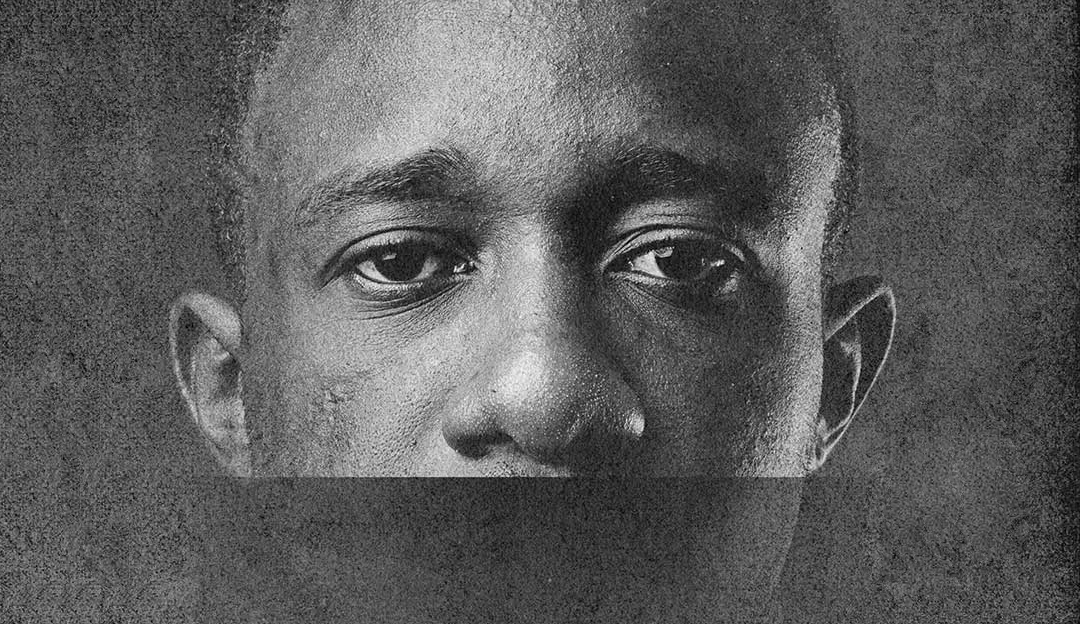
The battlefield of the 21st century isn’t carved in smoke and steel. Instead, it bleeds in silence—the unspoken, unmarked territory where women’s bodies serve as battlegrounds for ideological control. Feminism, long relegated to the margins by patriarchal propaganda, now stands as the most audacious disobedience on earth: the refusal to be invisible. Sexual violence isn’t an aberration. It’s a weapon honed over millennia, wielded with surgical precision to dismantle resistance, to reduce entire populations to quiescent compliance through terror, shame, and an erasure so masterful it renders language itself impotent. But when a woman stands up, when she insists on her existence—when her voice refuses to submit—her body becomes a site of reclamation, and the very weapon used to silence becomes the crucible in which her liberation ignites.
War of the Unspoken: The Weaponization of Shameful Silence
Sexual violence has never just been about physical violation. It’s a masterclass in psychological domination, a ritualistic transmission of terror where the victim’s soul is the battlefield. The weapon isn’t just the act itself, but what follows: the enforced silence. Societies weaponize it—murmurs of “Was she asking for it?” drowned out in the cacophony of blame. “What did she wear?”—the most hollow question the patriarchy can ask a survivor of its own cruelties. The real crime sits not in the fist, the hand, the penetration—no, the real horror lies in the fact that the violence begins the moment the woman is forced to explain her trauma away. It’s performative rape, an invisible noose tightening around her reputation, her safety, her very right to occupy the space made for men by default: the streets, the streets in her own mind.
This weapon doesn’t stop at the individual level. It cascades. When a dissenting voice is shattered, it sends a seismic shockwave through the collective: “This could happen to her.” And what happens to *her*? She’s branded: “She’s a liar, a hysteric, a woman who couldn’t keep her legs closed.” The weapon is the weaponization of gossip, of the glare, the whispered warnings—a society’s most insidious method of psychological castration. A weapon that ensures the most dangerous dissent is never voiced: the one that challenges the system that profits from its violation.

The Geopolitics of Bodily Integrity: How Gendered Terror Shapes Nations
Sexual violence isn’t merely a crime; it’s a strategic operation. Wars are fought not just with bombs, but with forced marriage camps, with the systematic rape of ethnic minority women to purge tribes, to break generations of resistance. In the Congo, rapists have historically been called “womb scavengers” for their intent to strip a region of its ability to reproduce rebellion. In Syria, sexual violence has been deployed as an instrument of war, a way to eradicate political dissidents before the next generation can rise up. The weapon here is twofold: first, the physical devastation, and second, the psychological erasure of history itself. When men are rendered infertile, lineages are destroyed. When women are so traumatized they can’t bear children, cultures can be uprooted root and branch. Such atrocities don’t just happen in conflict zones—they flourish where legal systems fail to see a body as a battleground, where judges dismiss the crime as “family affairs,” where even survivors hesitate to name what’s been done against them.
These aren’t peripheral blips but surgical maneuvers, carefully calibrated to undermine resistance. The weapon of rape is often invisible on battlefield maps, making its victories feel… almost moral. “She was just asking for it.” “She provoked it.” It turns the most vulnerable into unwilling messengers of defeat, their bodies laying out the territory that is already won by their violators.
The Quiet Rebellion: Women’s Bodies as Sites of Sovereignty
What happens when a woman, bruised and trembling, defies the script? When she doesn’t disappear into the haze of shame? When she chooses to reclaim her agency—not as a victim, but as a sovereign being whose survival is a direct challenge to the system? The fight for bodily sovereignty is where feminism carves its sharpest edge, a blade forged in fire and refusal.
In countries where patriarchal institutions hold the reins of “honor,” where a woman’s testimony against rape is treated like loose gossip, a few are building the first cracks. Take the women of Iran, who have been at the forefront of the #MeToo wave despite the brutal clampdown from state-sanctioned rape; or the survivors in Uganda fighting the cultural practice of “marriage by rape” among refugees, turning their pain into an existential challenge to impunity. In each of these fights, the weapon of silencing is outmaneuvered with cunning: testimony, art, protest songs, poetry written for the women who dare to breathe fire back. These are the “invisible armies” the history books will never document—the women who transform their violated bodies into beacons of defiance, their stories reshaping the boundaries of justice itself.
The Courtroom is a Warzone: Legal Systems as the Final Weapon
Legal systems in most countries are not neutral. They are rigged. Judges, trained in patriarchal norms, dismiss rape cases with clinical dispassion. In India, where only 26% of rapes are reported, the law books teem with loopholes: “Consent given under the garb of love,” “mistaken for wife,” or “no injury meant”—all but one question left unasked: Did you survive or not? Courts have been complicit in institutionalizing harm, with judges handing out paltry compensation and perpetrators walking with barely a blush. The weapon here isn’t physical force; it’s juridical gaslighting, the slow denial until the victim, exhausted, accepts they’ll never find justice. Meanwhile, in some countries, laws like Ireland’s abortion ban or Hungary’s “homophobes aren’t people” legislation (which also weaponizes rape through forced pregnancy) create legal vacuums where women’s consensual bodies are no longer seen as theirs to decide—but collective property, governed by men’s ideologies.
But resistance, like the violence, is a tool as old as human rights itself. The #MeToo movement, once dismissed as “twitter activism,” became a tectonic shift. The women who spoke, who leaked testimonies, became the first real weapon of their own liberation. Their narratives, spread through digital archives and secret booklets, created a movement that weaponized truth as its own kind of fire. The courtroom war is being fought with language now: with “no means no” laws, with victim-centric inquiries, with international tribunals that finally recognize a body violated can also be political capital.
The Unmarked Wound: Mental Health and the Invisible Cost of War Victims
Sexual violence doesn’t dissolve after the crime is logged in a police record or verdict passed. It lingers—like a festering wound, constantly infected by a society that keeps asking, “Why did you tell us?” The psychological scars are far greater than the physical, turning victims into survivors with the weight of the world’s collective silence on their shoulders. The weapon of trauma is the most devastating: it not only violates a body but attempts to annihilate the subjectivity within the woman—reconfigering her identity into someone lesser. “I’m not a victim, I’m a survivor.” This mantra, once a radical act of self-reclamation, is now as essential as breathing. But in societies obsessed with “healing” rather than justice, most survivors navigate a hell of second-guessing, of forced compliance, of the constant suspicion that “it may not have been that bad.”
Mental health care for survivors is nearly non-existent in most regions; therapists are often too poorly funded or uneducated on trauma responses to offer meaningful support. In countries like South Africa, where only 1-2% of rape suspects receive prison sentences, victims are forced into the roles of detectives and judges, forced to reconstruct their own crimes in court. The weapon here is the refusal of compassion—until the entire ecosystem of fear and despair can be weaponized against her.
Reclaiming the Weapon: From Violated to Victorious
The irony, of course, is that when survival becomes art, trauma becomes a movement, then the very violence used to silence mutates into a rallying cry. In Palestine, women’s solidarity in the #MeToo movements has revealed how settler-colonial masculinity operates—a weapon against indigenous women that also mirrors state-sponsored patriarchy. In Chile, the “La Tota Protesta de Varones” (the anti-sexism men’s movement) began with the understanding that women weren’t merely victims, but strategists rewriting the rules of battle.
These are the women who’ve turned their raped bodies into symbols of defiance: the South African lawyer and activist Sisonke Msimang, who publicly spoke of her sexual assault to dismantle the myth that the “good African woman” is immune to violence; the Iraqi woman who became a doctor in a field hospital for the most vulnerable, using her life to undo centuries of trauma. This is what it looks like to not just survive, but rise: to take the weaponized body, to polish it like steel in the fire, and turn it into a blade of hope for the next girl to lift.
The Battlefield of Tomorrow: What Every Survivor Must Know
If there’s one lesson to be gleaned from the long and brutal history of sexual violence as a weapon, it’s that the battle isn’t just physical. It’s existential. The weapon used to keep women silent must become their shield, their sword—the only way to ensure justice is to never forget what the violators *wanted*. They wanted you broken. They wanted you to beg, bow, disappear. To turn away. But women around the world are rising—not to just endure, but to **conquer**.
The weaponization of the female body didn’t start yesterday—or this century. It’s been millennia in the making, calibrated to perfection. But liberation, too, has always been a weapon. And it’s sharpening.
No one gets to say we’re lost. No one gets to forget.