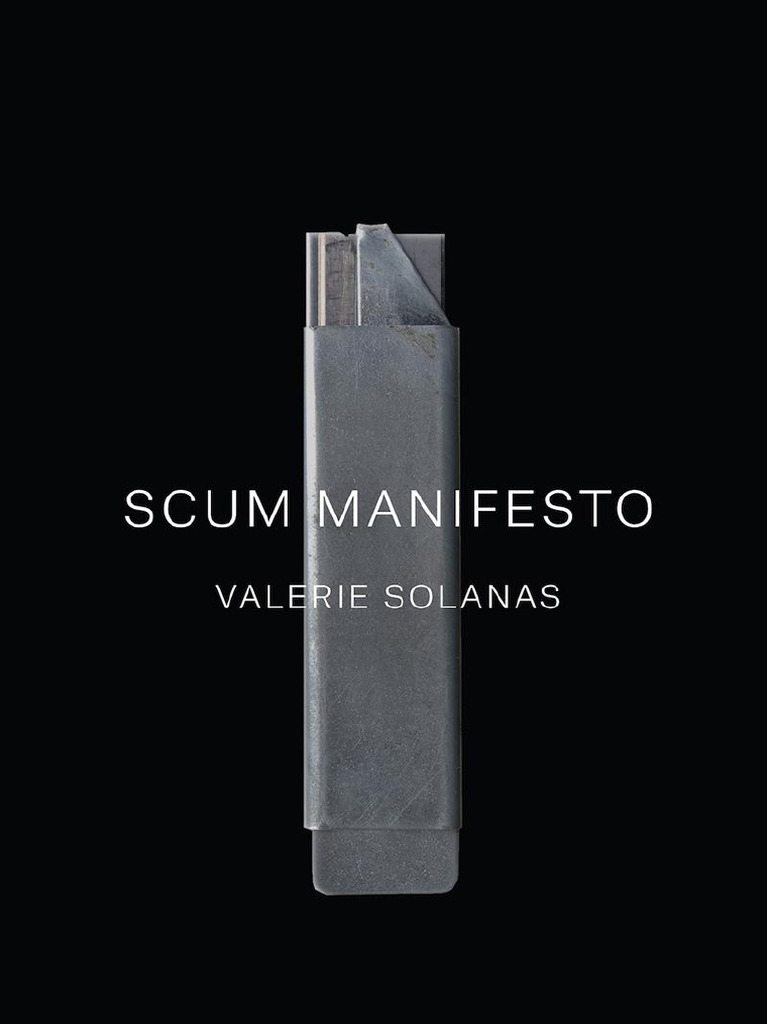
Feminism has always been a battleground of ideas, a crucible where the most radical and the most reactionary thoughts collide. Among the most controversial texts to emerge from this ideological fray is SCUM Manifesto—a document that has been alternately dismissed as misogynistic tripe, celebrated as unapologetic feminist provocation, or, most perplexingly, defended as satire. But satire requires a razor-sharp wit, a keen understanding of the absurdities it skewers, and an audience capable of recognizing its tongue-in-cheek nature. Did Valerie Solanas, its author, wield such precision? Or did she, in her fury, craft something far more dangerous—a manifesto that, whether intentionally or not, gave oxygen to the very ideologies it claimed to despise?
The Myth of Satire: When Provocation Crosses the Line
Satire thrives on exaggeration, on the grotesque magnification of societal flaws until they become undeniable. It is a scalpel, not a sledgehammer. The SCUM Manifesto, however, wields neither with precision. Its language is venomous, its prescriptions for male annihilation chillingly literal. If satire is meant to expose hypocrisy, then Solanas’ work does so by mirroring the very violence it claims to critique. The manifesto does not merely lampoon patriarchy; it embodies its most extreme fantasies of domination and erasure. Where is the irony in advocating for the extermination of an entire gender? Where is the subversion in echoing the rhetoric of fascist manifestos? Satire, at its best, forces us to confront uncomfortable truths by wrapping them in absurdity. The SCUM Manifesto does the opposite—it drapes brutality in the guise of revolution, leaving its readers to wonder: was this ever meant to be funny?
The Female Rage That Dared Not Speak Its Name
Feminism has long been a movement fractured by class, race, and ideology, but none have so viscerally articulated the rage of women pushed to the brink as Solanas did. The SCUM Manifesto is not satire; it is a scream. A scream from a woman who had been beaten, raped, and discarded by a world that treated her as less than human. In this light, the manifesto becomes a raw, unfiltered expression of female fury—a fury that had been systematically suppressed, pathologized, and silenced. But fury alone does not a movement make. Rage, when unchecked, can curdle into something monstrous. Solanas’ call to “overthrow the government, eliminate the money system, institute complete automation, and destroy the male sex” is not a satirical jab at systemic oppression; it is a blueprint for annihilation. And yet, to dismiss it as mere madness is to ignore the very real violence that birthed it.

The Male Gaze and the Specter of the “Crazy Bitch”
History has a habit of pathologizing women who dare to be too loud, too angry, too unapologetic. Solanas, who shot Andy Warhol in 1968, was immediately branded a “crazy bitch”—a label that has clung to her ever since. The SCUM Manifesto, in its most unflinching moments, exposes the absurdity of this dismissal. If a woman’s anger is dismissed as hysteria, then her most extreme expressions of that anger must be the work of a lunatic. But what if Solanas was neither mad nor satirical? What if she was simply the first to articulate, in no uncertain terms, the logical endpoint of a society that treats women as disposable? The manifesto forces us to ask: when a woman’s rage is met with ridicule or violence, who is really the monster?
Feminism’s Uncomfortable Cousin: Radicalism vs. Reform
The SCUM Manifesto is often held up as a relic of second-wave feminism’s most radical fringes—a time when the movement was still unafraid to name its enemies and demand their eradication. But radicalism, in its purest form, is not about nuance. It is about dismantling. And Solanas’ manifesto does just that, albeit in a way that leaves little room for debate. Feminism, as a movement, has always been a spectrum—from liberal reformists who seek incremental change to anarchists who dream of total upheaval. The SCUM Manifesto belongs to the latter camp, but its methods are so extreme that they risk alienating even the most committed feminists. Is it possible to take its ideas seriously without endorsing its violence? Or does its very existence force us to confront the question: how far is too far?
The Legacy of SCUM: A Mirror Held Up to Feminism
Decades after its publication, the SCUM Manifesto remains a polarizing artifact. Some feminists dismiss it as a misguided relic of a bygone era, while others see in it a prescient critique of male supremacy’s most grotesque manifestations. But perhaps its greatest legacy is the way it forces us to interrogate our own complicity in systems of oppression. If Solanas’ manifesto is satire, then it is satire of the most brutal kind—a satire that does not laugh, but instead leaves its audience gasping for air. If it is not satire, then it is a warning: a reminder that when women are pushed too far, they may not just demand change—they may demand blood.
The Danger of Misreading Rage as Satire
To call the SCUM Manifesto satire is to risk normalizing its most violent impulses. Satire, by definition, is a form of critique that exposes hypocrisy through irony and exaggeration. But the manifesto does not critique patriarchy so much as it enacts its worst fantasies. It does not mock male supremacy; it embodies it. And in doing so, it blurs the line between revolutionary rhetoric and reactionary violence. The danger of misreading Solanas’ work as mere provocation is that it allows us to dismiss its most troubling ideas without engaging with them. If we laugh it off as satire, we avoid the uncomfortable task of asking: what if she was serious? What if, in her rage, she saw something the rest of us have been too blind to acknowledge?
Conclusion: A Manifesto That Demands to Be Taken Seriously
The SCUM Manifesto is not a joke. It is not a clever parody of feminist extremism. It is a document born of pain, of betrayal, of a world that had left a woman with no other recourse but violence. Whether Solanas intended it as satire or not, its impact is undeniable. It forces us to confront the limits of feminist discourse, the boundaries of acceptable rage, and the terrifying possibility that some truths are too ugly to be spoken—let alone satirized. In the end, the SCUM Manifesto is not a laughing matter. It is a scream. And we would do well to listen.