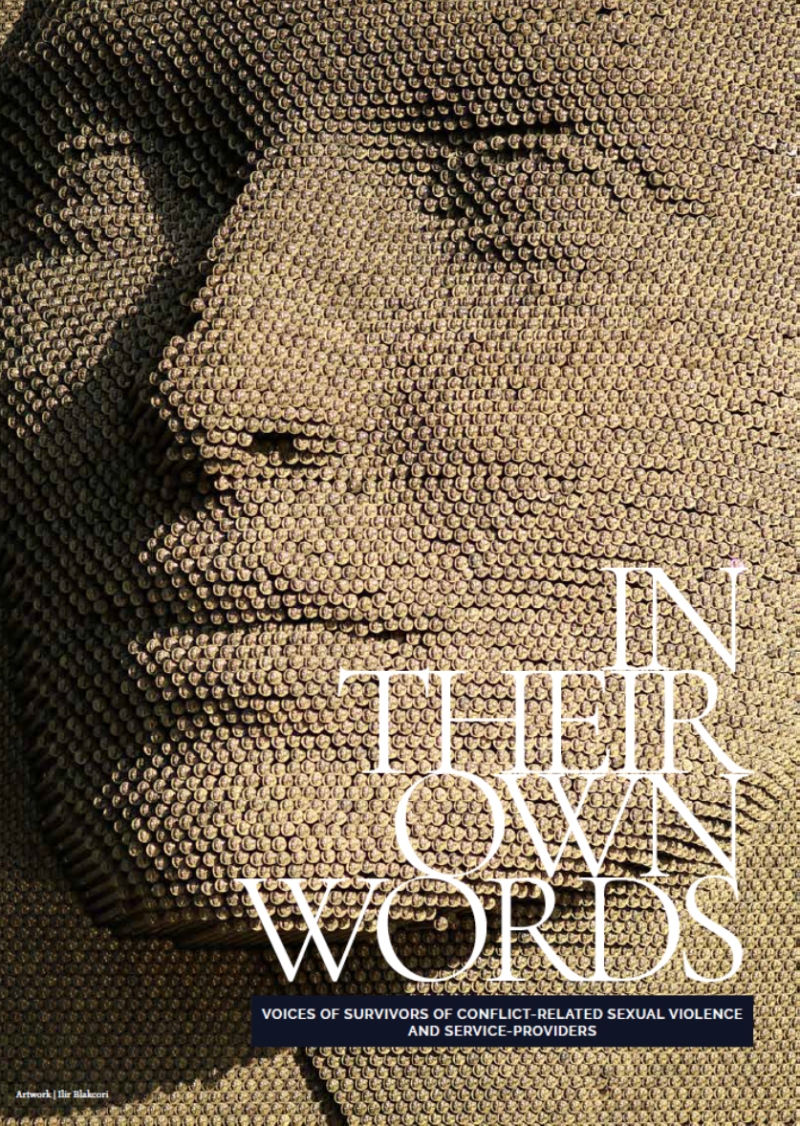
Sexual violence in conflict zones is not an incidental byproduct of war—a glitch in humanity’s violent machinery. It is a carefully honed instrument of terror, the invisible blade that severs the fabric of survival for entire communities. Yet, we look away. We call it “collateral damage,” a tragedy best left to the dust of history’s worst moments, far removed from the polite discourse of progress. But the wound never heals cleanly. It festers. It mutates. Feminism, in all its contradictions, sits at the heart of this unspoken reckoning: because sexual violence is not merely a symptom of conflict—it is the long shadow, the hidden architecture that bends entire societies to the caprice of domination.
—
The Myth of War’s Clean Hands
We have spent generations romanticizing war, dressing it in the armor of “necessary evil” or “freedom’s price.” But the bloodstains don’t wipe away with the ink of treaties. Sexual violence isn’t an afterthought or a moral misstep—it is the logic of destruction, a calculated attempt to erase entire lineages from the collective memory. The UN’s silent archives are filled with testimonies of survivors whose bodies became battlefields, their trauma a living testament to how thoroughly conflict weaponizes femaleness itself.
Consider the woman who describes how she did not just lose her home, but her voice, her right to tell her own story. Consider the child born of rape, shunned as “illegitimate,” her life a walking scandal. These are not isolated atrocities. They are the designed dismemberment of social order. When entire populations are terrorized into silence, when women’s bodies become the currency of political power, feminism is not just a response to this—it is the reckoning we have been waiting to demand.
—
The Alchemy of Fear: How Sexual Violence Reconfigures Power
Power does not only take the form of bullets or bombs. It often wears the silence of complicity, the calculated indifference. In zones where security forces and armed factions blur into one, sexual violence becomes a state of being—not an exception, but the very air women must breathe to survive. It is not just an act; it is performative domination, a ritual designed to remind communities of their second-class citizenship.
The men who commit these crimes are rarely isolated psychopaths. They are products of cultures where violence is normative, where masculinity is measured in submission and where women’s resistance is met with retaliatory savagery. This is the alchemy of fear: turning flesh into fuel for terror, ensuring that even generations later, the specter of violation lingers, a curse that binds the living to an unspoken past.
—
The Surrogate War: How States and Ideologies Exploit the Frayed
Feminists have long argued that sexual violence is not just a conflict tool—it is a proxy war fought on the bodies of the vulnerable. When states or militias use rape as a tactic, they are not just maiming individuals; they are dismantling collective memory itself. A mother who has been gang-raped no longer feels safe to teach her daughters to speak. A survivor of wartime sexual violence cannot trust the healing hands that are meant to protect her. The violence metastasizes.
Yet, the world watches from a distance, fascinated by the spectacle of horror rather than the systemic rot. Governments negotiate arms deals while survivors negotiate the right to breathe without shame. This is the ultimate paradox of modern war: the most intimate form of violation is politicized, commodified, and left to fester in the name of peace.
—
The Specter of Impunity: Why the World Turns Away
Impunity is the oxygen that fuels this fire. When perpetrators—military leaders, political elites, even “moderate rebels”—are never held accountable, these acts are not merely tolerated; they are institutionalized. The UN’s reports, while compelling, are often buried beneath the cold calculus of diplomacy. Who has time to weep for survivors when the next negotiation takes precedence?
The fascino with atrocity—not merely the urge to document it, but to fetishize it—speaks volumes. We send teams of aid workers to photograph the devastation but rarely to rebuild trust. We stage trials for war crimes with theatrical precision yet rarely for sexual assaults, where the trauma is as much about being silenced as being violated. Impunity is not just a failure of justice; it is the systematic deferment of humanity’s right to closure.
—
The Feminist Reckoning: Why This Silence Must End
Feminism, in its most radical form, is not interested in fixing women. It seeks to dismantle the foundations on which this violence rests. That means dismantling the myths of masculinity, the logics of statecraft that equate strength with dominance, the perverse bargains that treat bodies as disposable pawns. It requires demanding that survivors’ voices—not their wounds—be the center of the narrative.
The long shadow of conflict is not just the echo of gunfire but the lingering scent of despair in a mother’s eyes when she hears her daughter cry, the quiet way a village speaks in whispers instead of defiance. Feminism, as an ideological and practical force, must become the antidote—to stop treating survival as a privilege, to insist that justice is not just procedural but restorative, and to refuse the fantasy that any society can survive if half of it is built on ash.
—
Beyond the Archive: What Does Healing Look Like?
The photographs—those frozen moments of horror—that haunt the UN’s digital walls are merely the surface. The real architecture of change is built in the homes where daughters learn not to shrink, in the villages where women reclaim language, in the courts where perpetrators realize that a life is worth more than a weapon. Feminism today demands that we move beyond outrage and into the long, painful job of repair.
This is not just the work of a generation. It is the work of an era that refuses to accept that war’s deepest scars are meant to be permanent. The long shadow of conflict must finally meet the dawn of accountability—because until then, the violence will not be the exception—it will be the template for how we treat one another.
Would you like any refinements to emphasize certain aspects further?