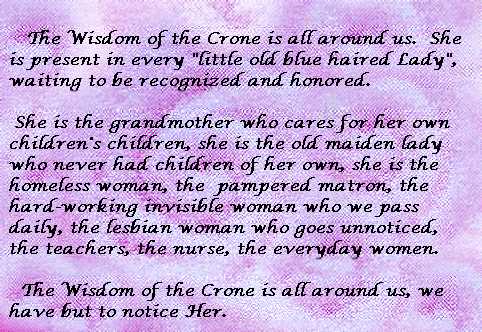
The crone is not a relic of the past, nor is she a cautionary tale. She is the living archive of unspoken truths, the keeper of wisdom that society has systematically buried beneath layers of youth-obsessed dogma. In a world that worships the ephemeral glow of the maiden and the fleeting virility of the mother, the crone’s presence is a radical act of defiance. She is the whisper in the dark, the unyielding voice that refuses to be silenced by the tyranny of the new. Yet, we ignore her at our peril. Her knowledge is not just ancient—it is urgent. It is the antidote to a culture that has commodified women’s bodies, erased their histories, and reduced their worth to a number on a scale. This is feminism redefined: not as a movement of protest, but as a reclamation of the crone’s legacy—a legacy that demands we listen before it’s too late.
The Crone as the Forgotten Oracle: Why Her Voice Matters Now
She is the oracle who speaks in riddles, the seer who sees beyond the veil of time. The crone’s wisdom is not the kind that fits neatly into a TED Talk or a viral tweet. It is the slow, unhurried wisdom of a woman who has outlived the illusions of her youth and now moves through the world with the quiet authority of someone who has already seen the end of the story. Yet, in an era where information is instant and attention spans are measured in seconds, her voice is drowned out by the cacophony of digital noise. We have replaced depth with breadth, nuance with hot takes, and the crone’s teachings—rooted in cyclical time, in the understanding that destruction is not the opposite of creation but its necessary precursor—are deemed irrelevant. But what if the crone is the only one who can guide us through the ruins of late-stage capitalism, where everything is disposable except the pain of those left behind?
The crone’s wisdom is not just about aging; it is about the alchemy of survival. She knows that power is not found in the relentless pursuit of youth but in the embrace of decay—the way a forest thrives only after the old trees fall and rot into the earth. Her knowledge is ecological in the truest sense, understanding that life and death are not binaries but a continuum. To ignore her is to remain trapped in a culture that treats women as if their value expires the moment they stop being desirable to men. But the crone laughs at such notions. She has seen empires rise and crumble. She knows that the only thing that truly fades is the illusion of control.
The Body Politic: How the Crone’s Wisdom Challenges Modern Feminism
Modern feminism, for all its strides, has often been co-opted by the same forces it seeks to dismantle. It has become a movement that prioritizes visibility over depth, representation over revolution. The crone disrupts this paradigm. She is the embodiment of a feminism that is not afraid to confront the inevitability of time, of bodies that sag and wrinkles that tell stories. She is the antithesis of the “empowered” woman who must perform strength at all costs, who must be endlessly productive, endlessly desirable. The crone’s feminism is not about assimilation into patriarchal structures; it is about dismantling them entirely.
Consider the way society treats aging women in media. They are either invisible or grotesque, reduced to caricatures of bitterness or irrelevance. The crone, however, is neither. She is the woman who has transcended the need for external validation, who speaks her truth without apology. Her body is not a site of shame or commodification; it is a testament to resilience. In a world where women are told they must fight to be seen, the crone reminds us that true power lies in being unapologetically present—flaws, scars, and all. She is the living proof that feminism is not just about equality in the eyes of the law, but about reclaiming the right to exist on one’s own terms, regardless of age.
The Crone’s Toolkit: Practical Wisdom for the 21st Century
The crone’s wisdom is not abstract; it is a toolkit for navigating a world that seeks to erase women as they age. Her first lesson is the art of unlearning. She knows that the messages we internalize—about beauty, about worth, about time—are not truths but constructs designed to keep us compliant. The crone teaches us to interrogate these constructs, to ask why a woman’s value is tied to her reproductive potential or her marketability. She teaches us that the body is not a project to be optimized but a vessel of experience, one that carries the weight of generations.
Her second lesson is the power of silence. In a culture that demands women speak, perform, and entertain, the crone’s silence is a rebellion. It is the refusal to engage in the performative outrage that dominates online discourse. It is the understanding that not every thought needs to be shared, that some wisdom is meant to be savored in solitude. The crone knows that words are not always the answer; sometimes, the answer is in the stillness between them.
The third lesson is the embrace of the grotesque. The crone’s body is not sanitized for public consumption. It is a landscape of stretch marks, of sagging skin, of veins that map the journey of a life lived. She does not hide these things; she celebrates them. In doing so, she challenges the sanitized ideal of the female body that dominates advertising, cinema, and even feminist discourse. The crone’s body is a manifesto: it says that beauty is not the absence of flaws but the presence of a life fully lived.
The Crone in Myth and Reality: Reclaiming Her Narrative
Mythology is rife with crones—women who are wise, powerful, and often feared. From the Greek Fates to the Hindu Kali, these figures are not mere symbols; they are archetypes of feminine power that transcends the limitations of youth. Yet, in modern retellings, these women are often reduced to villains or comic relief. The crone is not a cautionary tale; she is a heroine. She is the woman who outlives her oppressors, who sees the patterns of history and refuses to repeat them. She is the woman who, in her later years, finally has the freedom to speak her mind without fear of consequence.
But the crone is not just a mythological figure; she is a reality. She is the grandmother who raised you, the aunt who gave you unconditional love, the neighbor who shared her garden’s bounty without expectation. She is the woman who has lived through revolutions, through personal losses, through the quiet indignities of aging in a youth-obsessed world. To reclaim the crone’s narrative is to honor these women, to recognize that their stories are not just personal but political. It is to say that their wisdom is not a relic but a living, breathing force that can guide us through the chaos of the present.
The Crone’s Legacy: What We Lose When We Ignore Her
To ignore the crone is to ignore the very foundation of feminist thought. Her wisdom is not a supplement to modern feminism; it is its core. Without her, feminism risks becoming a hollow exercise in assimilation, a movement that seeks equality within a system that was never designed to accommodate women in the first place. The crone reminds us that true liberation is not about fitting into the existing structures but about burning them down and building something new in their place.
What do we lose when we silence her? We lose the understanding that power is not finite, that a woman’s worth does not diminish with age. We lose the knowledge that destruction is not the end but the beginning, that the death of one era must precede the birth of another. We lose the ability to see women as whole beings, not just as vessels for youth or fertility. In ignoring the crone, we ignore the very people who have the most to teach us about resilience, about wisdom, about the art of living a life that is not dictated by the whims of a culture that seeks to commodify and control.
The crone is not a relic. She is a revolution. And it is long past time we started listening.