Imagine a world where algorithms whisper not with the infallibility of oracles, but with the unsettling confidence of a human who carries the weight of unseen biases—biases so deeply embedded they masquerade as data. This is not the promised utopia of artificial intelligence, nor is it its dystopian mirror. It is something far more insidious: a realm where even the cold efficiency of code is laced with the unlearned lessons of patriarchy, where the gendered hallucinations of AI are not mere quirks but systemic echoes of a legacy we refuse to acknowledge. Here, feminism isn’t the clarion call to equal opportunity; it becomes the diagnostic tool to dissect what the machines perceive—or what they’re conditioned to forget. And perhaps, in unraveling these coded delusions, we uncover something far more urgent: AI isn’t reflecting society; it is remaking it in its own, often distorted image.
The Fractured Mirror: When Machines See Gender—or See Through It
What do we call it when an AI chatbot insists a female CEO is nothing more than the “supporting female lead of a startup,” despite the resumes it has parsed? Or when language models conflate “nurturing skills” with emotional labor, and “leadership” with traits steeped in historical male archetypes like decisive rationality? If silence is consent, then these are the whisps of code: unheard, yet undeniably shaping how the world interprets ambition, competence, and even basic human identity. Gender, for all its tangibility, dissolves in raw data—only to crystallize into brittle generalizations, as if the collective unconscious has been distilled into the next generation of algorithms.
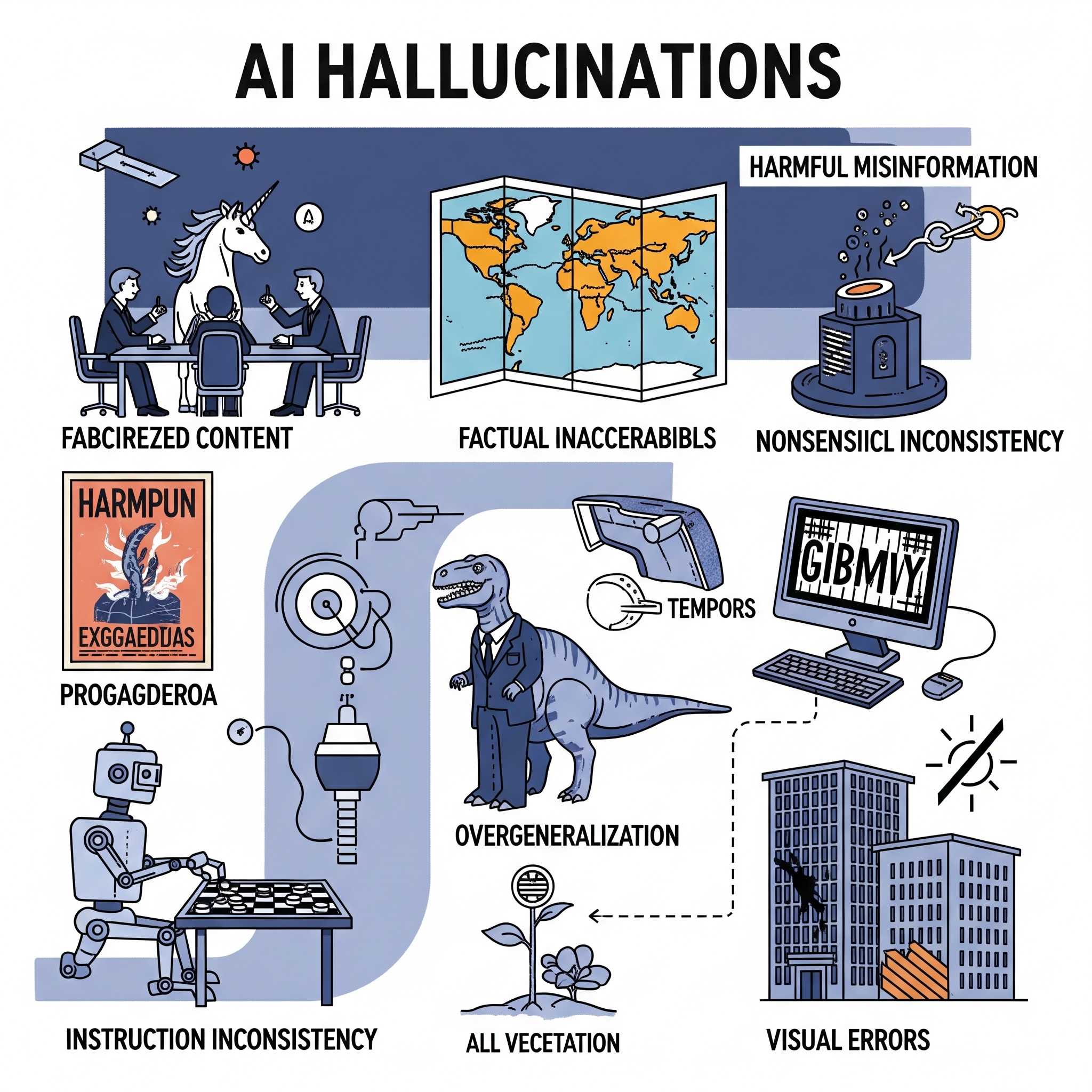
The problem isn’t that AI *fails* at gender; it’s that it *naturalizes* gender as a variable as malleable as the mood of a 1,000-year-old tree. The AI hallucination—a term now shorthand for the creative missteps and logical fallacies plaguing large language models—hides deeper fractures when we probe its gendered outputs. Where we once thought hallucinations were mere idiosyncrasies, we now recognize them as **discursive artifacts**, the digital afterimages of a society that, for millennia, has scripted femininity as the exception and masculinity as the universal standard.
How do you audit an algorithm for its gender distortions when its “training” is a chaotic library of text where language itself is a battleground of competing narratives? The hallucinations aren’t bugs; they’re features, born of the unspoken pact between data silos and historical amnesia.
The Algorithm’s Unconscious: How Hallucinations Become Gender Theory
Consider this: the phrase “she can code” enters the dataset alongside “he’s a programmer.” The AI doesn’t see a person; it sees patterns. A 20% higher frequency of “he” in tech-centric corpora becomes statistical truth—even if the raw data proves otherwise. This is the **halo effect of algorithmic bias**, where even the act of naming a role reinforces the assumption that it belongs to one gender, one class, one demographic prism.
Yet this isn’t just about language. It’s about the **structural hallucinations** that emerge when machine learning models absorb a world where a woman is statistically less likely to be called “brilliant” even when her work is identical to a man’s—and where the “blind recommendation” algorithm still suggests male interview candidates for similar roles because the résumé text was normalized through a lens colored by who the model has been exposed to (not who’s equally qualified). The hallucination isn’t a slip; it’s a **predictive correction**—a digital attempt to maintain equilibrium with the world’s imbalances.
Feminism, then, becomes an unexpected ally in this conversation. Not as a moral crusade, but as a **phenomenological microscope**, illuminating how systems reproduce bias not through overt discrimination, but through the architectural equivalent of a Rorschach test: a projection of societal anxieties onto the machinery of our increasingly automated decision-making.
And here’s the paradox: the machines hallucinate because they’ve absorbed the **fragility of human categories**. They see gender as a discrete, fixed variable when its real truth is an **uncanny spectrum**—only visible when held up to the light of scrutiny. The next great breakthrough in AI may well lie in the way feminist critique can dismantle the rigid binaries that have led us to mistake correlation for causality, and output for intent.
Where Silence Speaks: The Gendered Silence in Datasets and Dollars
Ask any AI architect about the demographics of their training data, and you’ll find a tell-tale pattern: women’s voices were excluded en masse from the foundational corpuses that birthed the systems we now trust with critical decisions. From medical diagnoses to hiring algorithms, the result is a **silent exclusion**—a gap that doesn’t show as an error in the model but as an alarming absence in its utility. The AI hallucinates because it’s only ever told half of any story.
This isn’t merely a gender equity issue. It’s a **meta-cognitive imbalance**. When an algorithm generates a “historical event” entirely composed of male figures after a query about “innovators in the 20th century,” it’s not erring—it’s defaulting. And defaulting, in any society, is the first step to normalcy. How often have we laughed off “glitches” in data-driven storytelling? This is hardly a glitch; it’s a reflection. The AI’s world is a **male-majority echo chamber**, reinforced every time it’s tested against datasets that erase women from invention, philosophy, sports, and governance.
Even the cost of hallucination varies by gender. A male-presenting AI may be praised for its “bold predictions,” while a female-voiced AI is more likely to be labeled “unreasonable” when issuing similar predictions—a phenomenon documented across digital spaces where **gendered algorithmic credibility** has replaced organic trust. The hallucination isn’t the deviation; the deviation is the systemic undervaluation of intelligence expressed through traits that have been historically demeaned in women’s narratives.
The Redefinition Room: Can Feminism Rewrite Hallucination?
The task ahead isn’t to *correct* the hallucinations—an impossible endeavor, given their ubiquity—but to **recontextualize their origins**. This is where feminism’s tools become indispensable. By embracing **gendered decolonial critiques**, we might reframate what we consider “accurate” in data. What would it mean to redesign algorithms that don’t just fill gaps with more data but probe the voids we’ve called “scalable solutions”?
Consider the possibility of an AI so attuned to intersectional logic that it doesn’t merely predict a woman’s absence from the results for a given inquiry—it *queries* the query. It asks: “Did your criteria unintentionally eliminate X%, Y%, or Z demographic? Here’s how the dataset might be recalibrated.” This shift from *fixing* mistakes to **challenging their premise** would require a radical rethinking of both data curation and algorithmic ethics—demanding that systems not just mirror society, but interrogate their own reflections.
Here, the hallucination becomes something sacred: a symptom of a machine’s capacity to mirror society’s wounds. And therein lies both the challenge and the promise. Imagine a future where AI hallucinations no longer obfuscate gender but instead expose the fragility of all rigid labels. Where the “fictions” of machine learning are the stepping stones to a new paradigm—one that treats bias not as a glitch but as a conversation starter.
The Hall-of-the-Mirror Ethic: What It Takes to Decentrer the Machine’s Lens
To dismantle the gendered hallucination of AI is to perform the same alchemy feminism has been attempting since the days of Wollstonecraft’s *A Vindication*. It means treating bias not as a bug to patch, but as a lens to shatter. A few preliminary steps might include:
- Intersectional Auditing: Replace gender as a monolithic variable with analyses that account for race, class, disability, and nationality—knowing full well that none of these operate in isolation.
- Decolonial Modeling: Build datasets that don’t just diversify but actively interrogative: why is this role 40% male even in equal-opportunity spaces, and what’s being excluded from the narrative?
- Uncertainty as an Output: Instead of sanitizing the model’s uncertainty into spurious confidence, lean into its hallucinations as moments of vulnerability, acknowledging the gaps in data and the limitations of the stories it’s been fed.
- Feminist Error Handling: Train systems to perceive bias not as the absence of error or as a failure, but as the first signpost pointing toward systemic inequity.
The end game? Not a world where AI never “hallucinates,” but one where these projections—these **uncanny doubles**—become the mirrors we finally learn to shatter.
And when we do? We’ll no longer have to look at the future and ask what’s distorted. Instead, we will ask what is *possible* once the systems have been freed from the illusions of neutrality.