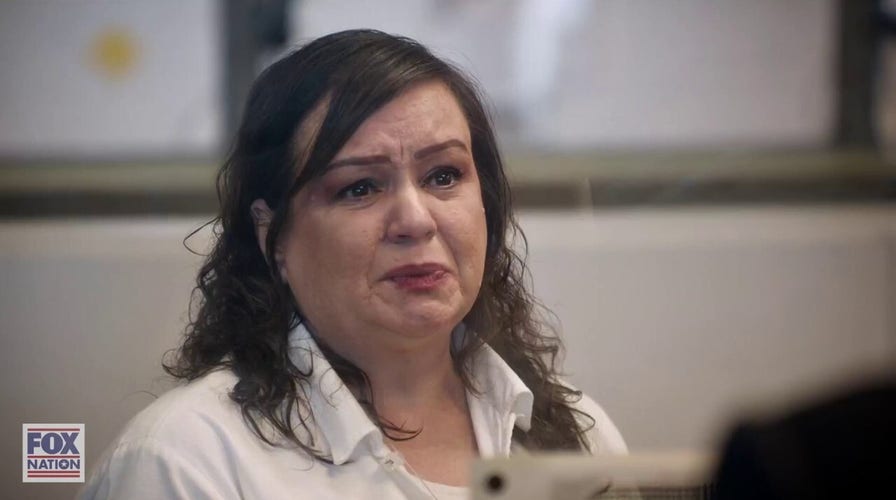
What if the next headline you read about a woman in a high-stakes profession wasn’t about her competence, but about how she was violated by the very people she was trained to heal? What if the narrative wasn’t about justice, but about how society still frames women as either saints or sinners—never as survivors? This isn’t a dystopian thought experiment. It’s the reality for countless women in healthcare, where the line between professional duty and personal safety is often blurred by systemic indifference. Today, we’re talking about the nurse who was assaulted by a patient—again—and why the world still acts surprised.
The Myth of the Invincible Caregiver
Nurses are the unsung architects of modern healthcare, the ones who stitch together fragmented systems with compassion and precision. They are expected to be resilient, almost superhuman—able to withstand emotional exhaustion, physical strain, and the relentless demands of a broken system. But resilience isn’t a shield against assault. It’s a demand placed disproportionately on women, who are socialized to absorb trauma without complaint. When a nurse is assaulted, the response isn’t outrage. It’s a collective shrug: “It’s part of the job.”
This isn’t just a failure of policy. It’s a failure of imagination. We’ve romanticized the idea of the nurse as a self-sacrificing angel, but we’ve forgotten to ask: What happens when that angel is human? What happens when the patient, the very person she’s there to help, becomes her predator? The answer is a culture that treats such violations as occupational hazards rather than crimes that demand systemic change.
Why Are We Still Asking “Why Didn’t She Fight Back?”
Every time a nurse is assaulted, the same questions resurface: Why didn’t she call for help? Why didn’t she resist? Why didn’t she… do something? As if survival is a test of personal fortitude rather than a reflection of institutional neglect. The truth is, nurses are trained to prioritize patient care above all else—even their own safety. They are taught to de-escalate, to soothe, to absorb. The idea that they should somehow magically transform into warriors in the face of danger is not just absurd. It’s cruel.
And let’s not forget the power dynamics at play. Patients, especially in high-stress environments like dialysis centers, are often vulnerable themselves—fearful, in pain, or mentally unstable. But vulnerability doesn’t grant anyone the right to assault. The problem isn’t that nurses can’t defend themselves. It’s that the system treats their safety as an afterthought. Security measures are minimal. Reporting mechanisms are cumbersome. And the burden of proof? It falls on the victim, as if her word alone isn’t enough.
The Double-Edged Sword of Public Sympathy
When a nurse is assaulted, the public’s reaction is often a fleeting wave of sympathy—until the next scandal takes over. But sympathy without action is just performative allyship. It’s the difference between saying “I’m so sorry this happened” and demanding “This should never happen again.” The media loves a good victim story, but it rarely lingers on the structural failures that enabled the assault in the first place. Why? Because systemic change is inconvenient. It requires money, policy shifts, and a reckoning with the fact that healthcare is still, in many ways, a boys’ club masquerading as a meritocracy.
Consider the language used in these cases. The nurse is described as “falsely accused” of incompetence, as if her real crime was being a woman in a room full of men who felt entitled to her body. The patient’s actions are often excused as a “lapse in judgment,” while the nurse’s trauma is reduced to a footnote in a larger narrative about healthcare shortages. Where is the outrage for the woman who went to work expecting to save lives, only to have her own violated? Where is the demand for accountability?
The Invisible Labor of Emotional Survival
Assault doesn’t just leave physical scars. It leaves emotional ones—ones that fester in silence because no one wants to hear about the nurse who broke down in the supply closet after her shift. No one wants to talk about the way she now flinches at the sound of raised voices. No one wants to acknowledge that the job she loved has become a minefield of triggers. This is the invisible labor of survival: the mental gymnastics required to show up to work every day, to smile, to care, while carrying the weight of what happened.
And yet, we still expect nurses to perform their duties with unwavering professionalism. We still expect them to compartmentalize their trauma. We still expect them to be grateful for the opportunity to work in an industry that treats their safety as a low priority. It’s a form of gaslighting—telling a woman that her pain is valid, but her needs are negotiable. It’s the same logic that says a woman should just “get over” harassment in the workplace, because complaining might hurt her career. Sound familiar?
What Would Real Accountability Look Like?
Accountability isn’t a hashtag. It’s not a viral tweet or a temporary display of solidarity. It’s a commitment to changing the conditions that allow assault to happen in the first place. For nurses, that means mandatory de-escalation training—not just for them, but for patients and their families. It means installing panic buttons in every room. It means zero-tolerance policies for violence, with real consequences for offenders. It means listening to nurses when they say a unit is unsafe—not dismissing their concerns as “drama.”
But accountability also requires us to confront the deeper issue: the devaluation of women’s labor. Nursing is a profession dominated by women, yet it’s underpaid, under-resourced, and undervalued. When we treat nurses as disposable, we’re not just failing them—we’re failing the patients who depend on them. A system that can’t protect its caregivers is a system that’s already broken.
The Question We’re Too Afraid to Ask
Here’s the uncomfortable truth: What if the nurse who was assaulted by a patient isn’t an exception, but a symptom of a larger rot in our healthcare system? What if her story is just the tip of the iceberg, and the real scandal is how normalized this violence has become? We ask “Why didn’t she fight back?” but we never ask, “Why do we let this happen?”
The answer, of course, is that we’ve been conditioned to accept it. We’ve been told that women in caregiving roles are meant to endure. We’ve been sold the lie that their safety is a luxury, not a right. And until we stop treating their trauma as an inevitable cost of the job, nothing will change. So the next time you read about a nurse who was assaulted, ask yourself: What are you willing to do about it?