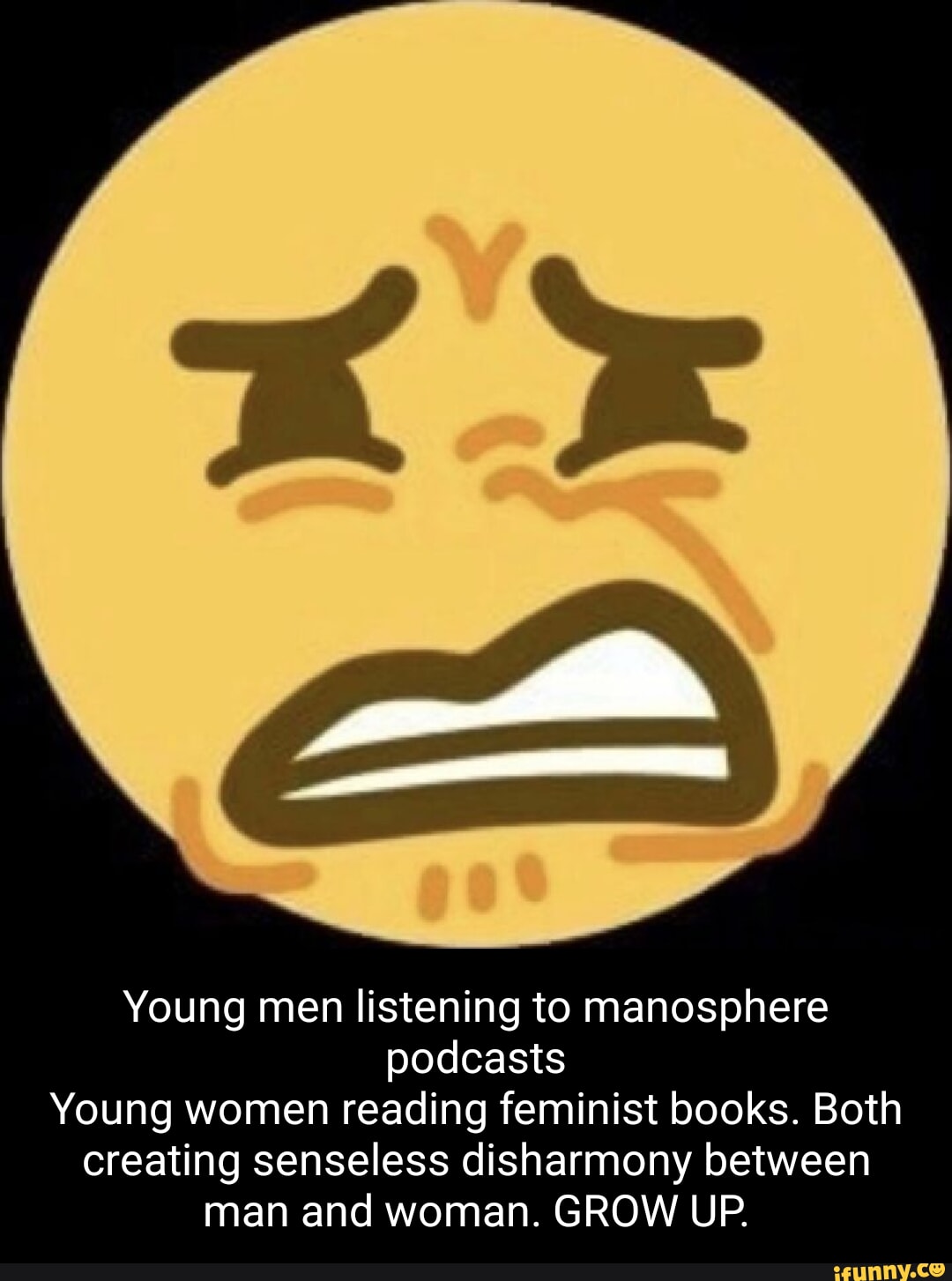
There’s a peculiar, smoldering tension at the heart of online masculinity today—a tension so taut it could snap like a rubber band stretched over a raging fire. It’s not just about red pills and blue pills. It’s about something far more unsettling: the way feminism, like a runaway algorithm, keeps rewriting the rules of engagement for men who thought they’d finally found their digital turf. And now? The funniest people in the whole damn equation are teenagers. Yes, the ones scrolling through memes between TikTok dances and Instagram rants about “woke culture”—they’ve locked onto something the manosphere, as a movement, seems oddly incapable of articulating: that feminism isn’t just a villain. It’s the punchline. And that, my friends, is terrifying in the best way possible.
The Manosphere’s Dark Mirror: A Movement Unfazed by Its Own Irony
The manosphere has always been a paradoxical space: a place where alpha posturing coexists with soul-searching, where incels lick their wounds as incel-housers post self-deprecating poetry. But what’s less discussed is this: they’re all living in the same cultural earthquake, just tuning into different frequencies. The alpha male gurus and the grifters of the internet’s patriarchy-as-a-fraternity miss the joke entirely—TikTok teens, on the other hand, have a sixth sense for absurdity. They’re laughing at the thing itself, not just at its victims. The manosphere built itself a fortress out of rage and resentment, only to realize too late that the real enemy was never feminism—it was its own inability to evolve. Teens? They’ve skipped the whole “manipulation phase” entirely. They’re just holding up the mirror, flashing a neon sign labeled “LOL.”
Feminism as the Ultimate Performance Art: A Comedy of Errors
Imagine a performance piece where the audience doesn’t just watch—they’re the audience *and* the cast. That’s feminism in the age of social media, a living, pulsing experiment in how collective guilt gets curated, packaged, and sold like a viral TikTok challenge. The manosphere has treated this like a zero-sum battle, screaming about “cultural Marxism” and the “soft bigotry of low expectations” while feminism, in its online incarnations, is performing for an increasingly numb public that treats it like a kind of digital masochism. The funny (or infuriating) part? The best moments aren’t the speeches, the policy debates, or the protests. They’re the glitches—the moments when the performativity of feminism, like a badly edited YouTube comment section, reveals its own fractures.
The manosphere would have us believe this is a war. Teens see it as a reality TV show where everyone got too invested in playing their character. One side insists they’re “liberating” men from oppression while the other clings to a mythic past that never existed outside of pornography and fantasy novels. The teens? They’re watching it all, shaking their heads at how badly structured the plot actually is. They’ve got a sense that neither side is really trying to *change* anything—just to perform the illusion of strength, whether through victimhood or conquest.
The Teen Meme Machine: Where Seriousness Goes to Die
You ever see how memes travel? They hop from niche forums to mainstream platforms, morphing with each stop, mutating into new hybrids. By the time they land in the hands of a teenager, they’re unrecognizable—sometimes for the better. Consider the “beta male” fantasy or the “red pill” mythos. These were once serious ideas, part of an attempt to rebrand male trauma into a kind of cult doctrine. But then? They hit the TikTok algorithm and became something else entirely. Teenagers didn’t just copy—there’s this strange, almost *sacred* element to it. Like they understood that seriousness was just another form of laziness. So they took it out to the woodshed and chopped off the legs of the stool to see if it would still stand up.
The memes themselves betray a deeper truth: the manosphere was always a house of cards waiting for someone to laugh. And who better to shove the floor from below than a teenager whose entire childhood was spent watching adults argue over pixels and emotions? Teens don’t *understand* the stakes; they just see that the whole thing is a mess of bad jokes, performative virtue-signaling, and a strange kind of loneliness dressed up in t-shirts declaring “MAN UP.” And so, they adapt. They bend the rules. They turn the manosphere’s obsession with control into a meme about how powerless no one really is.
Laughter as Resistance: Why the Scariest Weapon is a Smile
Resistance usually involves something dramatic: strikes, riots, viral hashtags. But teenagers don’t do protests when they’ve got a thousand ways to sabotage the show *from within*. This is where the darkly brilliant appeal of their approach kicks in. They mock not because they’re trying to tear down a system—but because they’ve been *bored* by it. The manosphere’s architects, buried in their echo chambers, mistake this boredom for weakness. They’re missing the point entirely: these kids are rendering the system obsolete, not by force, but by refusing to take it seriously. Their memes, their ironic adoption of alpha language, their ability to twist a manosphere platitude into a middle finger to itself—that’s not just critique. It’s cultural necrosis.
The Irony of the Teenage Infiltration
Here’s what the manosphere can’t wrap its alpha-male hands around: teenagers don’t just consume this content. They *reprogram* it. They take the raw material of toxic masculinity and use it to build something entirely different—less about identity than about irony, less about rules than about breaking them just to see what happens. They’re the original “genderswap” meme kings, flipping the scripts of toxic masculinity and feminist rhetoric alike. If the manosphere saw itself as an army, teens see themselves as digital pranksters, walking into the general’s office to replace the “KILL EVERYONE” memo with a screenshot of something absurdly adorable—and watching as the entire platoon scratches its head.
The Uncomfortable Truth: Feminism as Art Gallery, the Manosphere as Basement Humor
The funny part of all of this? The kids have won. Not by smashing anyone’s glass ceiling, but by revealing the truth no one wanted to see: that the manosphere and its ideological counterpart aren’t two monolithic forces clashing. They’re two sides of a very boring coin. That’s why teenagers have locked onto both, the same way a kid will pick apart a toy to see what makes it tick—there’s no investment, no allegiance beyond an almost clinical fascination with how silly it all really is.
What’s left for the manosphere to do? Keep getting upset about irony? Keep acting like the jokes land the way a brick would? Sure, feminism remains a scary idea to some, a cultural earthquake to others. But to teenagers, it’s just another episode of a show they don’t really care about, but can’t help watching because it’s too ridiculous not to. And in that disdainful detachment lies an army. Not an invincible army of ideology, but a far more dangerous thing: an entire generation laughing at the system until it collapses under the weight of its own laughability.
Closing the Circle: From Meme to Method, from Laughter to Legacy
The manosphere will keep raging. It’ll keep posting its incel manifestos and its alpha-male pep talks for a while. The real action, though, is in the margins, where a few thousand teenagers gather in chat rooms and TikTok DMs to strip the whole thing down to its barest, dumbest elements—and then build something new from the ashes. Because if there’s one thing the youth of today understands, it’s that comedy is both the most violent and the most powerful form of resistance you can wage.