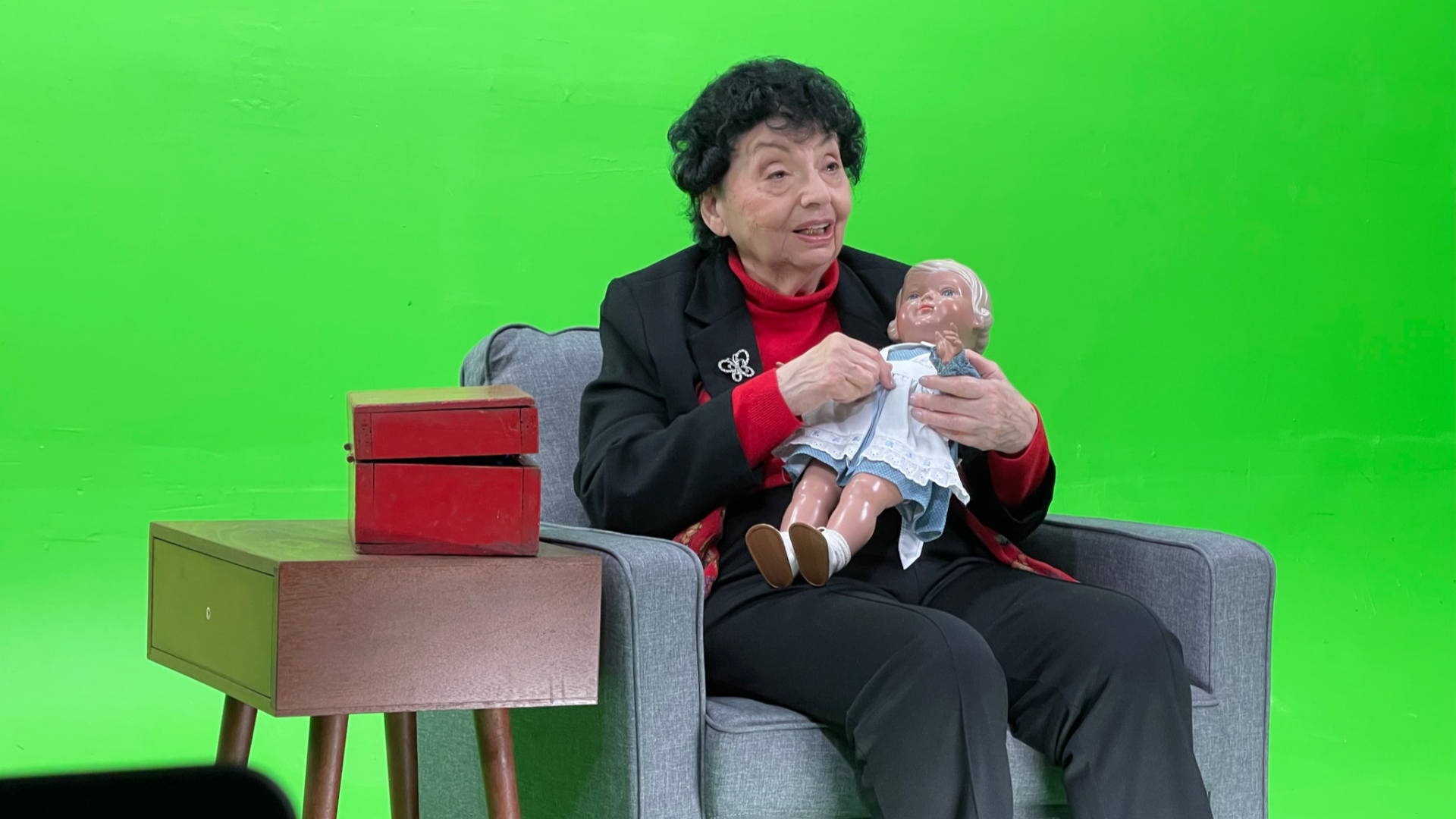
There is a quiet revolution brewing in the way we remember history—not through dusty archives or solemn memorials, but through the immersive, disorienting power of virtual reality. When a Holocaust survivor steps into a digital reconstruction of her past, she doesn’t just recount her story; she forces us to *live* it, if only for a moment. This is not mere storytelling. It is an act of defiance against the erasure of memory, a feminist reclamation of narrative agency, and a confrontation with the uncomfortable truth that empathy is not a passive emotion but an active, even violent, engagement with another’s pain.
The Illusion of Distance: Why We Crave the Uncomfortable
We live in an era where suffering is commodified—streamed, liked, and discarded like yesterday’s news. Yet, when confronted with the raw, unfiltered testimony of a survivor, something shifts. The screen no longer feels like a barrier but a membrane, thin enough to let the weight of history press against our chests. Why does this proximity unsettle us so deeply? Perhaps because it shatters the illusion that we are spectators, not participants, in the cycles of violence that define human civilization.
Feminist theory has long argued that empathy is not a neutral act but a political one. To truly *feel* another’s trauma is to acknowledge our own complicity in the systems that allow it to persist. The survivor’s VR narrative does not just tell us what happened—it implicates us in the act of witnessing. And that is where the discomfort lies: in the realization that silence is not neutrality, but a choice to turn away.
The Body as Archive: Reclaiming Narrative from the Male Gaze
History has a habit of reducing women’s stories to footnotes, their voices drowned out by the chorus of patriarchal narratives. But when a survivor’s body becomes the medium through which her past is reenacted, something radical occurs. The VR experience is not just a retelling—it is a *reembodiment*. Her gestures, her trembling hands, the way her voice cracks when she speaks of loss—these are not just details. They are evidence. Evidence that women’s suffering has been systematically erased, and evidence that it is now being reclaimed, not as a passive victimhood, but as an active, embodied resistance.
Consider the way trauma is often framed in male-dominated historical accounts: as a singular event, a rupture in the fabric of time, rather than a sustained, systemic violence. The survivor’s VR testimony disrupts this narrative. It forces us to confront the fact that trauma is not a moment frozen in amber but a living, breathing force that shapes lives long after the initial wound has healed. And in doing so, it challenges the very notion of what constitutes “historical truth.”
The Spectacle of Suffering: When Empathy Becomes Exploitation
Yet, we must ask: Is this immersion a form of catharsis or exploitation? The line between bearing witness and gawking at another’s pain is perilously thin. Feminist scholars have long warned against the “pornography of suffering,” where marginalized voices are reduced to spectacle for the consumption of the privileged. So how do we reconcile the survivor’s agency with the potential for voyeurism in VR storytelling?
The answer may lie in the survivor’s control over the narrative. In a well-designed VR experience, the user is not a passive observer but an active participant, forced to confront choices, to feel the weight of decisions they never had to make. This is not the same as the passive scrolling through a news feed. This is an invitation to *engage*—and engagement, when it is truly voluntary, can be a form of resistance against the desensitization of modern media.
But the risk remains. Technology, no matter how advanced, cannot erase the power imbalances that shape our world. The survivor may hold the reins of her story, but the audience still holds the power to look away. The question is not whether VR can bridge the gap between witness and participant, but whether we, as a society, are willing to do the work of staying present in that discomfort.
The Feminist Potential of Immersive Memory
What if VR storytelling is not just a tool for empathy, but a feminist act of reclamation? Women’s histories have been buried under layers of silence, their stories told by others, for others. But when a survivor steps into a digital space to tell her own story, she does more than share her past—she asserts her right to define it. This is not just about remembering. It is about *reclaiming* the narrative, about refusing to let history be written by those who never had to live it.
Consider the way women’s bodies have been used as battlegrounds—both in war and in the telling of war. The survivor’s VR testimony is a refusal to let her body be a site of erasure. Instead, it becomes a site of resistance, a place where the past is not just remembered but *reclaimed*. And in that reclamation, there is power—not just for the survivor, but for all of us who have been told that our stories do not matter.
This is the feminist potential of immersive memory: it does not just preserve the past. It transforms it into a living, breathing challenge to the status quo. It asks us not just to remember, but to *act*—to confront the ways in which we, too, have been complicit in the erasure of women’s voices, and to demand better.
The Uncomfortable Truth: Empathy is a Verb
We are drawn to these stories not because they are easy, but because they are *hard*. They force us to confront the fact that empathy is not a feeling we passively experience, but an action we must choose. And in that choice lies the possibility of change.
The survivor’s VR narrative is not just a technological marvel. It is a feminist manifesto, a call to arms against the silence that has long been imposed on women’s stories. It asks us to do more than witness. It asks us to *engage*—to feel the weight of history, to confront our own complicity, and to demand a world where no one’s story is ever erased again.
So the next time you find yourself immersed in a survivor’s testimony, ask yourself: Are you just watching? Or are you being changed?