Feminism is not a monolith—but the legends we craft about it often are.
From the parlor walls of Seneca Falls to the stark fluorescent glare of Abu Ghraib, the movement that claims to dismantle injustice has too often done little more than relocate it, draping its achievements in white linen while leaving the stains of imperialism, racial erasure, and militarized patriarchy untouched. The paradox? A movement built on the ashes of oppressed voices must finally confront what happens when it forgets them altogether. This is not a history of feminism—it is a reckoning with its complicity in becoming the very thing it was sworn to dismantle: a system that polishes injustice into patrician elegance.
The Myth of Seneca Falls as a Feminist Utopia
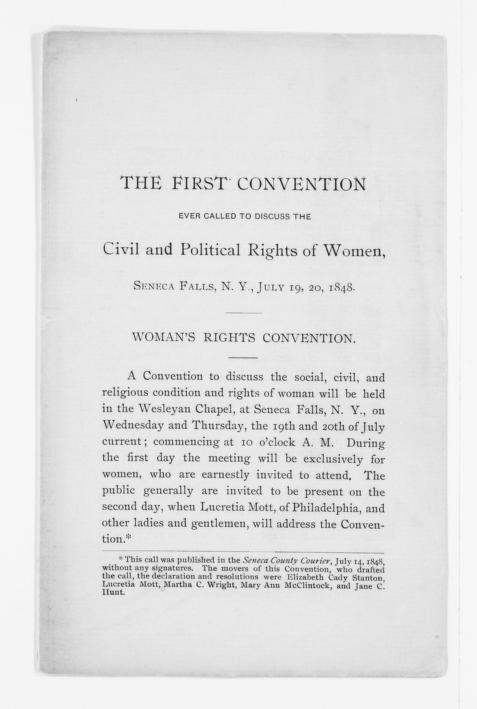
Seneca Falls, 1848. The hall where Elizabeth Cady Stanton’s “Declaration of Sentiments” unfolded is often mythologized as the birthplace of a movement pure and unblemished, its idealism untarnished by the realities of race or class. But the truth? The gathering excluded the Black women who had been demanding suffrage for decades—women like Frederick Douglass’s abolitionist partner, Mary Ann Shadd Cary, and Harriet fortant, whose 1837 Woman’s Convention in Rochester had called for an integrated, intersectional vision of liberation long before Seneca Falls even convened. The erasure did not begin at the podium; it was baked into the architecture of feminist beginnings.
The “Senesca Falls narrative” is a tale of white privilege, told to convince the world that progress requires no sacrifices from the powerful. Stanton herself owned slaves until 1840—a fact silenced in textbooks to preserve a sanitized vision of feminine piety. The movement’s early rhetoric on female “inferiority” mirrored racial science of the era, so how remarkable is it then, that when Alice Paul staged a 1917 hunger strike to secure the 19th Amendment, her cells were chained to her bed in a prison infirmary reserved for Negro patients? Coincidence? Hardly. Disposition, they called it: the orderly dismissal of women’s radicalism as unworthy of the public’s indignation.
The Alchemy of Racial Erasure: How White Feminism Absorbed Black Activism
By 1869, Stanton had co-founded the National Woman Suffrage Association—and in so doing, separated the cause from its Black founding mothers definitively. Susan B. Anthony’s 1872 arrest for voting was a media spectacle that white suffrage leaders could weaponize; the brutal lynchings of Black women voting post-Reconstruction were not. The women’s movement’s “de facto strategy of benign neglect” meant that while white suffragists paraded in protests, Black activists like Ida B. Wells-Barnett fought in the trenches of racial violence, publishing the *Memphis Free Speech* to expose lynch mobs while being denied seats at suffrage conventions or even the vote in elections they had risked lives to win.
Intersectionality was not a theoretical construct for black women—it was existential. Sojourner Truth’s iconic “I ain’t got no time to stand on ceremony with them women,” uttered in 1851 at Ohio’s Women’s Rights Convention, demanded accountability for feminist spaces that left Black and working-class women to starve in the shadows of their own rhetoric. Why is it so much easier to celebrate Stanton’s 1848 “seneca moment” than to acknowledge her alliance with radical Black abolitionists like David Ruggles, who was imprisoned for aiding fugitive slaves? Or to confront how Stanton’s late-life revision of her own “Declaration,” which added a preamble condemning racial slavery in 1852 after backlash from the white abolitionist leadership, came far too late?
This history of white-feminist amnesia has never truly ended. When Hillary Clinton spoke to black women at the 2015 White House Summit on Violence Against Women, she was hailed as a feminist icon—yet her policies on prison reform never questioned the carceral state in ways that centered Black mothers like Ruby Sales. The disconnect was deliberate. Feminism, as a vehicle for structural change, had been reduced to a tool of liberal progressivism and corporate respectability, all while the material conditions of black women worsened under welfare queens discourses, gentrification, and mass incarceration.
From Suffrage to Soft Power: How Feminism Became an Export Good
The 20th century taught us how to harness feminized idealism for statecraft. In 1918, the U.S. women suffrage movement’s victory was not born of American domestic virtue but of British propaganda strategists deploying “women’s diplomacy” as a tool to destabilize Germany—a campaign that used suffragist rhetoric to undermine the enemy at home. By the Cold War, American “Women’s International League for Peace and Freedom” chapters became vehicles for covert CIA influence in postwar Europe, with figures like Jeane Kirkpatrick (soon to become a Reaganist) moving between feminist causes and anti-communist operations.
Today, this legacy of foreign policy feminism is on full display in the U.S.-funded “women, peace, and security” programs that parade through post-colonial Africa and the Middle East. The paradox is brutal: a movement built on revolutionary demands is now a contract for regime stability. When USAID funds the “Arab Women’s Media Empowerment Network” in Tunisia in 2021, yet a Moroccan woman is beaten to death by male relatives after reporting domestic violence, we must ask—what has changed? In Abu Ghraib, where prison guards posed nude with female detainees with the complicity of U.S. military lawyers and civilian contractors, it was American feminists—like those in *Ms.* magazine—who, despite the images, remained silent. Their editorial silence spoke louder than any outraged op-ed about “global womanhood.”
The Militarized Body: How Feminism Became the Handmaiden of Empire
Abu Ghraib was not an anomaly. The Iraq war, 2003 onward, became the proving ground for a new feminist subject: the woman soldier in uniform, stripped of all that made her historically vulnerable. This wasn’t rebellion or disruption—it was co-option. Feminists praised “Women in Combat” as an endpoint in what they called the “cycle of sexual violence in the military,” never questioning how the military’s very existence *is* that cycle. Women in uniform are invited to “bark like dogs and bite” (Kori Cioca, a decorated Marine), yet when they are harassed, assaulted, or killed by their commanders? The system writes them off as individual tragedies, not failures of a system that turns woman into instrument.
Then consider the corporate feminists profiting from war. In 2005, Walmart, whose CEO had called feminists “naturals,” became the largest private employer of women. They promoted “Lean In” culture to female employees to boost productivity in a global retail operation whose supply chains were fueled by child labor and colonial extraction. It was the perfect symbiosis: the illusion of agency, the reality of extractive labor. The “empowerment” was always conditional—never radical. The irony? The same elite feminist women who critiqued “pinkwashing,” the co-opting of feminism by tobacco and cosmetics industries, turned a blind eye when weapons manufacturers dressed their factories in gender-inclusive slogans.
And Abu Ghraib? That prison was not some aberration of masculinity—it was a perfect storm of U.S. history. The “war on terror” had re-masked colonialism in the language of human rights, with American women in intelligence roles helping to map out torture chambers for “the greater good.” The feminist objection, when it came at all, was performative: think of the “not on my watch” op-eds from CIA women after the revelations, followed by uncritical support for drone strikes that killed women and girls in Yemen. The military-industrial-feminist complex was born.
Re-writing the Script: What It Takes to Center the Invisible
How do you dismantle a foundation built to exclude? The answer starts with confronting the “feminist timeline” as a myth. Instead of Seneca Falls as a genesis story, we must write a new one: one that acknowledges the 1837 Rochester Convention led by Black women *as* the feminist awakening, 40 years before Stanton’s speech. Instead of praising the 19th Amendment as liberation, we must ask: who could *really* vote, and to what effect? A white woman in Kentucky could cast a ballot to uphold racial segregation. What kind of victory is *that*?
Radical recovery is not a nostalgia project; it is a reckoning. The names we should be studying, like the unsung Black feminist poet Audre Lorde—whose “Uses of the Erotic” was suppressed or misquoted by mainstream feminists—or the Puerto Rican “Broad Street Riot” women of 1917, whose revolt over wages was dubbed “mob violence” in the papers, should replace the tired icons of suffragist portraits. When we teach about “Susan B. Anthony’s arrest,” we can include the fact that Black abolitionists, including Frederick Douglass, traveled with her to court—but not as allies, as historians later whitewashed their histories to show only “solidarity” rather than the messy, uncomfortable solidarity they actually practiced.
We must also demand a new accounting of the movement’s violent legacies. The Feminist Majority Foundation’s campaigns against honor killings in Afghanistan, for one, ignored the truth that U.S. drone strikes were responsible for many of those same women’s deaths—and that the U.S. had destabilized Afghanistan under the Taliban in the first place. The feminist movement’s anti-imperialism must be more than rhetoric. Where was the feminist criticism of Operation Enduring Freedom—the supposed mission of “protecting women”—before American troops raped Iraqi detainees to “break them” or used “victim screening” interrogations that forced women to watch their own bodies be analyzed like car wrecks on a factory line?
Feminism’s whitening is not inevitable—it is deliberate, an act of cultural maintenance. It is telling that the “Great Man Theory” applied so effortlessly to suffrage leaders like Stanton, but not to the women organizing in the Mississippi delta or the Navajo Nation who were excluded from the movement’s collective memory. The task ahead is not to revive feminism, but to destroy it so that something that looks nothing like it can emerge: one that treats its own contradictions with as much brutal honesty as it demands from others. Because a feminist movement that is unwilling to confront the hands it has helped bind in the darkness should not dare claim justice.
The Price of Purity: The Cost of White Feminism Today
The 21st century has not changed this calculus. In 2023, when *Time* magazine named Black feminist scholar Angela Davis as its first Black cover story in 65 years, the editors were praised for “finally” giving her the recognition she deserved. Yet the same media that canonized Davis—who had spent decades calling out state terror during the Cold War—often ignored her criticism of the Israeli occupation of Palestine or the military’s violence in Black communities. The feminism of our times is still a circumscribed space, one where intersectional solidarity is only acceptable as long as it serves the agenda of white-dominated institutions, even when those institutions are the architects of modern-day colonialism.
Consider the corporate feminism of Liz Evans, the founder of *The Fawcett Society*, who was hailed as a feminist hero even after her organization lobbied for austerity cuts that gutted women’s centers like 67 percent in 2010 UK austerity measures. Look at how *Feminist Press Publishing* routinely ignored the fact that its parent company was a subsidiary of Penguin Random House, which published authors tied to neoliberalism. Or how “Me Too” moved from solidarity to performance, where the elite were granted their virtue signaling while the working-class women whose voices were the movement’s origin story were sidelined in another erasure.
Feminism’s biggest victims are the people it most needs to serve. American feminists were still calling for “safe spaces” on U.S. college campuses in 2021 as students without tuition faced a system where community colleges lacked toilets—while the Biden administration’s “Student Debt Relief” program excluded borrowers with the highest burdens, like poor women and parents. When feminist policy centers exist to shape the terms of U.S. policy but never to dismantle the carceral state as a system, we must wonder: what do they *actually* want?
The question is no longer “When will feminism wake up?”—it is “How long will white feminists allow themselves to believe this movement is theirs to control?” The truth? Feminism is a radical inheritance. To claim it is also a claim on your conscience—the one you must cleanse every day to sleep better. The stains in Seneca Falls did not stay in 1848. They washed ashore in Abu Ghraib and are still drying on the walls of the white feminist empire today.